
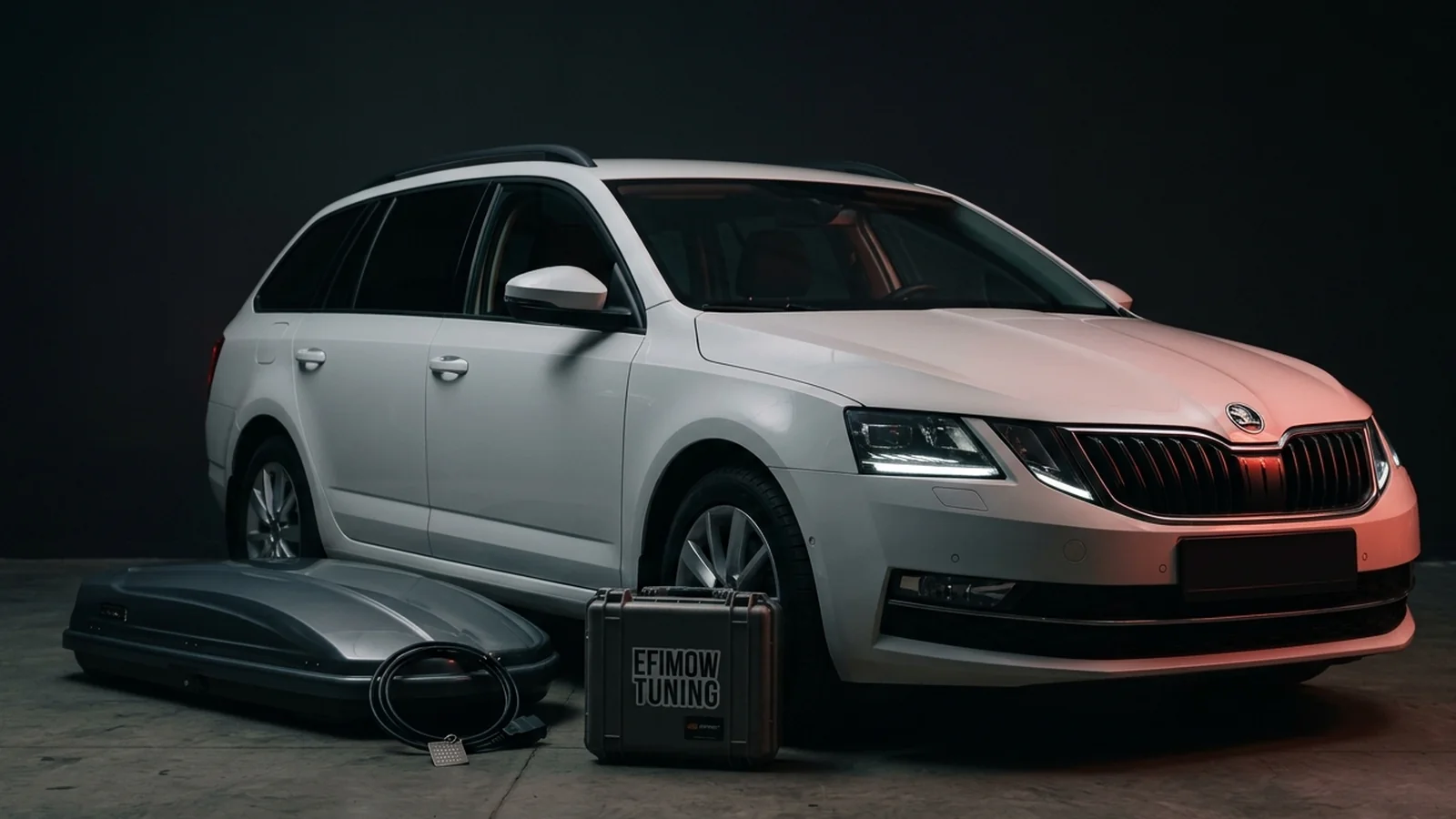
Skoda Octavia III 2.0 TDI: More Pull for the Everyday Estate
Octavia III (5E) 2.0 TDI with Bosch EDC17C64: variants up to the RS, typical Stage 1 guide values, ECO tuning, checks and prices from 300 €.
October 25, 2026 by Leo Efimow
For many people the Skoda Octavia III is the most sensible car in its class: a huge boot, an economical diesel, unspectacular technology. As a Combi with the 2.0 TDI in particular, it is a workhorse: family holidays with a roof box, commuting, a trailer at the weekend. People who drive like that rarely want a higher top speed, but often want more pull when the car is full. A software optimisation can deliver exactly that if it is done properly. Here you will find out what is possible on the Octavia III with the Bosch EDC17 ECU, which options make sense and what you should check beforehand.
The diesel variants of the Octavia III
According to our catalogue, the Octavia III (5E) ran from 2012 to 2020. For the diesels, it lists these variants:
| Variant | Engine code | Power | ECU |
|---|---|---|---|
| 1.6 TDI | CLHA | 105 PS | Bosch EDC17C64 |
| 2.0 TDI | CRVC | 143 PS | Bosch EDC17C64 |
| 2.0 TDI RS | CUPA | 184 PS | Bosch EDC17C64 |
| 1.4 / 1.6 TDI | n/a | n/a | Delphi DCM6.2 (some variants) |
This article focuses on the 2.0 TDI with the EDC17C64. The Delphi variants of the smaller engines belong to a different ECU family with its own guide values (around 15–25 % power and torque) and a different price tier. Which ECU is fitted can be seen on the label on the unit. If in doubt, we clarify it when reading.
What happens in the ECU
The EDC17C64 belongs to the Bosch EDC17 family for common rail TDI engines. It controls injection quantity, rail pressure, injection timing and boost, and limits torque on several levels: the smoke limiter, torque limiters for engine and gearbox, and protection functions for exhaust temperature and turbocharger.
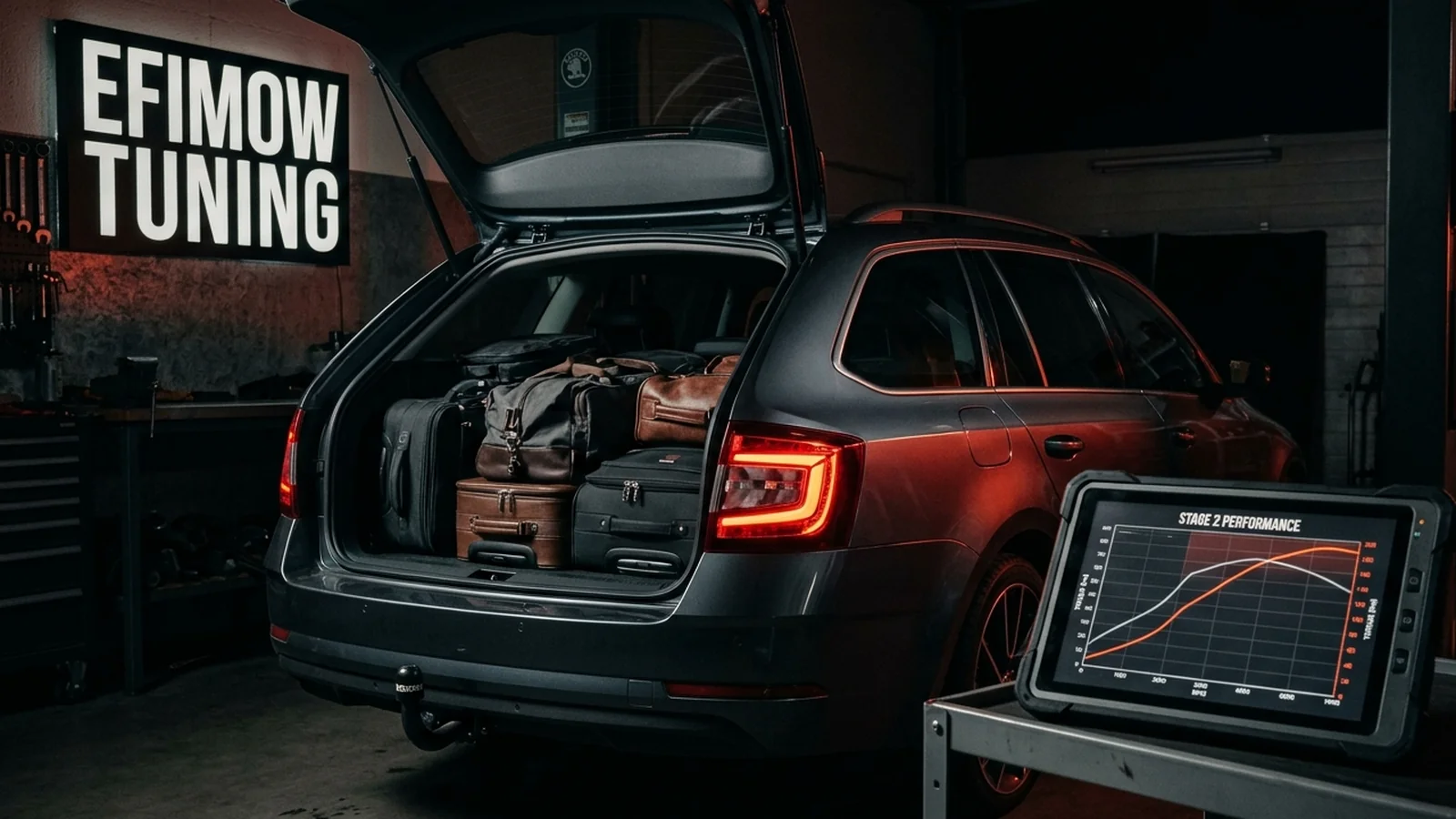
For Stage 1 these maps are adapted together. The goal on the Octavia is an earlier, broader torque plateau, not a power peak just before the limiter. The protection functions stay active and are adapted to the new load points. If you want to understand how the ECU calculates internally, the details are in the article Bosch EDC17 explained.
Typical guide values
For the EDC17 family on VAG TDI engines, typical Stage 1 guide values are around 20–30 % more power and around 20–30 % more torque. This applies to healthy engines on stock hardware and is an experience value, not a promise. How much you actually get depends on the condition of the engine, the factory calibration, and the turbocharger and clutch.
In daily driving you notice it first in a high gear: the loaded estate pulls without downshifting, there is reserve on inclines, and overtaking takes less time. On the RS with 184 PS the base is higher and the character changes less. The mid-range 143 PS variant often feels the clearest benefit.
ECO tuning: the alternative for high-mileage drivers
Not every Octavia driver wants more peak power. For high-mileage drivers, ECO tuning is often the more interesting option: torque is raised in the low and mid-range while peak power stays unchanged. The engine can then run at lower revs in daily use, which may reduce consumption depending on your driving profile. There are no fixed consumption promises: driving style, route and load all play a part. The background is explained in the article ECO tuning: saving fuel through software.
Other bookable options
Besides Stage 1 and ECO tuning, the following can be booked for the EDC17C64:
- Stage 1+: a slightly more aggressive Stage 1 calibration
- Sharp Throttle: a more direct pedal map
- Vmax removal: observe the tyre speed rating and registration requirements
- DTC Off: only for individual, non-emissions-related fault codes
Launch control and hardcut limiter are only partly feasible on the diesel and therefore only available on request after the file has been checked. Both are pure motorsport functions.
The particulate filter, exhaust gas recirculation and, on Euro 6 variants, the SCR system with AdBlue are part of the exhaust aftertreatment. Disabling them is emissions tampering and prohibited on public roads. A proper optimisation works with functioning exhaust aftertreatment.
What to check beforehand
- DPF and driving profile: lots of short trips strain the particulate filter. If regenerations are frequently interrupted, find the cause first.
- Clutch and dual-mass flywheel: on a manual gearbox, the first parts to feel more torque. If the clutch already slips on stock, it needs replacing before tuning.
- DSG: with the dual-clutch gearbox, the transmission software also limits the transferable torque. More in the article "DSG DQ250/DQ381: gearbox software after engine tuning".
- Fault memory and maintenance: fix boost, exhaust temperature or AdBlue entries beforehand and keep oil and filters up to date.
- Towing: if you regularly tow heavy loads, mention it when booking.
Access, price and process
The EDC17C64 in the Octavia III is listed with OBD access in our catalogue. On later software versions with stricter write protection, bench access may still be required; if the ECU has to be opened for that, a 50 € surcharge applies. The original file is saved before any change so that a reflash to stock remains possible.
For the Octavia III 2.0 TDI CRVC with 143 PS and the RS with CUPA and 184 PS, Stage 1 starts from 400 €, Stage 2 from 500 €. The Delphi variants of the smaller diesels are in a different price tier; the configurator shows the exact price after you select your car.
Booking is done online. Afterwards you come to us in Stödtlen on a date of your choice or send in the ECU. The price is the same in both cases.
And Stage 2?
Stage 2 is also possible on the EDC17 units, but only together with hardware. Typical parts are a larger intercooler, an exhaust from the turbo back with catalyst and particulate filter and, depending on the goal, a larger turbocharger. Exhaust parts are only an option with type approval or an expert report; a pipe without catalyst or DPF is not Stage 2 but emissions tampering. Stage 2+ can also be booked for these ECUs. Important: more hardware also means more load on the clutch, gearbox and driveshafts. For an everyday estate, Stage 1 is usually the more sensible step. As with Stage 1, the software and hardware changes void the type approval; Stage 2 is intended for motorsport use only.
Legal
The software change voids your vehicle's type approval; the software is intended for motorsport use only. For use on public roads, an inspection and registration would be required. This also affects insurance cover and the periodic inspection.
Conclusion
The Octavia III 2.0 TDI is a prime example of what diesel tuning is good for in everyday life: more pull for a fully loaded, sensible car. With the EDC17C64, around 20–30 % more power and torque are realistic as typical guide values; if efficiency is your main goal, choose ECO tuning. The preconditions are a healthy engine, intact exhaust aftertreatment and a clutch or DSG that can handle the extra force.
Select your Octavia in the configurator to see the price and options for your engine code.