
Bosch MG1: B48 and B58 in the G-Series: Why Newer Software Is Different
The Bosch MG1 controls the B48 and B58 in the G20, G30, Z4 and Supra. How it differs from the MEVD17 and why the software level matters for tuning.
October 26, 2026 by Leo Efimow
If you drive a petrol BMW from the G-series, there is a good chance a Bosch MG1 sits under the bonnet. It controls the modular engines B48 (four-cylinder) and B58 (inline-six), in the 330i and M340i G20, the 530i and 540i G30, the Z4 G29 and the Toyota Supra A90. Technically, the MG1 builds on the MEVD17 of the F-series. For tuning, it is still a different world: it is more powerful, runs more models, is much better protected, and its software level today often decides the process more than the car model itself.
Which cars have the MG1
The B engines arrived around 2014/2015 and gradually replaced the N20 and N55. In the first F-series applications, the B48 and B58 partly still ran on variants of the MEVD17. In the G-series they mostly work with the MG1, whose variants carry identifiers such as MG1CS003; later hardware and software levels have their own identifiers. Which unit is fitted in a particular car is shown by the diagnosis.
| Car | Engine | Stock | Stage 1 (reference) | Stage 2 (reference) |
|---|---|---|---|---|
| 320i (G20/G21) | B48B20 | 184 hp / 290 Nm | approx. 230 hp / 386 Nm | approx. 254 hp / 426 Nm |
| 330i (G20/G21) | B48B20 | 258 hp / 350 Nm | approx. 323 hp / 466 Nm | approx. 356 hp / 515 Nm |
| 540i (G30/G31) | B58B30 | 333 hp / 450 Nm | approx. 406 hp / 585 Nm | approx. 450 hp / 639 Nm |
| Z4 M40i (G29), Supra 3.0 (A90) | B58B30 | 340 hp / 450 Nm | approx. 415 hp / 585 Nm | approx. 459 hp / 639 Nm |
| M340i (G20/G21) | B58B30 | 374 hp / 500 Nm | approx. 456 hp / 650 Nm | approx. 505 hp / 710 Nm |
The values come from the product pages and are calculated reference values, not dyno measurements. How a tuned G20 feels in everyday driving is described in BMW G20 330i and M340i with Stage 1.
What the MG1 basically controls
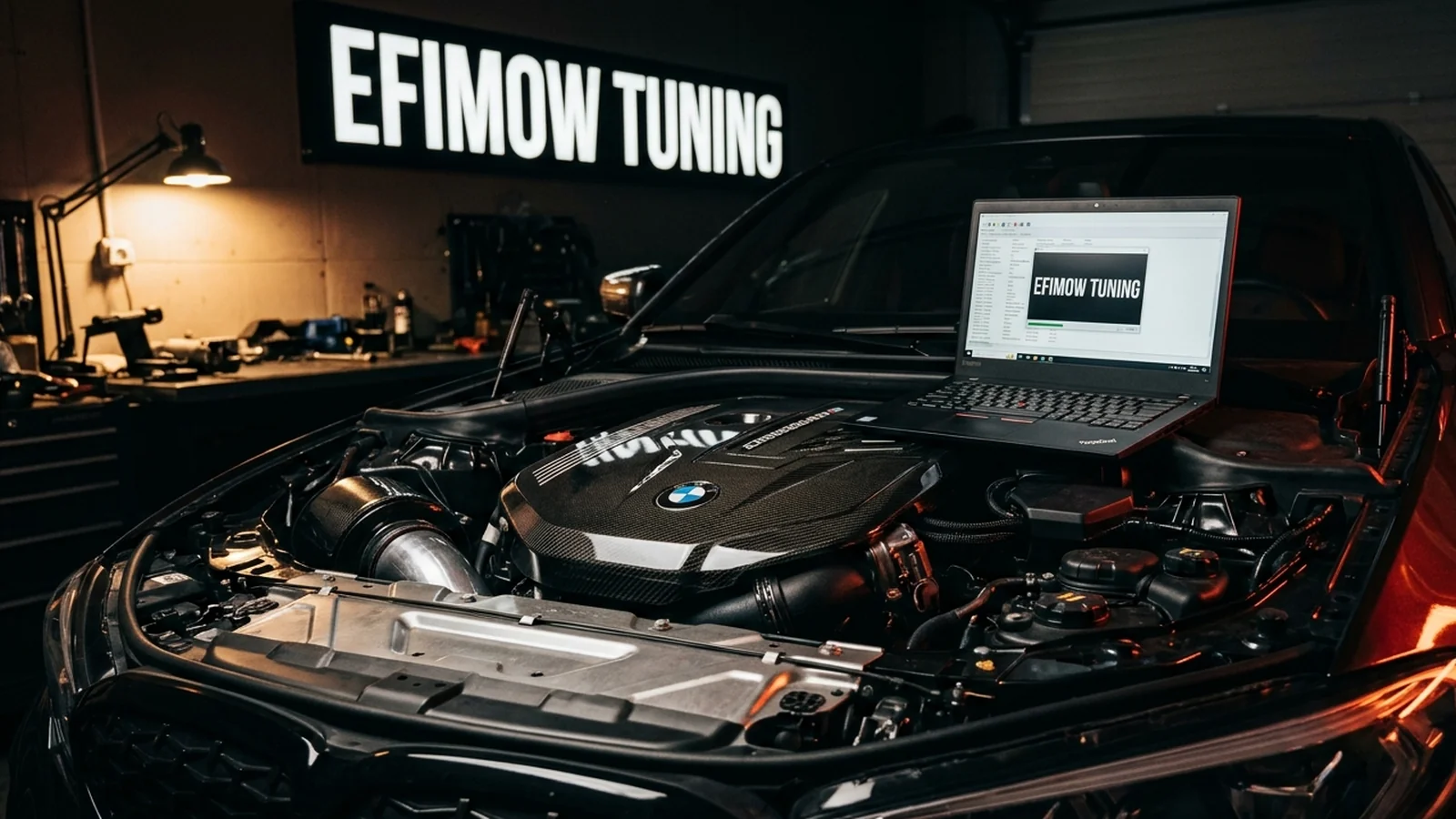
The tasks have changed little compared with the MEVD17: turbocharging, direct injection, Valvetronic and double VANOS are coordinated through a torque structure. Driver demand, transmission, stability control and protection functions report requests; the DME decides which torque is delivered and implements it through charge, boost, fuel and ignition.
The difference lies in the depth. The MG1 is based on a multi-core processor of the Tricore family (Aurix) and runs far more models than its predecessors: for component temperatures, for the state of the catalytic converter and for the gasoline particulate filter (GPF/OPF), usually on board in the G-series. On top comes close coordination with the transmission control unit, in most models a ZF 8HP.
Why newer software is different
For owners and tuners, four differences stand out.
1. Protection against changes. The MG1 checks whether the software it is supposed to run has been approved by the manufacturer. For cars with a production date from around mid-2020, BMW additionally locked writing via OBD. On these cars, an unlock on the removed control unit is required before the first calibration; after that, it works via the diagnostic port again. The background is described in Why BMW locked OBD access from June 2020.
2. More software levels. BMW regularly distributes software updates for the G-series, often during a workshop visit or an update of the whole car. Each new level can bring different requirements. That is why we ask for the exact level on every MG1. The original file you upload is the most reliable source for it.
3. Updates overwrite the calibration. If the dealer updates the DME, the adapted software is gone afterwards, and on cars after mid-2020 the route to the control unit has to be checked again after a new level. If you drive a tuned car, clarify before a workshop appointment whether a software update is planned.
4. More modelling, more protection. Because the MG1 models temperatures, loads and the state of the exhaust aftertreatment more precisely, it intervenes earlier and more specifically at the limit. A calibration has to take these models into account. That is not a drawback: the protection functions remain active, and that is exactly what makes a software calibration suitable for daily use on these engines.
What is realistic in tuning
The B48 and B58 are among the engines with the largest factory reserves. As with the N20 and N55, several power levels share largely the same hardware; the difference between a 320i and a 330i is to a large extent a matter of software. A Stage 1 calibration raises boost and torque targets and tunes ignition and injection to match.
Stage 2 needs hardware: a more capable intercooler and/or a downpipe with a sports catalytic converter. Exhaust parts need approval or an expert report. The gasoline particulate filter is part of the emissions control; removing or disabling it is illegal on public roads.
Because the transmission carries the additional torque, it is worth looking at the transmission control on automatic cars. On very modern cars, processing can also take somewhat longer than the usual 48 hours.
Practical tips for flashing
- ENET cable and a stable laptop: For the G-series you need an ENET cable and a Windows laptop.
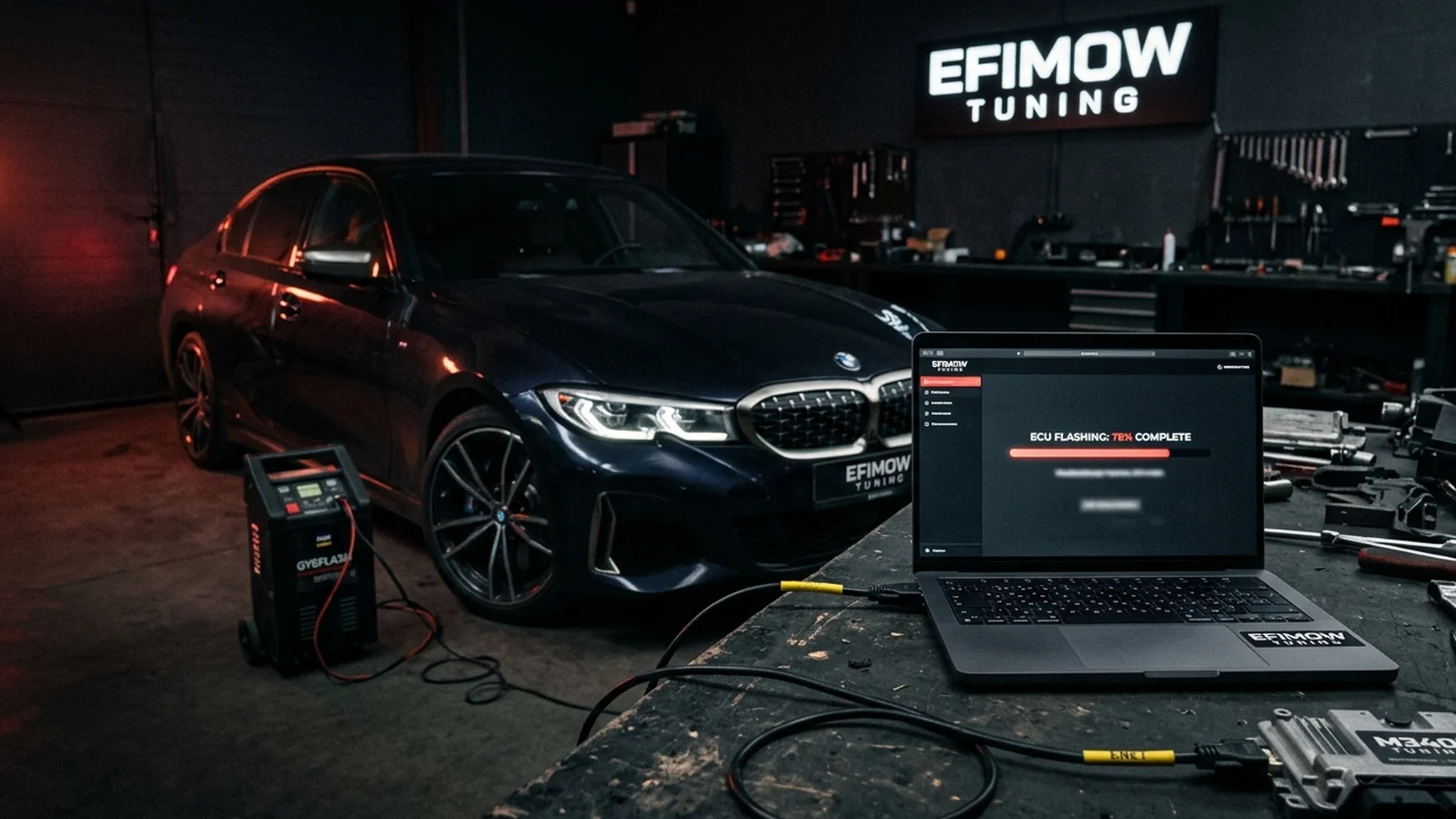
- Battery charger: Flashing an MG1 takes longer than on older units. A charger keeps the voltage stable.
- Back up the original file: It is the basis for any return to stock.
- No update in between: The car should not receive new software between reading and flashing.
Typical questions from the workshop
My G20 is from 2021. Is it possible at all? In principle yes, but the route differs from older cars. Production date and software level are decisive; both can be clarified in advance.
Do I need premium fuel? Yes, the calibration is designed for high-octane fuel. With a lower octane rating, knock control pulls ignition.
Does the particulate filter stay active? Yes. A power calibration does not change the emissions control.
Can I go back to stock? Yes, with the backed-up original file. For cars after mid-2020, the same access applies for the way back as for the way there.
Process and price
You configure your car, pay only for hardware and a €5 deposit today and upload the original file. We adjust it by hand; you pay for the software only once it is finished and flash it yourself via OBD. According to the product pages, software for the B48 and B58 in the G-series starts from €275 for Stage 1 and €350 for Stage 2, for example on the BMW M340i (G20/G21). The price for your configuration is shown in the configurator.
Legally: the software change voids your vehicle's type approval; the software is intended exclusively for motorsport (motorsport notice).
Conclusion
The Bosch MG1 controls BMW's current petrol engines: powerful, with large reserves, but much better protected than anything before it. On the B48 and B58, software delivers a lot, as long as the software level is clarified and the process matches it. Where the MG1 sits in the history of BMW engine management is shown in the overview of DME generations.