
Same car, different software: why the software version matters
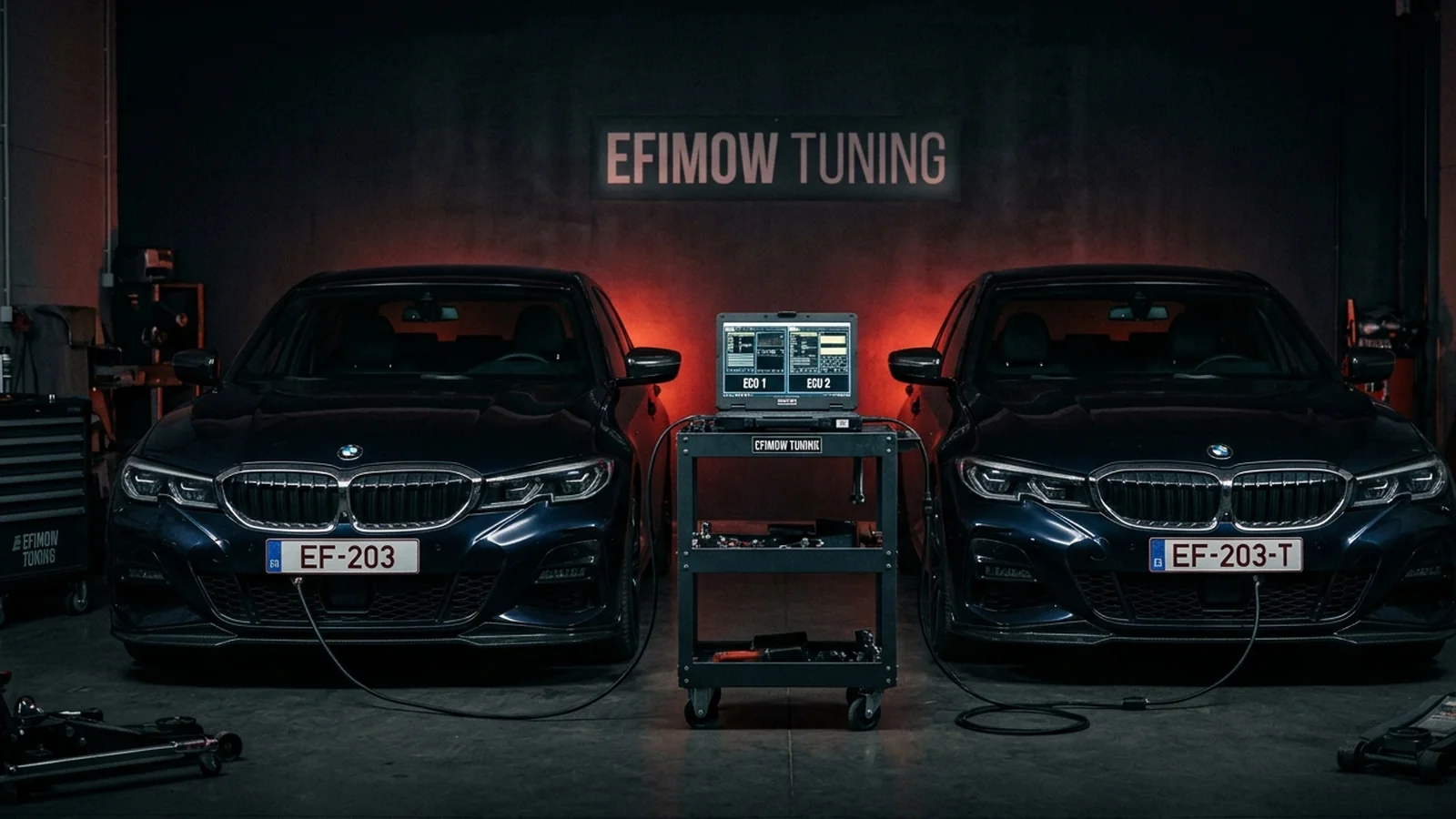
Two identical BMWs, two different software versions: why tuning software must always match the exact version, and what updates have to do with it.
October 26, 2026 by Leo Efimow
Two BMW 320d of the G20 series, same colour, same engine, same power according to the registration. From the outside you can't tell them apart. And yet the engine control unit in one may run different software than in the other. Day to day this hardly matters. For tuning it's the key point: modified software must always match exactly the software version it's built on. This article explains where the differences come from, why they matter so much and what that means for you.
What a software version is
An engine control unit contains a program and a large data area with maps, curves and constants. Together they form the software that controls the engine. Every release of that software has a unique identifier, the software version. It can be read via diagnostics, and it's what manufacturers and workshops mean when they talk about "version", "data level" or "software index".
BMW adds another layer: the integration level (I-level, German "I-Stufe"). It describes the software state of the whole vehicle, i.e. all control units that are matched to each other. When a workshop brings a car "up to a new I-level" with ISTA, the engine and transmission control units can receive new software as well.
Where the differences come from
Two seemingly identical cars carrying different software versions is the norm, not the exception. Typical reasons:
- Production date: Manufacturers improve their software continuously. A car built in spring may have a different version than one from the autumn of the same model year.
- Specification: Gearbox (automatic or manual), all-wheel or rear-wheel drive, tow bar, country version: each can mean its own software variant.
- Emissions standard and market: Different markets and emissions stages get different calibrations.
- Power level: When the same engine is offered in several outputs, the difference is often mainly in the software.
- Workshop updates: Software is updated during services, recalls or technical campaigns. Afterwards the car carries a newer version than at delivery.
Why tuning software must match the version
Tuning software isn't standalone software but a targeted modification of the existing one. It's created by reading your ECU's original data and changing it in the relevant places: torque limits, boost, injection, ignition, limiters. Everything else stays as it was from the factory.
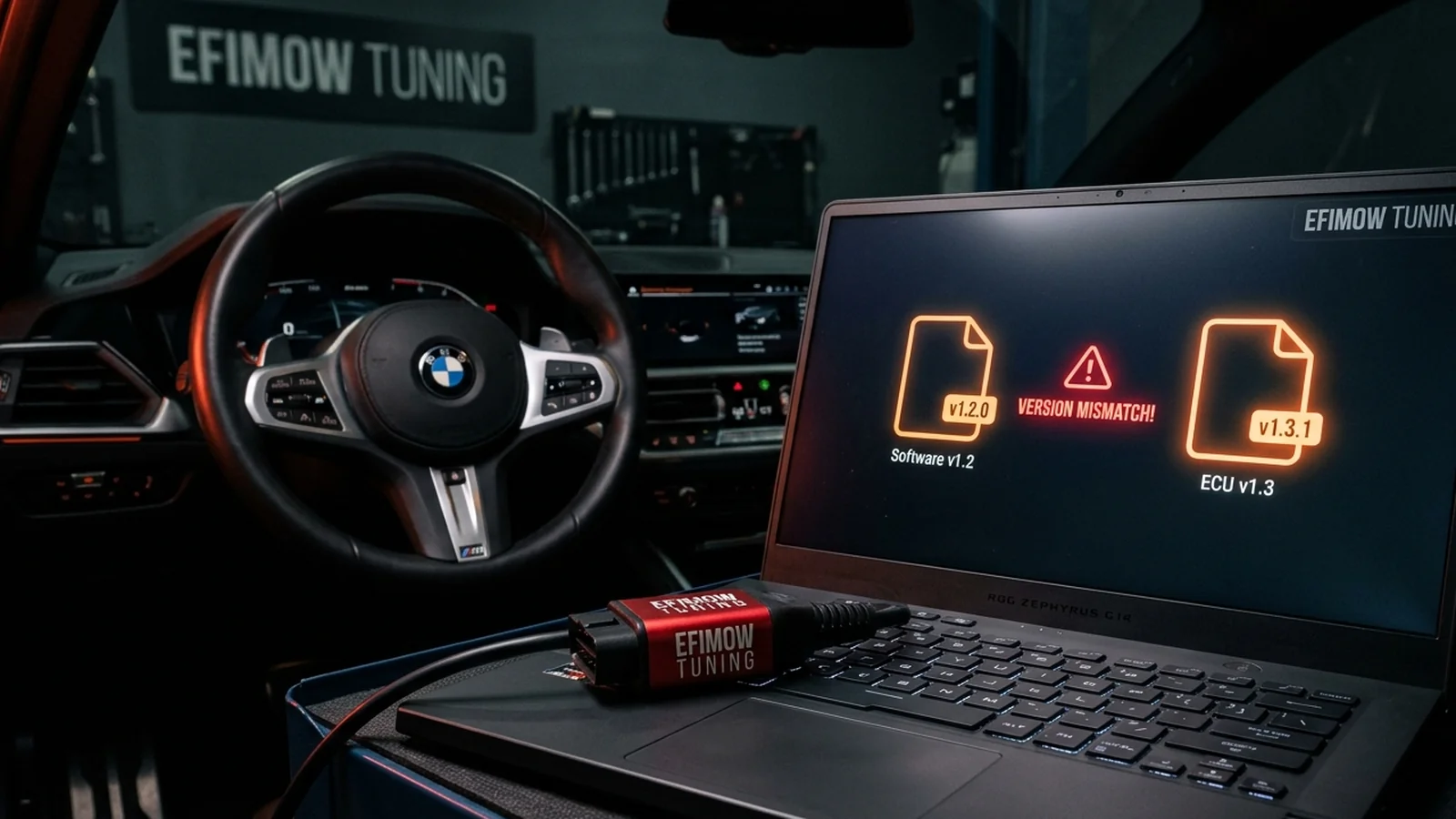
It follows that the modification only knows the software version it was created from. A different version can arrange maps differently, contain different protection functions or add new features. Writing a file made for version A onto an ECU with version B is therefore a bad idea. In the harmless case the engine runs poorly or logs fault codes; in the bad case protection functions don't work the way they should.
That's why reputable tuners always work from the original file read from your car, not with a file "for the model" from a collection. More on handling the original file in The original file: why backup and restoring matter so much.
Software version and access
The software version affects not only the modification itself but also the route into the ECU. With new versions, manufacturers also improve protection against changes. A well-known example is BMW: on G models with Bosch MG1 and MD1, access changed significantly from mid-2020, and classic writing via OBD is no longer straightforward there. The background is covered in Why BMW locked down the OBD port on the G20 from June 2020.
The same applies to other brands: a workshop update can change the access route. What was possible via OBD before the update may need the bench afterwards. That's why, for non-BMW vehicles, we ask for the current software version before the appointment. Then we know whether the usual route works.
The gearbox has a software version too
What applies to the engine control unit applies just as much to the transmission control unit. Automatic and dual-clutch gearboxes have their own software with their own version. From the factory, the engine and gearbox versions are matched to each other, at BMW via the shared integration level.
For tuning this means: if the gearbox is modified as well as the engine, each modification must match its own version, and both have to work together. If only one of the two control units gets an update at the workshop, that interplay may no longer fit. Why engine and gearbox work so closely together is explained in The torque model.
What this means for BMW customers
With BMW you read your ECU yourself via OBD and upload the file when ordering. The modified software is then created exactly from your software version. That has three practical consequences:
- The file belongs to your car. It isn't meant to be transferred to another vehicle, not even an identical one.
- A workshop update changes the base. If the software was updated after the read, the finished file no longer matches the ECU. Then it has to be read again and the modification carried over to the new version. What happens is described in Workshop update after tuning.
- Change nothing between read and flash. It's safest if no workshop visit with a software update falls between reading the ECU and writing the finished file.
For the BMW 320d (G20/G21) or the BMW M340i (G20/G21), the product page shows which options are possible for your car. You usually receive the finished BMW file within 48 hours. Modifying the software voids the vehicle's type approval; the software is intended exclusively for motorsport (motorsport notice).
Common questions from the workshop
My friend has the same car and already has a tuning file. Can I use it? No. Even with an identical model, the software version isn't necessarily the same. And even if it were, a clean modification needs the original data of your own ECU, as a base and as a way back.
How do I know whether my ECU has had an update? Most reliably via diagnostics: the software version read out then differs from the as-delivered one. A software update often appears on the workshop invoice too, for example as "control units programmed" or "software updated".
Is a newer software version worse for tuning? Not in principle. Newer versions often bring improvements. But they can make access harder or contain new protection functions that have to be taken into account in the modification.
Does tuning bring the software up to a new version? No. The modification builds on the existing version. A workshop update is a separate process at the manufacturer's service.
Conclusion
The software version is something like your ECU's fingerprint. It determines how the modification is built, which access route works and whether a file fits your car at all. That's why every modification is built from your own original data, and why it pays to keep an eye on workshop updates. How to find part number and software version is described in Which ECU do I have?; the configurator shows the prices for your car.