
Siemens/Continental SID: From SID803 to SID807 Explained
SID80x, SID20x, SID30x: which diesels run Siemens or Continental ECUs, how the series differ and what that means for tuning.
October 25, 2026 by Leo Efimow
If you drive a Peugeot or Citroën with a 1.6 HDi, a Ford with a TDCi, a Renault with a 1.5 dCi or a Land Rover with a TDV6, there is a good chance that an ECU called SID is working in the engine bay. The SID ECUs originally came from Siemens VDO, which was taken over by Continental in 2007, which is why older units carry the Siemens name and newer ones the Continental name. Technically it is the same line. For tuning, the number after "SID" is what matters, because it tells you which family the unit belongs to.
Three families, one name
The SID ECUs can be roughly divided into three series:
| Series | Typical applications (catalog) | Typical Stage 1 guide values |
|---|---|---|
| SID80x (801–807, 807EVO) | PSA/Ford 1.4/1.6/2.0 HDi/TDCi, Mazda, Fiat | approx. 20–30% power and torque |
| SID20x/21x (201–212) | Ford Duratorq, Transit, PSA/JLR V6 TDV6/TDV8, Boxer/Jumper 2.2 | approx. 15–25% power, 20–30% torque |
| SID30x/310 | Renault/Dacia/Nissan 1.5 dCi (K9K) | approx. 20–30% power and torque |
In our catalog, the SID ECUs are spread fairly evenly across these three series. The SID80x family is found mainly at Citroën and Peugeot, the SID20x at Ford, Land Rover and Jaguar, the SID30x almost exclusively within the Renault-Nissan Alliance.
SID80x: the PSA family
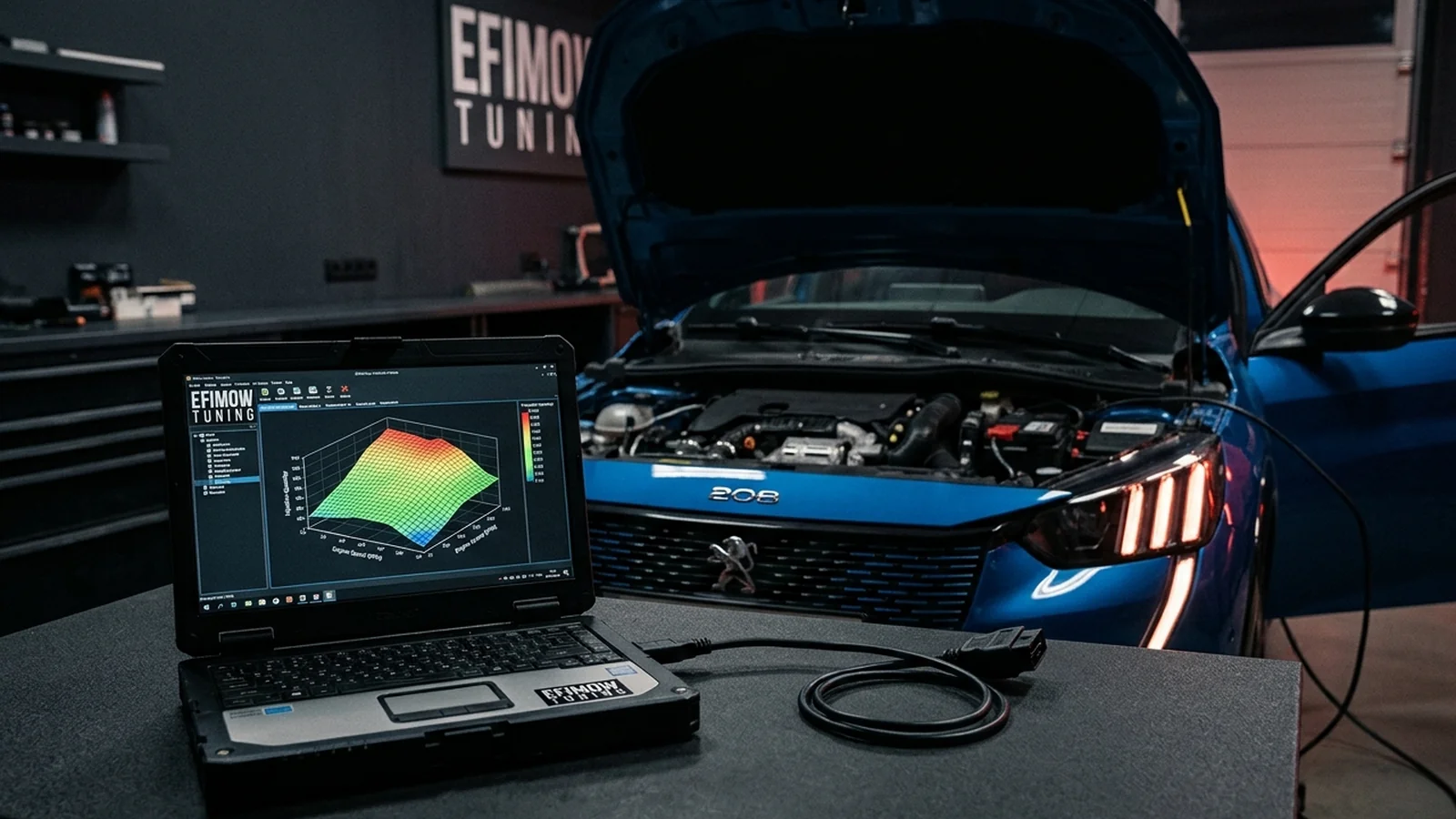
The SID80x series is closely linked to the PSA diesels. SID801 to SID804 control older 2.0 HDi and early 1.6 HDi engines; the SID803/803A is typical of the 2.0 HDi DW10BTED4 with 136 hp in the 307, 407, 607, 807 and Fiat Ulysse. The SID807 and SID807EVO belong to the 1.6 HDi/TDCi (DV6C), which is found as an eight- and sixteen-valve engine in many models, from the Peugeot 208 to Ford and Mazda, and even Volvo and Toyota, which use the same PSA engine.
Stage 2 makes only limited sense on the SID80x family: the small turbos of the 1.4 and 1.6 HDi put tight limits on hardware upgrades. For a clean Stage 1, on the other hand, these units are well covered.
SID20x/21x: Ford and the big V engines
The SID20x series is a mixed group. On one side are the Ford Duratorq engines in the Transit, Ranger and other models; on the other the V6 and V8 diesels jointly developed by PSA and Ford, which run at Land Rover and Jaguar as TDV6 and TDV8. On the biturbo V8s with SID203/204, two ECUs work together as master and slave. The software has to take that into account.
Depending on the version, the 2.2 HDi in the third-generation Citroën Jumper and Peugeot Boxer also belongs to this series (SID208). On vans, torque matters more than power; ECO tuning is often the better fit here.
SID30x and SID310: the 1.5 dCi
The SID30x series (SID301 to SID309) and the newer SID310 are the Siemens/Continental ECUs of the Renault 1.5 dCi. In the catalog they appear in the Clio, Megane, Scenic, Kangoo, Laguna, Captur and Kadjar, the Dacia Duster, Logan, Sandero and Dokker, and the Nissan Qashqai, Juke, Micra and Note. Current tool drivers for the SID307 and SID310 give access to torque monitoring, exhaust temperature limits and intake air temperature correction, among other things. That is important, because exactly these functions have to be adjusted along with a clean calibration.
What SID software changes
Regardless of the series, Stage 1 on SID ECUs works on the typical diesel maps: torque limiter, injection quantity, rail pressure, boost and smoke limiter. The protective functions (exhaust temperature, torque monitoring, component protection) remain active and are matched to the new load points.
For all three series, ECO tuning, Sharp Throttle, Vmax removal and DTC Off for non-emissions-related fault codes are documented as options. Disabling the particulate filter, EGR or SCR system is emissions tampering and illegal on public roads.
Access and price
Depending on the generation, SID ECUs are accessible via OBD or on the bench. Newer units such as the SID807 and SID310 are more elaborately protected than the older ones. Our pricing rules therefore classify by generation:
- The Peugeot 307 2.0 HDi with 136 hp with SID803 starts from €200 for Stage 1.
- The Peugeot 407 2.7 V6 HDi with SID201 also from €200.
- The Peugeot 208 1.6 HDi with 115 hp with SID807 from €300.
For other vehicles, the configurator shows the price. The work is done directly at the ECU: on site in Stödtlen at an appointment of your choice or by sending it in, at the same price and bookable online.
The software change voids the type approval. The software is intended for motorsport use only (motorsport notice).
How to find out which SID you have
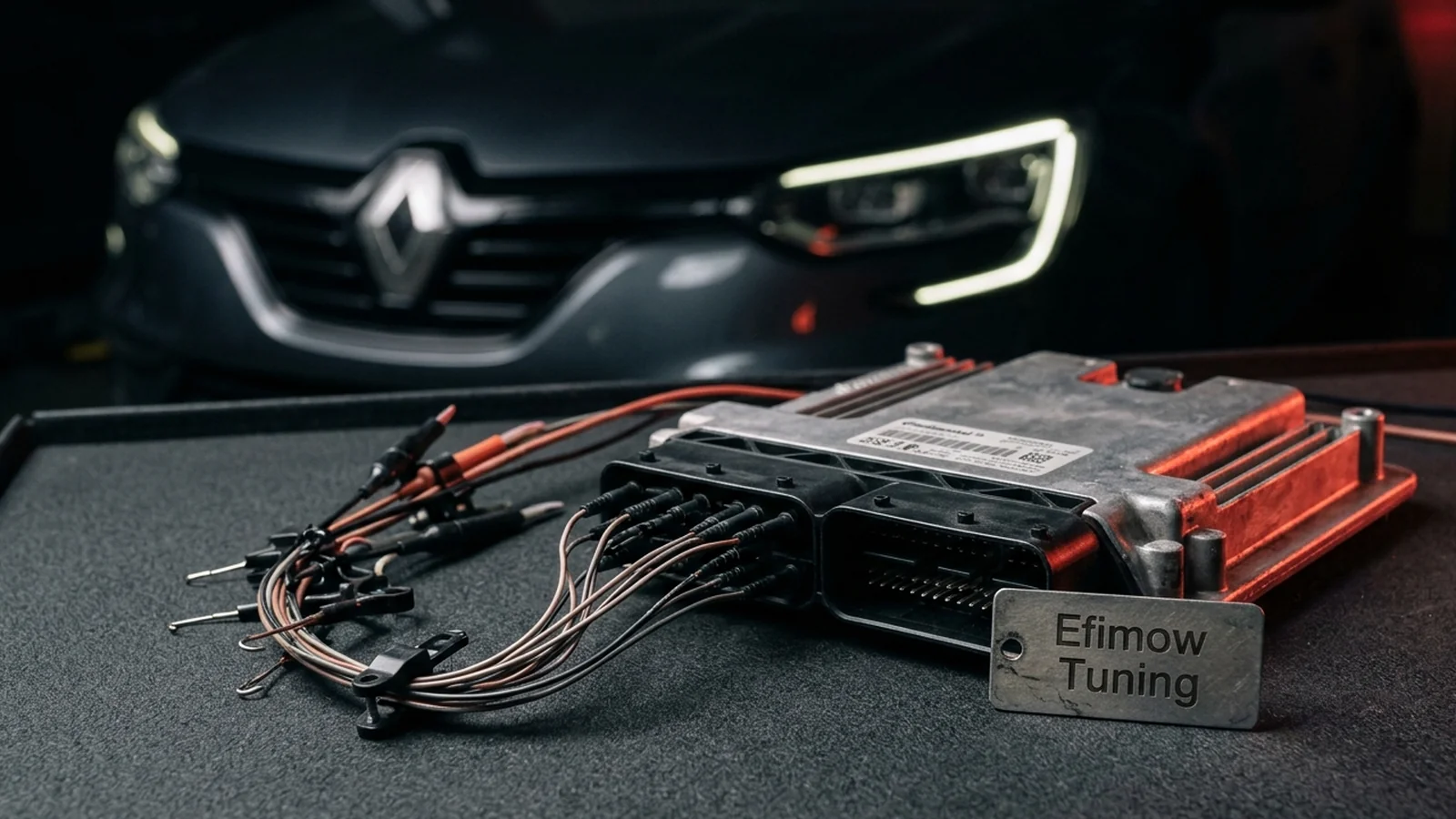
The designation is on the ECU label, often together with a Continental or Siemens VDO part number. Be careful with entries such as "SID" without a number: on the 1.5 dCi in particular, several generations were fitted over the years, sometimes even Delphi and Bosch units on the same engine. A photo of the label or the vehicle data helps us identify the right version in advance.
Common questions from the workshop
Siemens or Continental: is there a difference? Not for tuning. Continental took over the ECU business of Siemens VDO; the SID line continued under the new name. What matters is the number after "SID", not the logo on the housing.
Why is the SID807 more involved than the SID803? The SID807 belongs to a newer generation with stricter emission standards, more functions and stronger protection. The work requires current tool drivers and more care in calibrating the protective functions. This is reflected in our pricing rules, which classify by generation.
What happens on biturbo V8s with two ECUs? In master-slave systems, two units jointly control one engine. A calibration has to take both into account so that the cylinder banks work identically and the plausibility checks between the units match. If only one unit is changed, fault codes and limp mode are the typical result. We check such vehicles particularly carefully in advance.
Conclusion
"SID" is not a single ECU but a whole line with three series: SID80x for the PSA diesels, SID20x/21x for Ford and the big V engines, SID30x/310 for the Renault 1.5 dCi. Depending on the series, the Stage 1 guide values are a typical 15–30%, and access becomes more involved with each generation. More on the vehicles in our articles on the Renault 1.5 dCi and the Peugeot 2.0 HDi.