
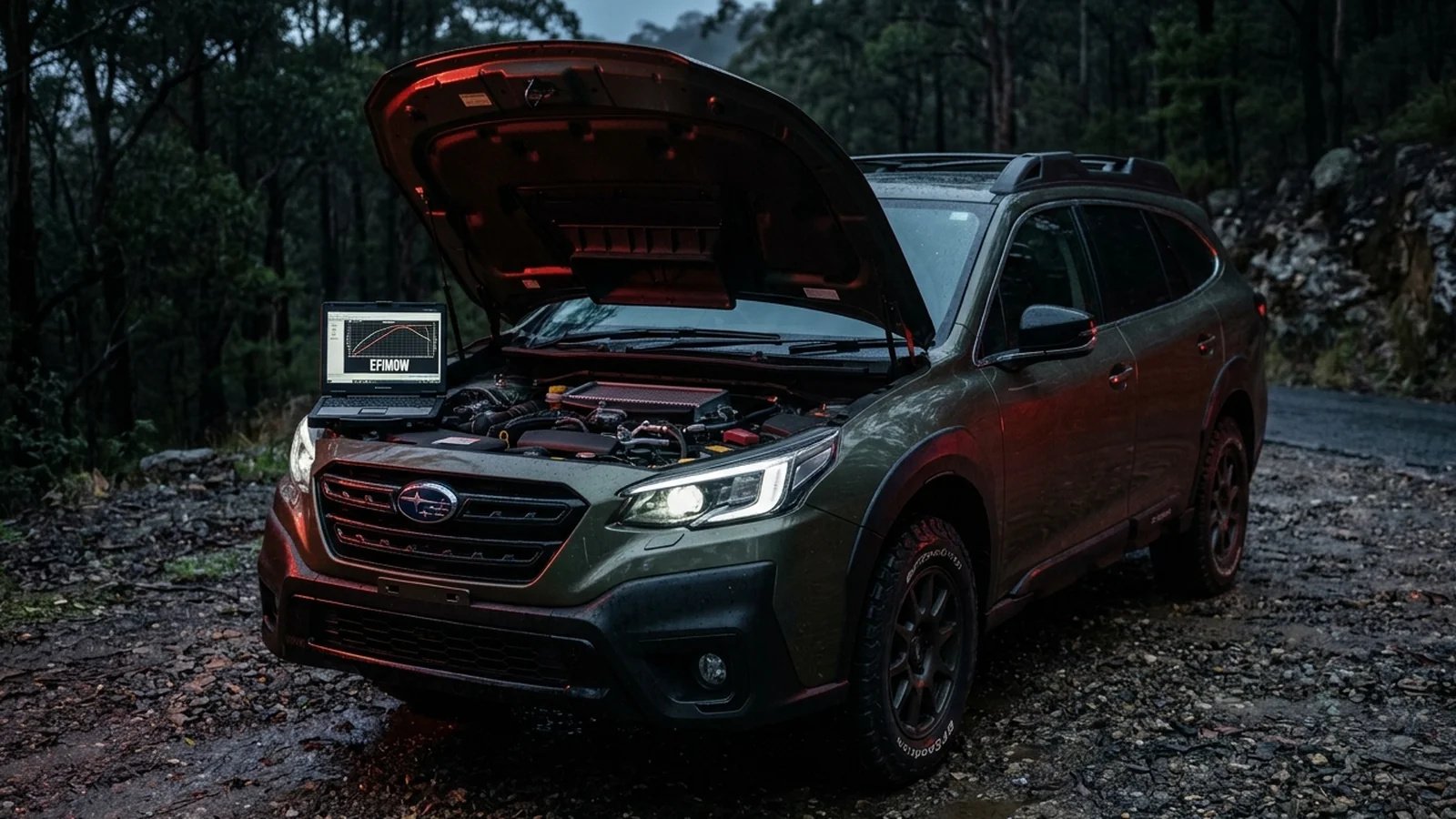
Subaru Boxer Engines: Tuning the EE20 Diesel and FA20 Petrol
Boxer diesel in the Forester, Outback and XV, naturally aspirated boxer in the BRZ and GT86: what software does for Subarus, the limits and why Denso matters.
October 25, 2026 by Leo Efimow
Subaru is one of the few manufacturers that consistently sticks with the boxer engine. The opposed cylinders provide a low centre of gravity and an unmistakable sound, and they also make Subaru a special case for tuning. Two engines are the focus here: the EE20, the boxer diesel with which Subaru became the first manufacturer to offer a boxer diesel in a production passenger car in 2008, and the FA20, the two-litre petrol in the BRZ and its sister model, the Toyota GT86. Both are controlled by Denso ECUs, and both respond very differently to software.
The EE20 boxer diesel
Our catalog lists the 2.0 boxer diesel with 150 hp in these models:
| Model | Years (catalog) | ECU |
|---|---|---|
| Forester | 2008–2013 | Denso |
| Impreza | 2007–2011 | Denso |
| Legacy / Outback | 2003–2009 (model generation) | Denso |
| XV | 2012–2017 | Denso |
The EE20 is a turbocharged common-rail diesel with (depending on the emission standard) a particulate filter. For the Denso diesel family, our data gives a typical 15–25% more power and 20–30% more torque as a Stage 1 guide value. In daily driving, the torque gain is what you notice most: an Outback or Forester towing a trailer pulls noticeably more easily.
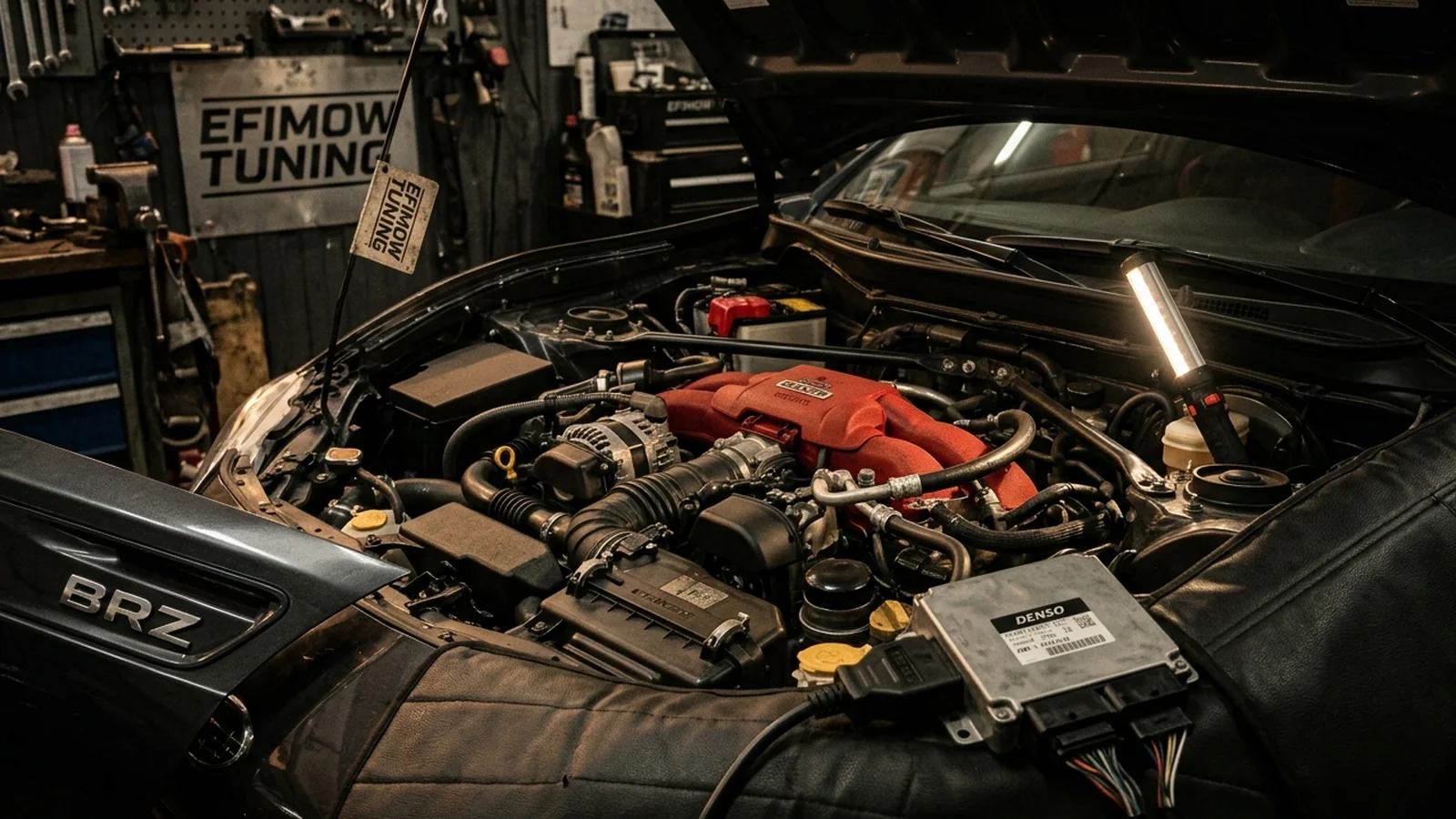
The special feature is the ECU. Denso units are partly encrypted, and tool coverage is patchier than for Bosch. The catalog lists several Denso hardware versions with different processors for the EE20. We therefore check before making an offer whether your specific ECU can be read.
The FA20 petrol boxer
The FA20 in the Subaru BRZ and Toyota GT86 is a naturally aspirated two-litre with combined port and direct injection, listed with 200 hp and a Denso ECU. Honesty is called for here: without a turbocharger, the most important software lever, boost pressure, is missing. For naturally aspirated engines in the Denso petrol family, our data gives only around 3–8% as a guide value.
More noticeable than peak power on the FA20 is response. Many drivers dislike the well-known torque dip in the mid-range and a reserved throttle pedal curve. Software can smooth the curve and make the pedal more direct (Sharp Throttle), but it will not turn the naturally aspirated engine into a powerhouse. If you want significantly more power from a BRZ or GT86, you end up with mechanical modifications up to forced induction, a project of its own with certification and registration.
Briefly: the EJ turbos
Besides the EE20 and FA20, our catalog also lists the turbo boxers of the Impreza WRX and WRX STi (EJ engines). For forced-induction Denso petrol engines, our data gives a typical 15–25% as a guide value. These engines are a classic of the tuning scene but require particular care with ignition, fuel quality and engine condition.
Options
For the EE20 boxer diesel, the following are documented alongside Stage 1:
- ECO tuning with more torque in the low and mid range
- Sharp Throttle for a more direct throttle pedal
- DTC Off only for non-emissions-related fault codes
- Vmax removal: only partly feasible on Denso diesels, so on request
For the FA20 and EJ turbos, Sharp Throttle, Vmax removal, rev limiter increase and DTC Off are documented among others, with launch control and no-lift shift on request depending on the platform. Functions such as the hardcut limiter, pops & bangs or the popcorn limiter are intended exclusively for motorsport on closed tracks, not for public roads.
Before tuning
On the EE20: the particulate filter and EGR should be in good order. A boxer diesel that does a lot of short trips often has a heavily loaded DPF. Disabling it is emissions tampering and illegal on public roads. On manual cars, check the clutch and dual-mass flywheel.
On the FA20: if you have track ambitions, keep an eye on oil level and quality. Boxer engines are sensitive to oil starvation in fast corners. High-octane fuel is the basis for any ignition timing adjustment.
Process and prices
We work on Subaru and Toyota directly at the ECU, on site in Stödtlen at an appointment of your choice or by sending in the removed ECU. The price is the same in both cases, and booking is online.
Under our pricing rules, the Forester 2.0D boxer diesel, the Outback 2.0 diesel with 150 hp and the XV 2.0 diesel start from €175 for Stage 1. The Subaru BRZ 2.0 with 200 hp and the Toyota GT86 2.0 start at €150. You will find all versions in the configurator.
On the legal side: the software change voids the type approval. The software is intended for motorsport use only, see the motorsport notice.
Common questions from the workshop
Does the boxer diesel have particular weak points? Like any modern diesel, the EE20 is sensitive to lots of short trips: the particulate filter cannot complete its regeneration and deposits build up. If you mainly drive short distances, have the DPF condition checked before tuning. On manual cars, clutch and dual-mass flywheel are the usual wear points.
Is Sharp Throttle at least worthwhile on a BRZ or GT86? For many drivers, yes. The stock throttle pedal curve is reserved, and more direct response noticeably changes the driving feel without changing much about the power. If you expect more from software on a naturally aspirated engine than better response, you will be disappointed.
Is all-wheel drive a risk when tuning? The permanent all-wheel drive distributes torque to all four wheels, which improves traction. At the same time, gearbox and centre differential must cope with the extra torque permanently. With a moderate Stage 1 on a healthy drivetrain, that is usually no problem; matching tyres on all four wheels are important. We back up the original state before writing.
Conclusion
At Subaru, forced induction decides whether software makes sense. The EE20 boxer diesel offers a typical 15–25% power and 20–30% torque as a guide value, but requires a check of the Denso ECU. As a naturally aspirated engine, the FA20 in the BRZ and GT86 gains only 3–8%. Here it is more about response than power. More on Japanese ECUs in our article on Denso ECUs and in the glossary under Denso.