
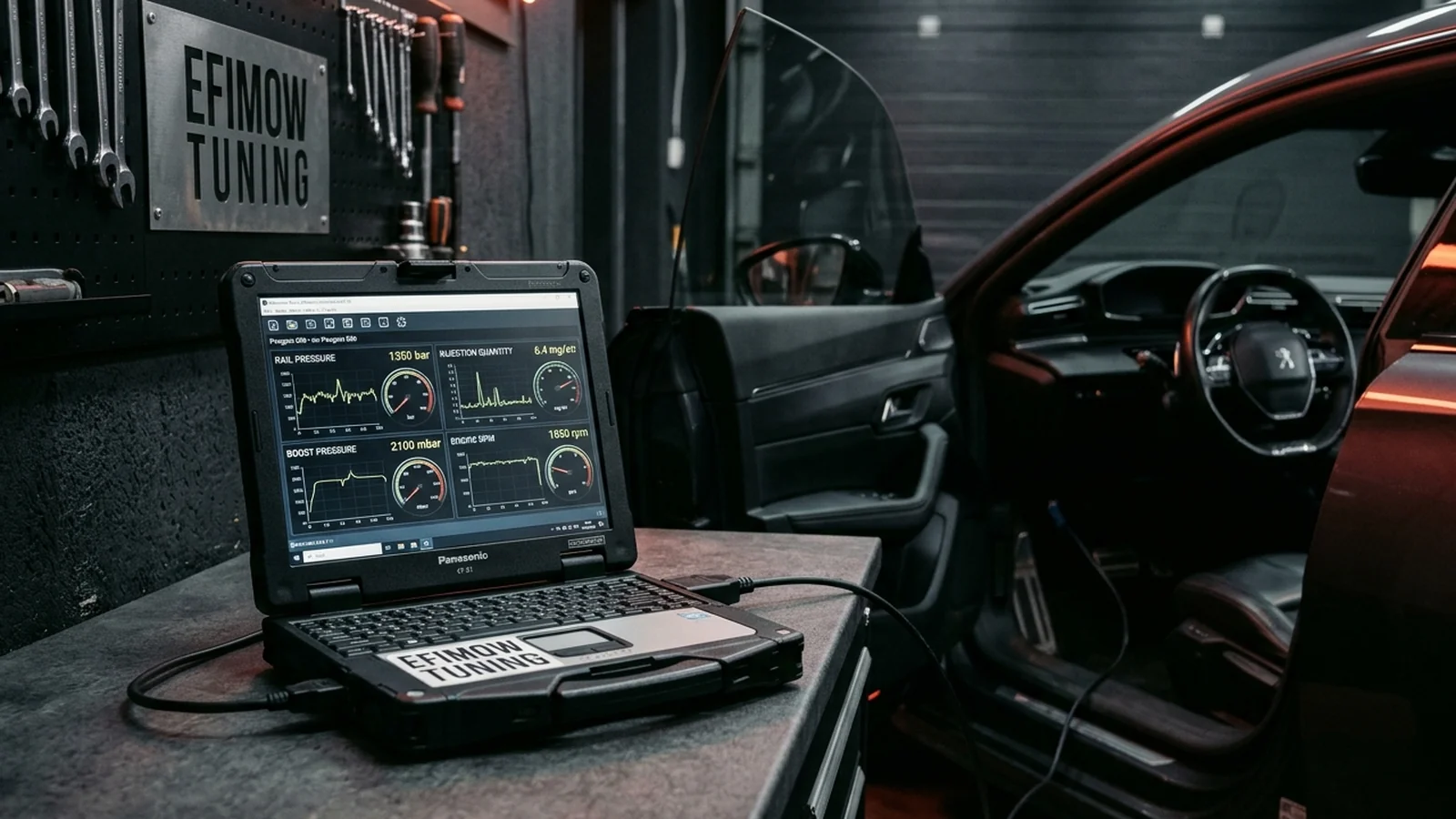
Delphi DCM3 to DCM6: Diesel ECUs Explained
From DDCR and DCM1.2 to DCM3.5 and DCM6.2: where Delphi ECUs are fitted, how they differ and what that means for access, tuning and price.
October 25, 2026 by Leo Efimow
When it comes to diesel ECUs, most people think of Bosch first. Yet a large share of Europe's small and compact diesels use an ECU from Delphi: the Renault 1.5 dCi, the Peugeot and Citroën 2.0 HDi, the Ford 2.0 TDCi, Hyundai and Kia, the Opel 1.7 CDTI and Mercedes engines. If you want to tune one of these engines, you should know which DCM generation is fitted, because access method, headroom and price all depend on it.
Delphi in diesels: injection system and ECU from one source
In diesels, Delphi supplied not only ECUs but complete common-rail systems with high-pressure pump, injectors and electronics. The abbreviation DDCR stands for this "Delphi Diesel Common Rail". The ECUs are called DCM (Diesel Control Module) and carry a generation number. The diesel business later belonged to Delphi Technologies and is now part of BorgWarner, but in workshops and tuning tools the Delphi name has stuck.
The generations at a glance
| Generation | Typical applications (catalog) | Family in our data |
|---|---|---|
| DDCR, DCM1.2 | Renault/Dacia/Nissan 1.5 dCi (early), Clio II/III, Kangoo, Logan, Micra | Delphi DCM1–3 |
| DCM3.2, DCM3.4 | 1.5 dCi (middle years), SsangYong, Kia, Peugeot 2.0 HDi (DW10BTED4) | Delphi DCM1–3 |
| DCM3.5 | PSA/Ford 2.0 HDi/TDCi (DW10CTED4), Fiat Scudo | Delphi DCM1–3 |
| DCM3.7 | Hyundai/Kia 1.4/1.6 CRDi, Chevrolet, Opel | Delphi DCM1–3 |
| Delco E87 | Opel 1.7 CDTI ecoFlex | Delphi DCM1–3 |
| DCM6.x (6.2A/6.2C) | PSA 2.0 BlueHDi, Ford, some VAG versions | Delphi DCM6–7 |
| DCM7.x | newest generation | Delphi DCM6–7 |
| CRD3.x | Mercedes OM651 / OM607, Jeep 2.2 CRD | Delphi CRD3 |
The one we see most often is the DCM3.5: in our catalog it is by far the most widespread Delphi ECU, followed by the DCM1.2, DCM3.7 and DCM3.4. The DCM6.x is found mainly at Ford and PSA.
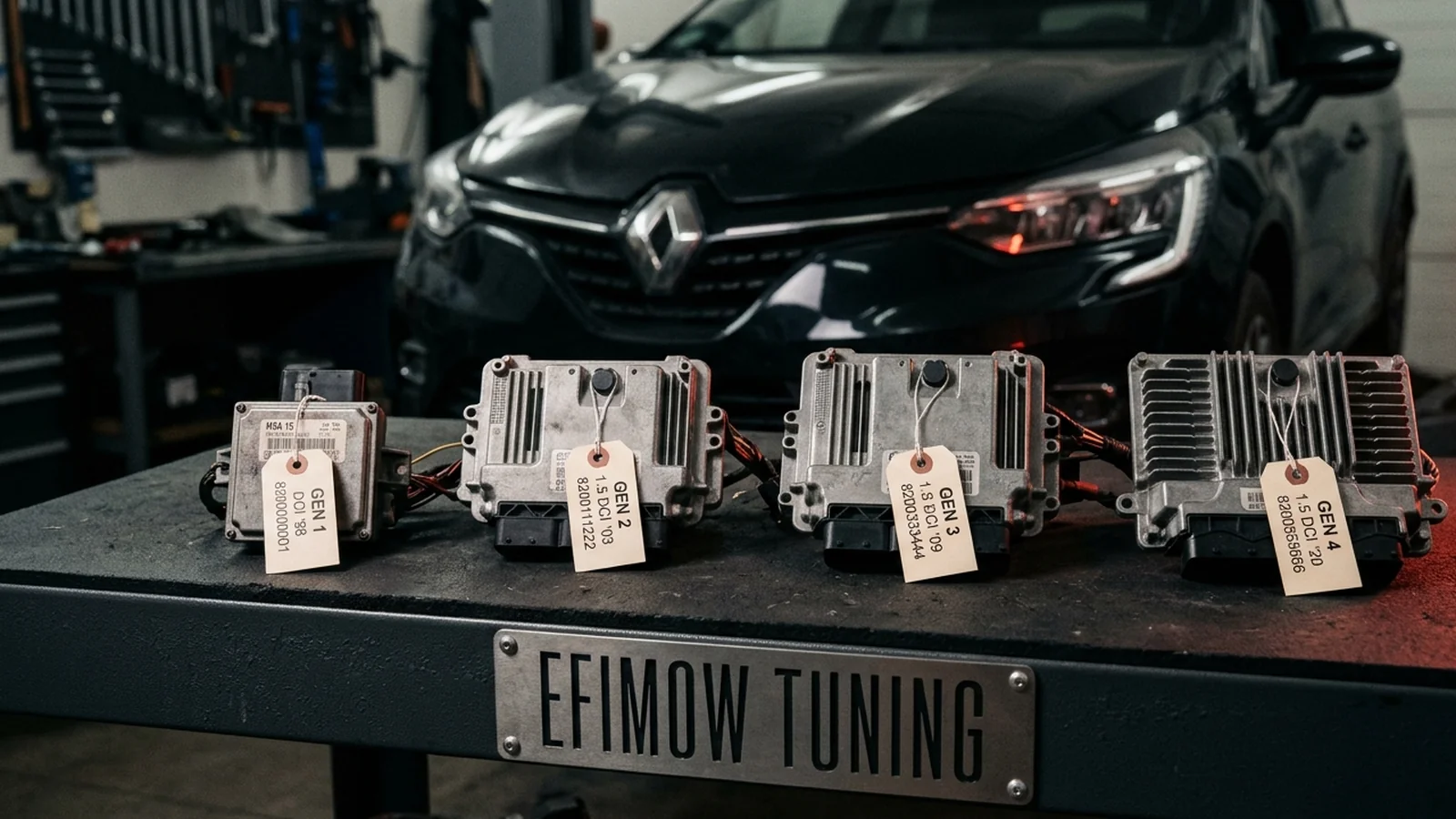
What sets the generations apart
DDCR and DCM1.2 are the early ECUs of the first common-rail years. They control relatively simple injection strategies, usually without complex exhaust aftertreatment. They are easy to access for tuning; headroom is limited more by pump, injectors and turbo than by the electronics.
DCM3.x brought more processing power, multiple injection, particulate filter control and a more complex torque structure. The rule here: the reading method depends heavily on the version. Some DCM3.x units are read via OBD, others on the bench, some only in Tricore boot mode with the housing opened.
DCM6.x is the Euro 6 generation with SCR control and AdBlue. These ECUs are often write-protected; depending on the software version, bench or boot access is required, sometimes with a prior unlock. Tool coverage varies widely by software version.
DCM7.x is the newest generation. Our pricing rules treat it like the latest Bosch generations, because the ECU usually has to be opened.
What software delivers on Delphi engines
For Stage 1, our data gives typical guide values per family:
- Delphi DCM1–3 (incl. DDCR, DCM3.5, DCM3.7, Delco E87): around 20–30% more power and torque
- Delphi DCM6–7: around 15–25% more power and torque
- Delphi CRD3 (Mercedes OM651): around 20–30%
The smaller headroom of the DCM6 generation has the same cause as on other Euro 6 diesels: the engines are calibrated more tightly to emission limits, and the software has to work with the SCR catalyst and particulate filter. Stage 2 with hardware is possible for the Delphi families, but makes only limited sense when turbo and injectors already work close to their limit.
As options, the Delphi families have documented ECO tuning, Sharp Throttle, Vmax removal, a slight rev limiter increase (rarely useful on a diesel) and DTC Off for non-emissions-related fault codes. Disabling the DPF, EGR or AdBlue system is emissions tampering and illegal on public roads. Technically documented does not mean permitted.
How to tell which ECU you have
On Delphi units, the label usually carries "DCM" with the generation number and a hardware number. Without removing it, the generation can often be read out via diagnostics. Important: different generations were fitted to the same engine over its production life. Depending on the year, a Renault 1.5 dCi can have a Delphi, a Siemens or a Bosch ECU. That is why we ask for registration document details or a photo of the label before the appointment.
How this is reflected in the price
Our pricing rules are based on the ECU generation, not the brand. A few examples: the Renault Clio III 1.5 dCi with 86 hp with DCM1.2 starts from €175 for Stage 1, the Peugeot 508 2.0 HDi with 165 hp with DCM3.5 from €200, the Peugeot 308 II 2.0 BlueHDi with DCM6.2 from €300. If an ECU has to be opened for access, a surcharge applies. The configurator shows the exact price for your car.
We work on non-BMW vehicles directly at the ECU: on site in Stödtlen at an appointment of your choice or by sending it in, at the same price, bookable online. The software change voids the type approval; the software is intended for motorsport use only (motorsport notice).
Common questions from the workshop
Is a Delphi ECU harder to tune than a Bosch? Not harder, but different. Bosch ECUs are particularly widely documented in the industry; with Delphi, tool coverage depends more on generation and software version. On the common DCM3.x versions a clean Stage 1 is routine; on the DCM6 generation more preparation is needed.
What does Tricore boot mode mean on a DCM3? Some DCM3 versions are based on Tricore processors and can only be written when the housing is opened and the processor is addressed via a special start-up mode. It is an established method, but it requires experience and careful work so that housing and board remain undamaged.
Can I still get updates at the dealer after tuning? A workshop update usually overwrites the adapted software with a new stock version. The tuning is then gone, and the ECU would have to be worked on again. If you regularly visit a franchised workshop, you should know this. The original state, which is backed up before writing, is unaffected.
Conclusion
Delphi ECUs are everywhere in European everyday diesels, from the DCM1.2 in the early Clio to the DCM6.2 in the BlueHDi. The older generations are easy to access and offer a typical 20–30% headroom, the Euro 6 generation somewhat less and often more involved access. Know your generation and you know what to expect. Related vehicle articles: Peugeot 2.0 HDi and Renault 1.5 dCi; in the glossary under DCM.