
MSV70/MSV80: The N52 Naturally Aspirated Six and What Software Brings
The N52 with Siemens MSV70/MSV80 powers the 325i, 330i, 130i and Z4 3.0si. What a calibration brings on this Valvetronic engine and where the limits are.
October 26, 2026 by Leo Efimow
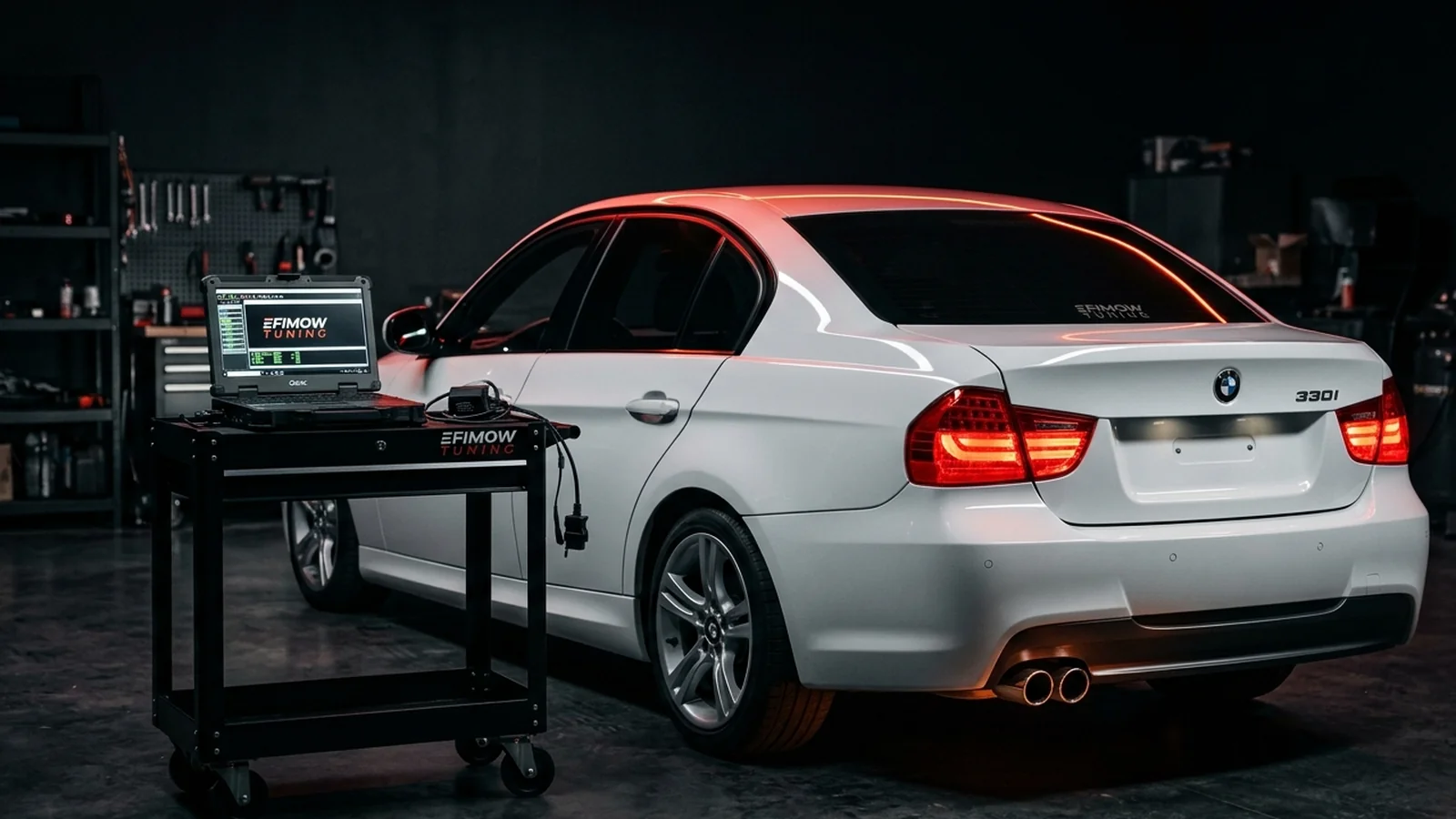
The N52 is the last big BMW inline-six without turbo and without direct injection to be built in large numbers. It arrived around 2004 and replaced the M54, with a lightweight magnesium-aluminium crankcase, double VANOS and Valvetronic, which BMW had previously used on four-cylinders and the large V engines. It is controlled by the Siemens MSV70 and, in the revised version (N52N), by the MSV80. Many drivers love exactly this engine: linear, eager to rev, beautiful sound. When asked whether software does anything there, our answer in the workshop is always the same: yes, but differently than many expect.
Where the N52 is fitted
The N52 comes with 2.5 and 3.0 litres. Typical cars with the MSV70 are:
| Car | Engine | Stock | Stage 1 (reference) |
|---|---|---|---|
| 325i (E9x) | N52B25 | 218 hp / 250 Nm | approx. 233 hp / 275 Nm |
| 330i (E9x), 530i (E6x) | N52B30 | 258 hp / 310 Nm | approx. 276 hp / 341 Nm |
| 130i (E8x), Z4 3.0si (E85/E86) | N52B30 | 265 hp / 315 Nm | approx. 284 hp / 347 Nm |
The values come from the product pages and are calculated reference values. The N52 also powers the 523i and 525i (E6x), the X3 and X5 of that generation and the 630i, among others. In Europe, it was replaced in some series from around 2007 by the N53 with direct injection, which runs on the Siemens MSD81, so the E90 330i exists with two very different engines under the same badge. The engine code settles it.
What MSV70 and MSV80 control
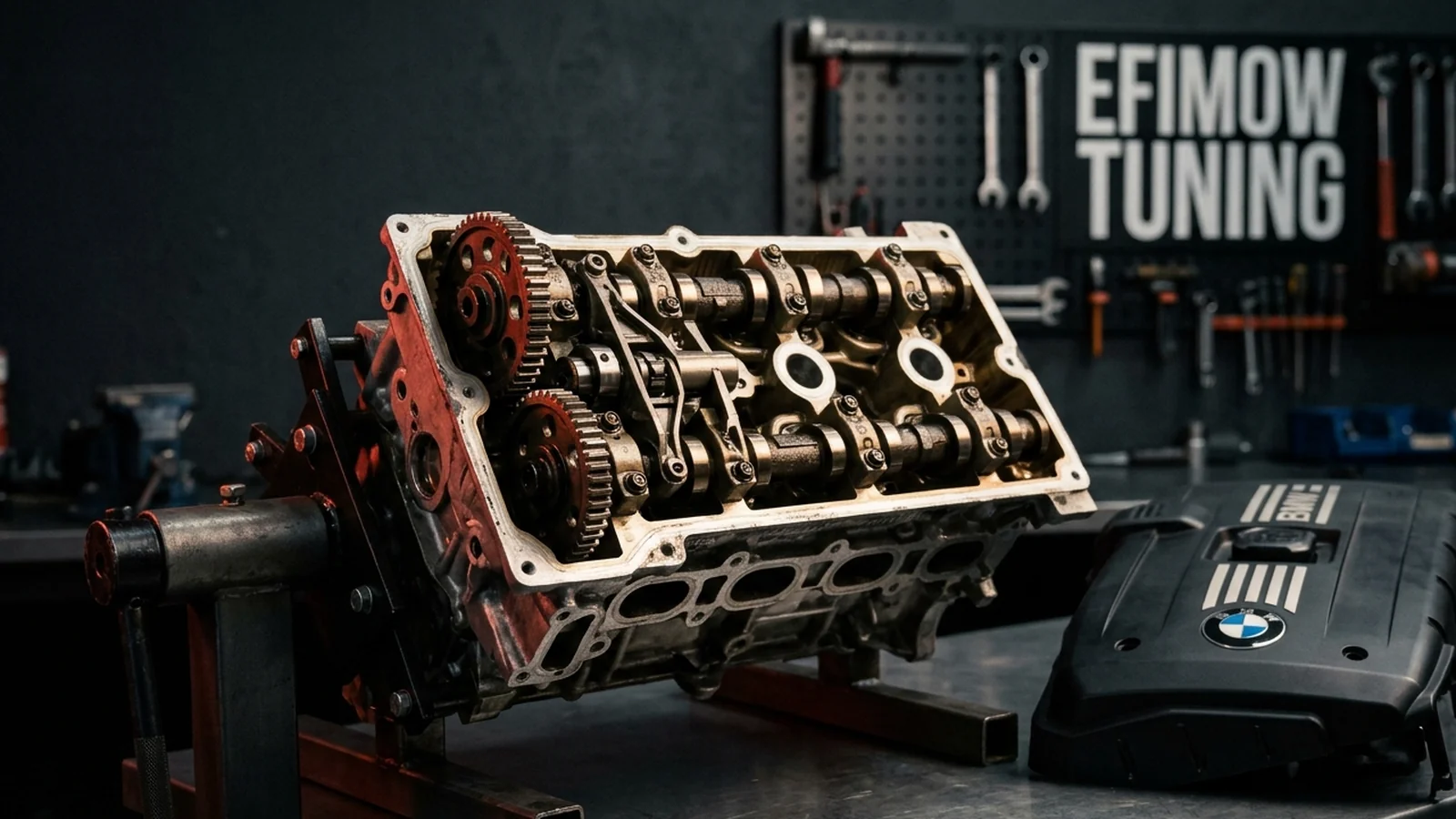
The "V" in the name stands for Valvetronic. On the N52, load in normal operation is controlled not via the throttle valve but via the variable valve lift of the intake valves. An actuator motor rotates an eccentric shaft that sets the lift continuously between very small values and full lift. The throttle stays largely open and is mainly needed for special cases and the limp-home strategy.
The DME coordinates:
- Valvetronic lift and double VANOS for the intake and exhaust camshafts,
- port injection and lambda control,
- ignition angle with cylinder-selective knock control,
- the torque structure, which combines driver demand, transmission and protection functions,
- and on the N52 also the electric water pump and the map-controlled thermostat.
Because charge comes from valve lift and camshaft timing, there are more control variables than on a classic throttle engine. That makes calibration more demanding, but it does not change the basic fact: without a turbo, the mechanics determine how much air gets into the cylinder.
What software realistically delivers on the N52
On the N52, the power gain of a Stage 1 calibration is around 7 percent, with torque rising by about 10 percent. On the 330i, that means from 258 to approx. 276 hp. That is measurable, but it is not the reason most customers with an N52 come to us. Three other effects are more noticeable:
- Throttle response. The pedal map is designed for comfort and economy from the factory. A more direct curve makes the engine respond more eagerly to small pedal movements. How this works is described in Sharp Throttle: a more direct accelerator.
- Torque curve. In the mid-range, timing and ignition can be tuned so that the engine pulls more evenly.
- Upper rev range. The N52 loves to rev. A calibration can hold power more cleanly up to the limiter; with the rev limiter itself, judgement is needed, because the valvetrain and crank drive have their limits.
On the N52, Stage 2 means exhaust-side hardware: headers and/or a 200-cell sports catalytic converter. According to the product page, the reference value for the 330i is then approx. 289 hp. The parts need approval or an expert report, and catalytic converter changes are not a way to bypass emissions control.
Before tuning: typical N52 points
The N52 is a robust engine, but even the youngest examples are now well over ten years old. We see these points frequently in practice:
- Valve cover and oil filter housing gasket: Oil leaks in this area are common and should be fixed before the engine works harder.
- Electric water pump and thermostat: If they fail, overheating looms. Cooling-related fault entries should be resolved before flashing.
- Hydraulic lifters: Ticking lifters after a cold start point to oil and maintenance issues.
- VANOS solenoids and Valvetronic: Dirty solenoids or a fault in the Valvetronic system lead to rough running and limp mode.
- Ignition coils and plugs: Misfires should be fixed beforehand.
A clean fault memory and a test drive with an eye on the live data are the best preparation.
Typical questions from the workshop
Is an N52 with Stage 1 faster than an N53? On paper, both are close after tuning. In everyday driving, what counts on the N52 is above all the more direct response; the N53 adds direct injection with its own character.
Do I need premium fuel? The calibration is designed for high-octane fuel. With a lower octane rating, knock control pulls ignition. The engine stays protected, but loses part of the gain.
Does tuning change the Valvetronic? The function remains. What is adjusted are the targets with which the DME combines valve lift, timing and ignition at full load; economical part-load operation remains the goal of Valvetronic.
Is it worth it on the 325i? The 2.5-litre benefits by a similar percentage to the 3.0-litre. In absolute terms the gain is smaller, but the throttle response changes just as clearly.
Can I go back to stock? Yes, at any time, with the backed-up original file.
Process and price
For the E-series, you read out the original file with a K-DCAN cable and upload it in the customer portal. Today you pay only for hardware and a €5 deposit; we do the calibration by hand, usually within 48 hours. You pay for the software only once it is finished, and then flash it yourself via OBD.
According to the product pages, software for the MSV70 costs from €170 for Stage 1 and €220 for Stage 2, for example on the BMW 330i (E9x) or the BMW 130i (E8x). The price for your configuration is shown in the configurator.
Legally: the software change voids your vehicle's type approval; the software is intended exclusively for motorsport (motorsport notice).
Conclusion
The N52 with MSV70 or MSV80 is an engine where software mainly improves the driving feel: more direct response, a rounder torque curve and a few extra horsepower. If you are after big power jumps, the turbo successor is the better choice. If you want to keep your naturally aspirated six and enjoy it a bit more, a clean calibration delivers exactly that. How the MSV units fit into the line of BMW control units is shown in the overview of DME generations.