
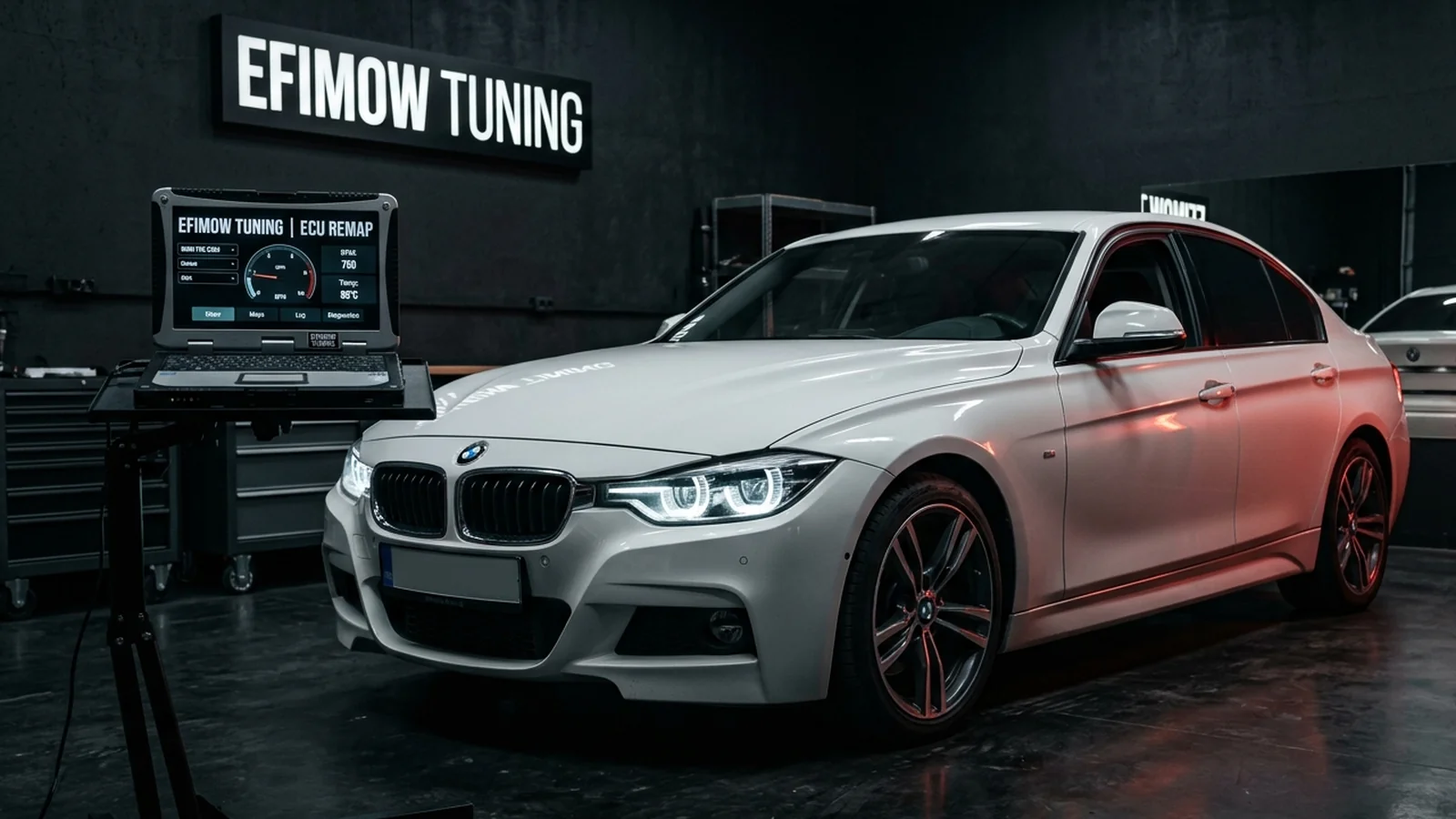
EDC17 in the F Series: Tuning the N47 and N57
N47 and N57 with Bosch EDC17 in the F10, F20, F30 and X5: which engines belong here, what tuning does and why the 8HP gearbox matters too.
October 26, 2026 by Leo Efimow
For many BMW drivers the F series is the epitome of the modern diesel: F30 320d, F10 530d, F20 118d, X3 F25 20d. Under the bonnet, in most cases, sits the N47 four-cylinder or the N57 six-cylinder, controlled by the Bosch EDC17, which BMW calls DDE7 and DDE8. This combination is probably the most common basis for diesel tuning on a BMW today. It is well understood, can be handled over OBD and has decent reserves. What makes it special lies less in the engine than in its interaction with the gearbox. In this article we classify the engines, explain what the EDC17 controls here and show what matters for a clean calibration.
N47 and N57: the engines at a glance
The N47 is a 2.0-litre four-cylinder and arrived in 2007 as the successor to the M47. It was built in numerous power levels, from around 116 hp in the 116d to 184 hp in the 320d and 520d. In twin-turbo form with 204 to 218 hp it powers, among others, the 123d, the F30 325d and the F10 525d.
The N57 is the 3.0-litre inline six and followed the M57 from 2008. With one turbo it was used in the 525d, 530d and 330d, with two turbos in the 535d, 335d, 640d and X5 40d. At the top stood the version with three turbochargers and 381 hp in the M550d and the X5 M50d.
Both engines share the basic design with an aluminium crankcase, common-rail injection and a timing chain on the gearbox side. On the N47 the timing chain is a well-known topic, which we put into perspective in a separate article: N47 timing chain and tuning. From around 2014 the N47, and gradually the N57 too, were replaced by the modular B47 and B57; the first B47s in the F series also still run on EDC17 variants.
What the EDC17 controls in the N47 and N57
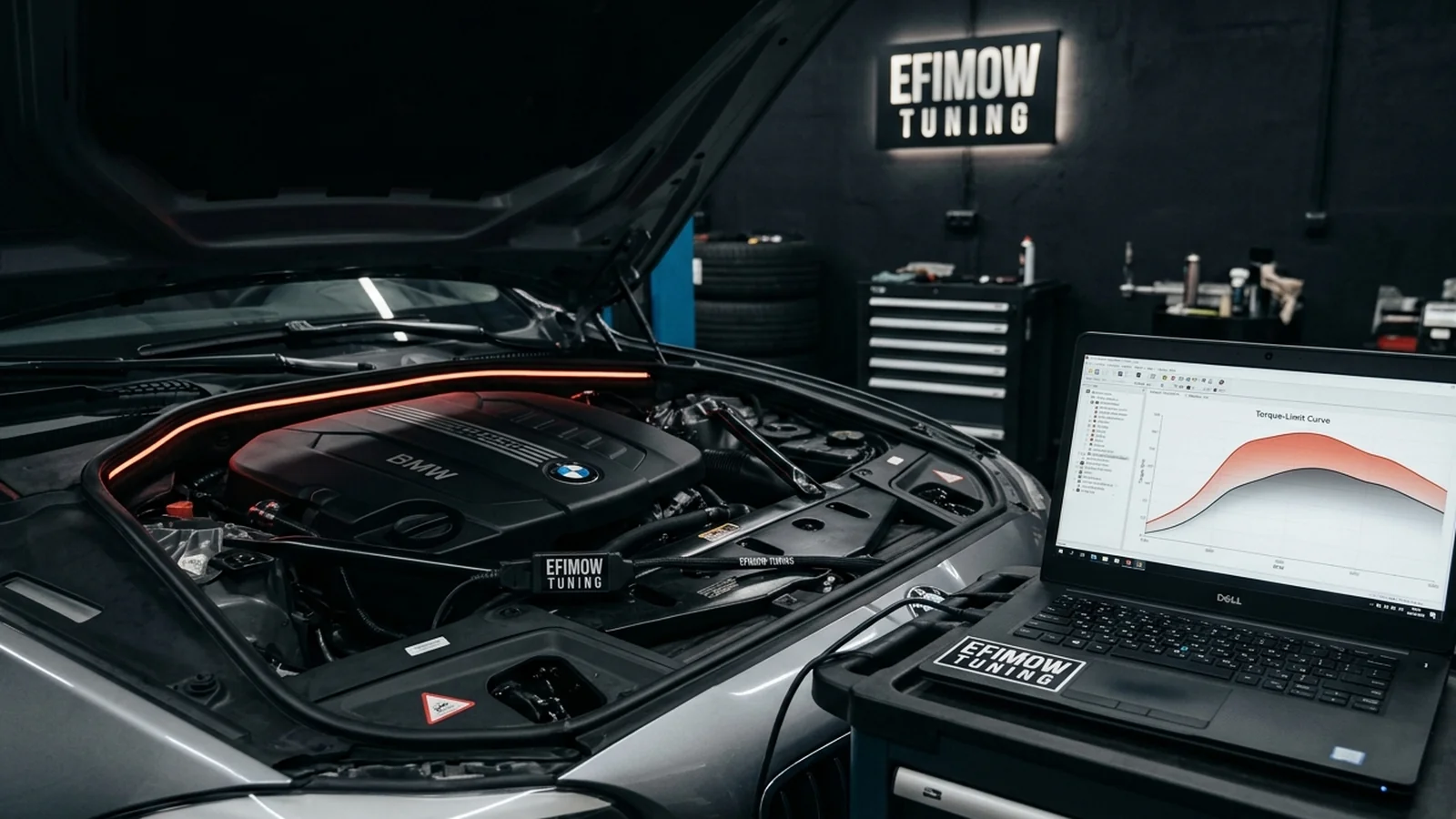
The EDC17 is the direct successor to the EDC16 and, like it, is torque-based. A target torque is formed from the driver request, limits and requests from other control units, and injection quantities, injection timing, rail pressure and boost are derived from it. Compared with the EDC16 it has much more processing power and memory, several injections per combustion cycle and finer control of particulate filter regeneration and exhaust gas recirculation. On the Euro 6 variants SCR dosing with AdBlue is added.
For calibration this means: the structure is known, but extensive. A clean Stage 1 does not raise individual values; it adjusts the limiter chain consistently, i.e. torque limits, smoke limitation, rail pressure and boost, and adapts the engine model to match. Protective functions such as exhaust temperature and component protection remain active. Particulate filter, EGR and SCR also remain active; disabling them by software is emissions tampering and prohibited on public roads.
Realistic figures
The N engines have noticeable reserves because the same engine was offered in many power levels. Some calculated guide values from the product pages:
| Vehicle | Stock | Stage 1 (guide value) |
|---|---|---|
| F30 320d (N47) | 184 hp / 380 Nm | approx. 230 hp / 505 Nm |
| F30 330d (N57) | 258 hp / 560 Nm | approx. 323 hp / 745 Nm |
| F10 535d (N57, two turbos) | 313 hp / 630 Nm | approx. 391 hp / 838 Nm |
You can find the figures for the F30 330d and the other models directly on the respective product page, along with the Stage 2 figures with modified hardware. As with every car: these are guide values, not a guarantee. The condition of engine, turbo and fuel affects the result.
The gearbox has to be part of the plan
On the F series the decisive point is often not the engine but ZF's eight-speed automatic. The 8HP is an excellent gearbox with large reserves, but its control unit knows the torque the engine delivers from the factory. When an N57 reports well over 700 Nm after tuning, the gearbox control reacts: it may limit the torque, shift earlier, or, with unchanged clutch pressures, slip slightly at full load.
Two things are therefore important. First, the engine software must report the torque to the gearbox in such a way that the engine model and the actual torque match; a calibration that deceives the gearbox about the real torque is the wrong approach. Second, with significantly higher torque the gearbox software should also suit the new engine output. Why that is and what is adapted is explained in the article on TCU adaptation on BMWs. On manual cars, clutch and dual-mass flywheel take on this role; their condition should be checked first.
Check before tuning
Many N47 and N57 cars now have between 150,000 and 300,000 kilometres on them. In practice we look at these points first:
- Fault memory: clarify entries relating to boost, rail pressure or air mass first.
- Particulate filter: a heavily loaded filter increases back pressure and exhaust temperature.
- Turbocharger: play, oil loss or fluctuating boost are a reason to repair first.
- Timing chain on the N47: take noises from the gearbox end seriously and have them checked beforehand.
- Oil changes: a properly kept interval with approved oil is the basis for every diesel engine, with or without tuning.
Process and price
We handle the N47 and N57 with EDC17 through the OBD port; the ECU stays in the car. You order online, read out the original software yourself and upload it in the customer portal. You usually receive the finished file within 48 hours, and the software is only paid for once it is finished; today you only pay for hardware and a €5 deposit. According to the product pages, Stage 1 for the EDC17 cars starts at €300 and Stage 2 at €375.
The software change voids your vehicle's type approval; the software is intended for motorsport use only (see the motorsport notice).
Conclusion
The N47 and N57 with Bosch EDC17 are the classic basis for BMW diesel tuning in the F series: well understood, accessible over OBD and with genuine factory reserves. The real skill lies in a calibration that adjusts the torque structure consistently and informs the gearbox honestly. With the six-cylinder and automatic, the gearbox side always belongs in the plan; with the N47, a critical look at the timing chain. Choose your model in the configurator and you will see engine, ECU and guide values for your car.