
No-Lift Shift: Changing Gear Without Lifting Off
How no-lift shift works on a manual gearbox, why it only works on petrol engines, what it demands from clutch and gearbox and why each case is checked.
October 25, 2026 by Leo Efimow
On a classic upshift with a manual gearbox you lift off, press the clutch, change gear and get back on the throttle. In that half second the revs drop, boost collapses on a turbo engine, and after the clutch engages the turbo has to spool up again. No-lift shift, NLS for short, shortens exactly this gap: you stay flat on the throttle, only press the clutch, and the ECU makes sure the engine does not over-rev in that moment. Sounds simple, but it is one of the functions where ECU, vehicle and software have to match precisely.
How no-lift shift works
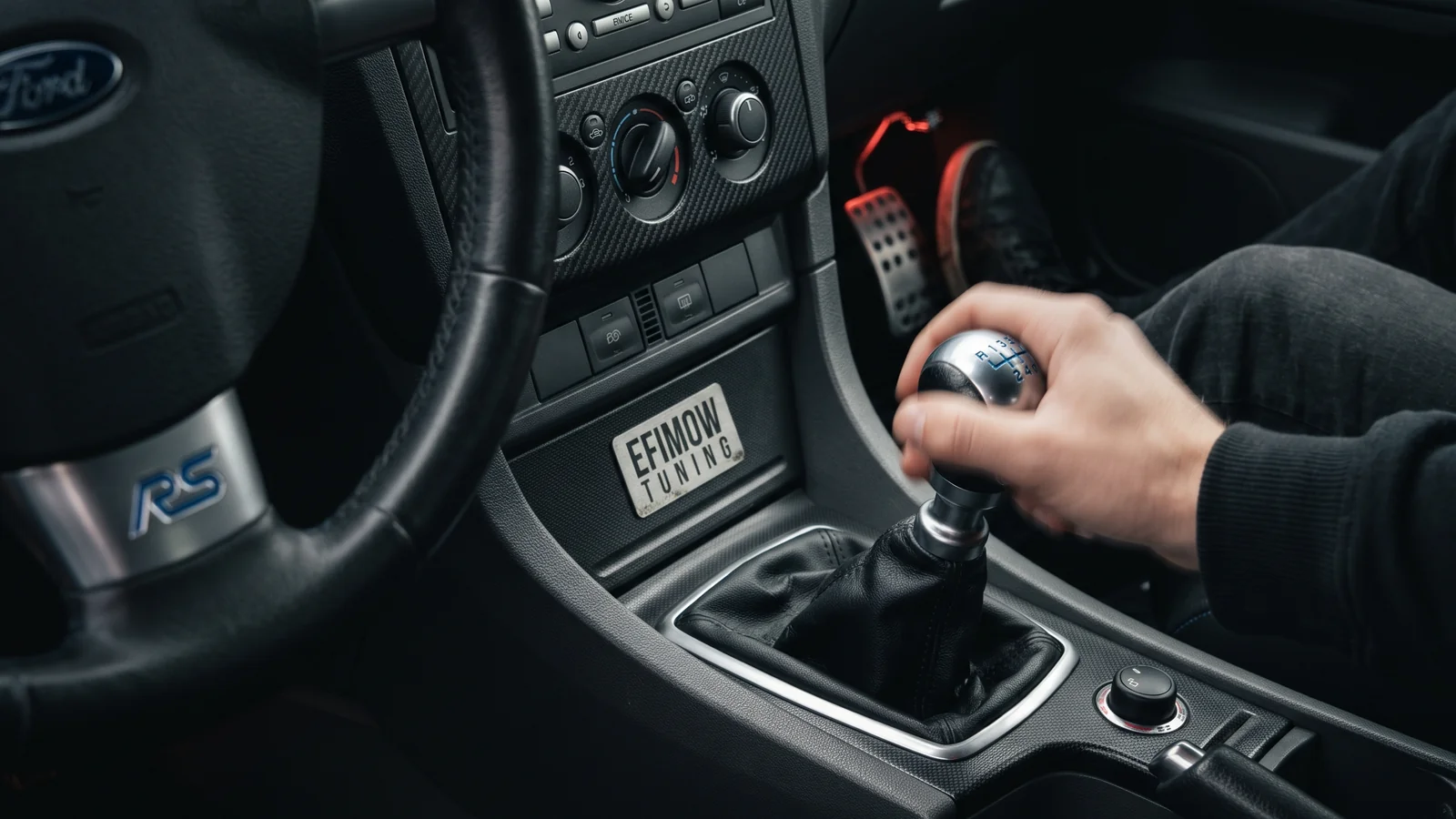
The core is the clutch switch on the pedal. It tells the engine ECU that the clutch is pressed. NLS combines this signal with further conditions:
- Vehicle moving, so NLS is clearly separated from launch control at standstill.
- Throttle pedal above a threshold, typically wide open.
- Engine speed above a minimum, so the function does not kick in during relaxed shifting.
When the conditions are met and the clutch is pressed, the ECU limits engine speed for that moment, on a petrol engine via an ignition cut: ignition is suppressed in individual cylinders or cycles, so the engine holds a set rpm despite the open throttle. As soon as the clutch comes back up, the cut ends and the engine immediately works under load again.
Because the throttle stays open, air keeps flowing through a turbo petrol engine. Boost drops far less than in a normal shift with the throttle closed. That is the real benefit: less boost loss between gears, not a faster hand on the gear lever.
Why NLS only works on petrol engines
A diesel has no spark ignition that could briefly be suppressed. A fuel-quantity cut during the shift would be conceivable in theory, but in practice it is hardly ever implemented and brings little on a diesel. In our classification of ECU families NLS is therefore listed as not feasible for all diesel families.
There are limits on petrol engines too. NLS requires a manual gearbox with a readable clutch switch. Automatic and dual-clutch gearboxes shift under load anyway and handle torque intervention via the transmission control unit. NLS is not relevant for them. And even on manual petrol cars it depends on the software: in many families the function can only be implemented on certain software versions.
NLS, launch control and hardcut compared
The three functions are often lumped together because they all work with rev limiting. The difference is when they act:
| Function | When active | What happens |
|---|---|---|
| Launch control | at standstill, clutch pressed, full throttle | launch rpm is held, on turbo petrol engines with ignition retard |
| No-lift shift | while driving, clutch pressed, full throttle | short ignition cut during the gear change |
| Hardcut limiter | at maximum rpm | hard ignition or injection cut instead of soft limiting |
More on the neighbouring functions in the glossary under launch control and hardcut limiter.
What NLS demands from clutch and gearbox
NLS does not make gear changes gentler; it makes them harder. If you use it, you should know the consequences:
- Synchro rings and sleeves: the shift happens at high rpm with force on the lever. The synchronisers work under greater load.
- Clutch: engagement happens at high rpm with boost present. The sudden torque goes straight into clutch, flywheel and driveshafts.
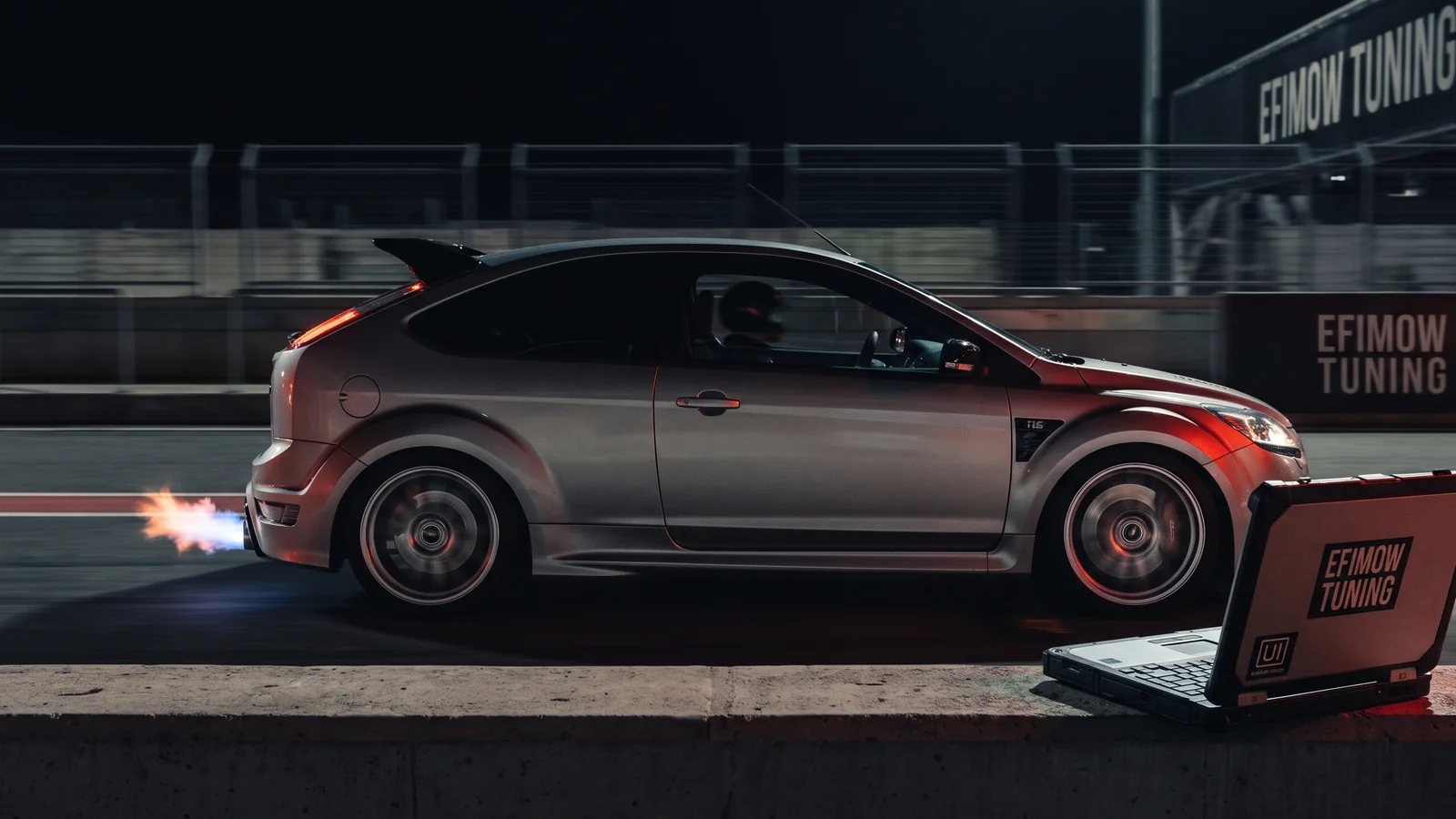
- Exhaust system: during the ignition cut unburnt mixture can reach the exhaust. That produces the typical bang on upshifts and thermally stresses catalytic converter and manifold.
An NLS calibration should therefore choose a cut rpm that suits the gearbox and not be set up as aggressively as possible. For a car with a worn stock clutch, NLS is the wrong project.
What has to be right before an NLS calibration
Before NLS makes sense at all, the vehicle should meet a few requirements:
- The clutch switch works cleanly: the signal must be clear and reliable. A switch that triggers late or irregularly leads to cuts at the wrong moment.
- Clutch and gearbox are in good condition: judder, slip or notchy synchros do not get better with NLS. They get worse faster.
- The engine calibration fits: NLS is usually combined with a power calibration. The cut rpm has to match the rev limit and the torque curve.
- The purpose is clear: on the race track or at a slalom NLS brings measurably less boost loss. In daily driving it brings nothing but wear.
Driving technique changes too. With NLS you clutch quickly and decisively without your right foot moving. If you are used to lifting off when shifting, you need a few runs on a closed course until the sequence sits. Half-hearted clutch work at full throttle is what destroys clutches fastest.
Which vehicles it suits
Typical candidates are manual turbo petrol cars as used in motorsport, for example the Ford Focus RS Mk2 with Bosch ME9. In our classification NLS is listed as partly feasible on most petrol families (Bosch MED17, MED9, ME7, MG1, Continental Simos and others): via clutch switch and ignition cut, but not on every software version. In no family is the function approved across the board.
That is why NLS is never bookable directly online with us, but always on request. You select your vehicle in the configurator, request the option, and we check against your read file whether your software version supports the function cleanly. Only then do we quote the price. We tune vehicles of other brands on site in Stödtlen or via a shipped-in ECU, at the same price.
Legal framework
No-lift shift is a pure motorsport function for the closed track. For any change to the engine software: the type approval (Betriebserlaubnis) lapses, and our software is intended exclusively for motorsport. What that means for liability and insurance is explained in the motorsport notice.
Conclusion
On a manual turbo petrol car, no-lift shift keeps boost up across the gear change by briefly suppressing ignition while the clutch is pressed. On diesels and automatic gearboxes the function is not relevant, and even on petrol engines the software version decides. The price for less boost loss is more load on clutch, synchronisers and exhaust. If you want to know whether NLS works on your car, send a request via the configurator. We check your file before anything is settled.