
Van Tuning for Business: Fuel Use, Pulling Power, Durability
Sprinter, T6, Ducato & co. in commercial use: what software tuning does for a van's pulling power and fuel use, and what matters for durability.
October 25, 2026 by Leo Efimow
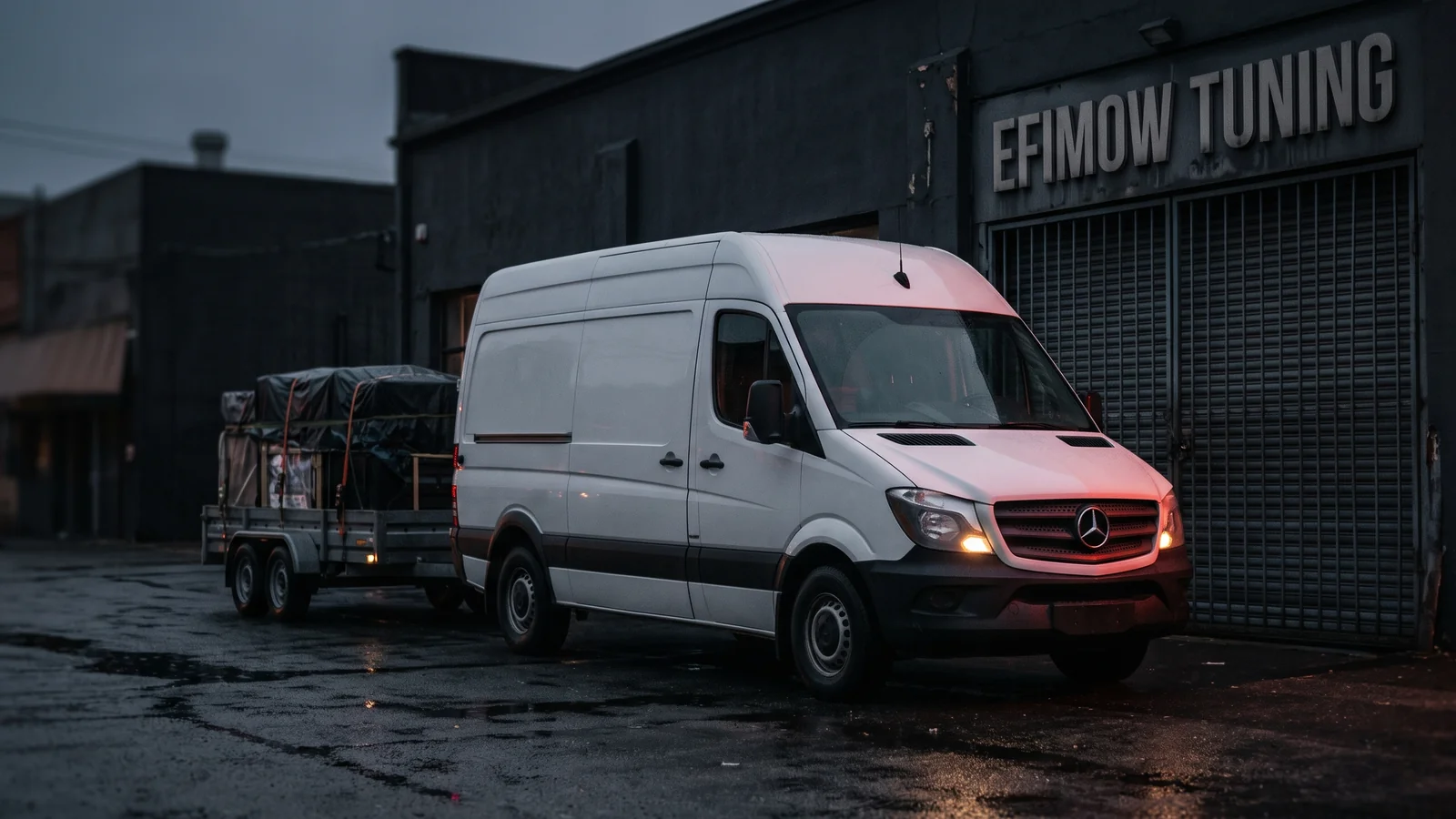
A van in commercial use is not a toy but a tool. It runs every day, often fully loaded, often with a trailer, and every hour in the workshop costs money. When tradespeople, couriers or dealers ask about tuning, it is rarely about top speed. It is about pulling power on hills, more relaxed driving under load, and whether fuel consumption drops. Here you learn what is realistic and what matters for durability.
Why vans are calibrated conservatively from the factory
Manufacturers often sell the same engine in several power levels. A Sprinter W906 with the OM651, for example, was available as 210, 213, 216 and 316 CDI with 95 to 163 hp. The hardware is largely the same; the power levels are set to a large extent by software. On top come reserves for full load in summer, poor fuel quality and continuous operation with high payload.
This range is exactly what makes vans interesting for software tuning. The goal is not to push the engine to its limit, but to raise torque where you need it every day: between roughly 1,500 and 3,000 rpm, when pulling away under load and on hills.
What is realistic
Typical Stage 1 guide values from our data for common van engines:
| Vehicle | ECU | Typical Stage 1 guide value | Price from |
|---|---|---|---|
| Mercedes Sprinter W906 316 CDI (OM651, 163 hp) | Delphi DCM3.5 | approx. 20–30 % | €200 |
| VW Transporter T6 2.0 TDI (EA288) | Bosch EDC17C74 | approx. 20–30 % | €450 |
| Fiat Ducato V 2.3 Multijet (150 hp) | Magneti Marelli MJ8F3 | approx. 20–30 % | €200 |
The prices follow the ECU generation: the T6 with EDC17C74 falls into the newest tier (€400) plus a €50 surcharge from model year 2015. The guide values are orientation, not a promise.
Fuel consumption: what really happens
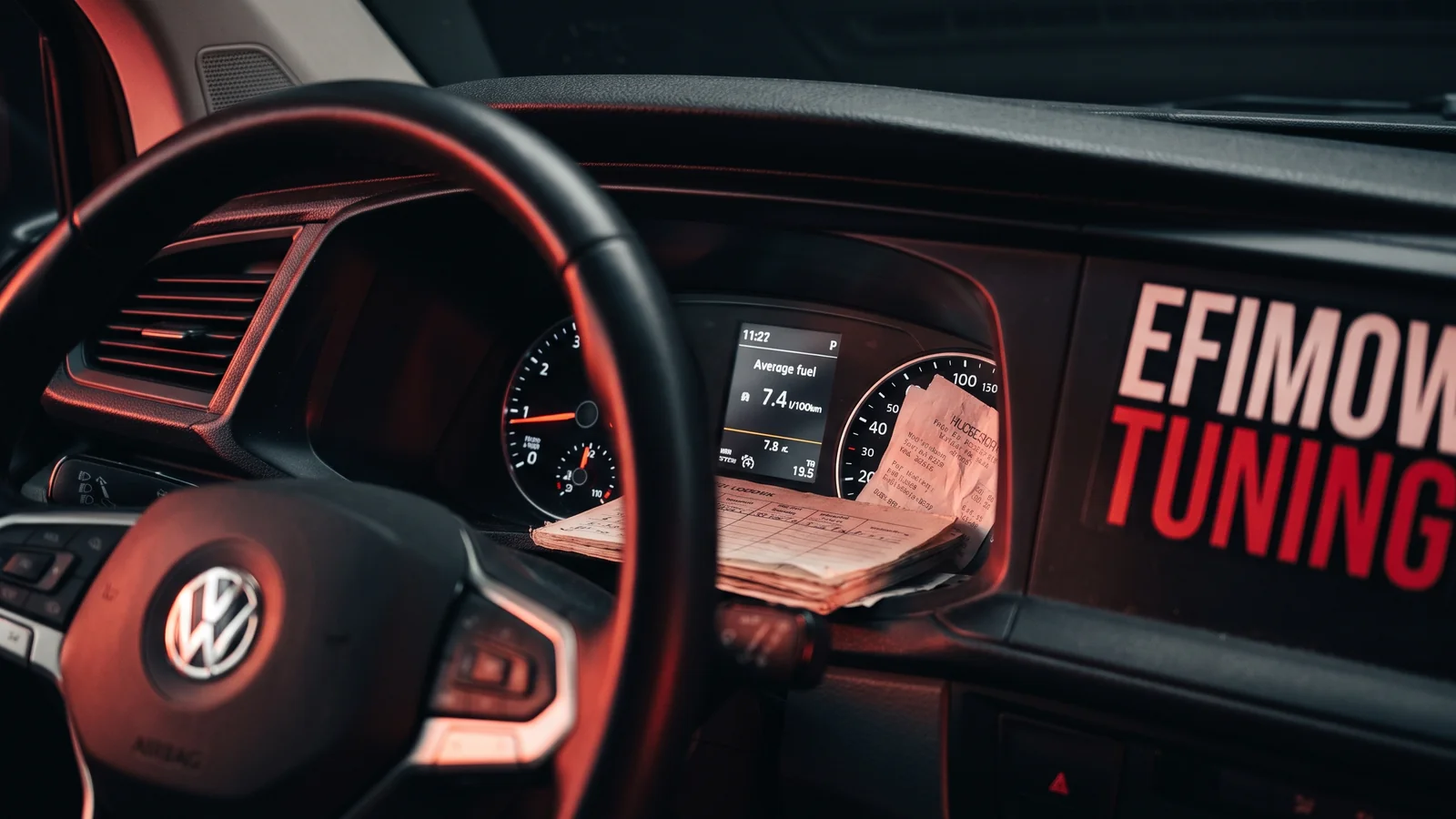
Fuel consumption is the most important question in business, and honesty helps here. Software tuning does not automatically lower consumption. What can happen: with more torque at the bottom end you drive with less throttle and in higher gears. If you use that, you can avoid part of the extra consumption an underpowered, fully loaded van otherwise has. If you use the extra power instead, you consume more.
For anyone explicitly after lower consumption there is ECO tuning. It optimises torque in the low and mid rev range while peak power stays unchanged. For the ECU families mentioned it is listed as feasible in our data. How much it saves in each case depends heavily on the operating profile: city traffic, motorway, load, driver.
Pulling power with trailer and load
For pulling power, torque counts, not peak power. A van that has to downshift on hills with a trailer in stock form can often hold a gear longer with raised torque. That is more pleasant and spares the clutch because you shift less.
Important: permitted towing capacity and gross vehicle weight do not change with tuning. They depend on frame, brakes, coupling and axles, not on the engine.
Durability: what matters
A commercially used van often runs 300,000 kilometres and more. A calibration has to cope with that. These points decide:
- Clutch and dual-mass flywheel: on manual gearboxes they are the weakest link. An already worn part shows its wear faster after tuning. Limiting torque in the lower gears spares the drivetrain.
- Automatic gearbox: torque converter automatics have a maximum input torque. The calibration has to stay below it or take the gearbox software into account.
- Exhaust temperature: continuous full load with a trailer means high temperatures. The calibration limits them as from the factory.
- Emission control: EGR, DPF and, on Euro 6, usually SCR with AdBlue remain active. Switching them off would be emissions tampering and is prohibited on public roads.
- Maintenance: oil changes, air filter and fuel filter according to schedule. Vans used for short trips otherwise strain the particulate filter.
Fleet, drivers, liability
In business a few points come into play that affect private owners less. Several drivers use the same vehicle, often without knowing what has been changed. Leased and rented vehicles belong to their owner, not to you. And changing the engine software voids the type approval unless it is inspected and registered, with consequences for insurance and liability. Our software functions are intended exclusively for motorsport; details are in the motorsport notice. Clarify within the company who decides what before a company vehicle is modified.
Process: short downtime
For a working van, downtime is what counts. For all brands except BMW you come to us in Stödtlen on a date you choose or send in the removed ECU, at the same price. Booking is online in the configurator. If an ECU has to be opened for access, a €50 surcharge applies, which the configurator shows.
Conclusion
Van tuning for business makes sense when it is about everyday torque: more pull under load, less shifting on hills, more relaxed driving. Consumption only drops if your driving style plays along; if saving fuel is the goal, look at ECO tuning. For durability, what counts is the condition of clutch and gearbox, clean temperature limits and active emission control. More on the clutch in the glossary under clutch.