
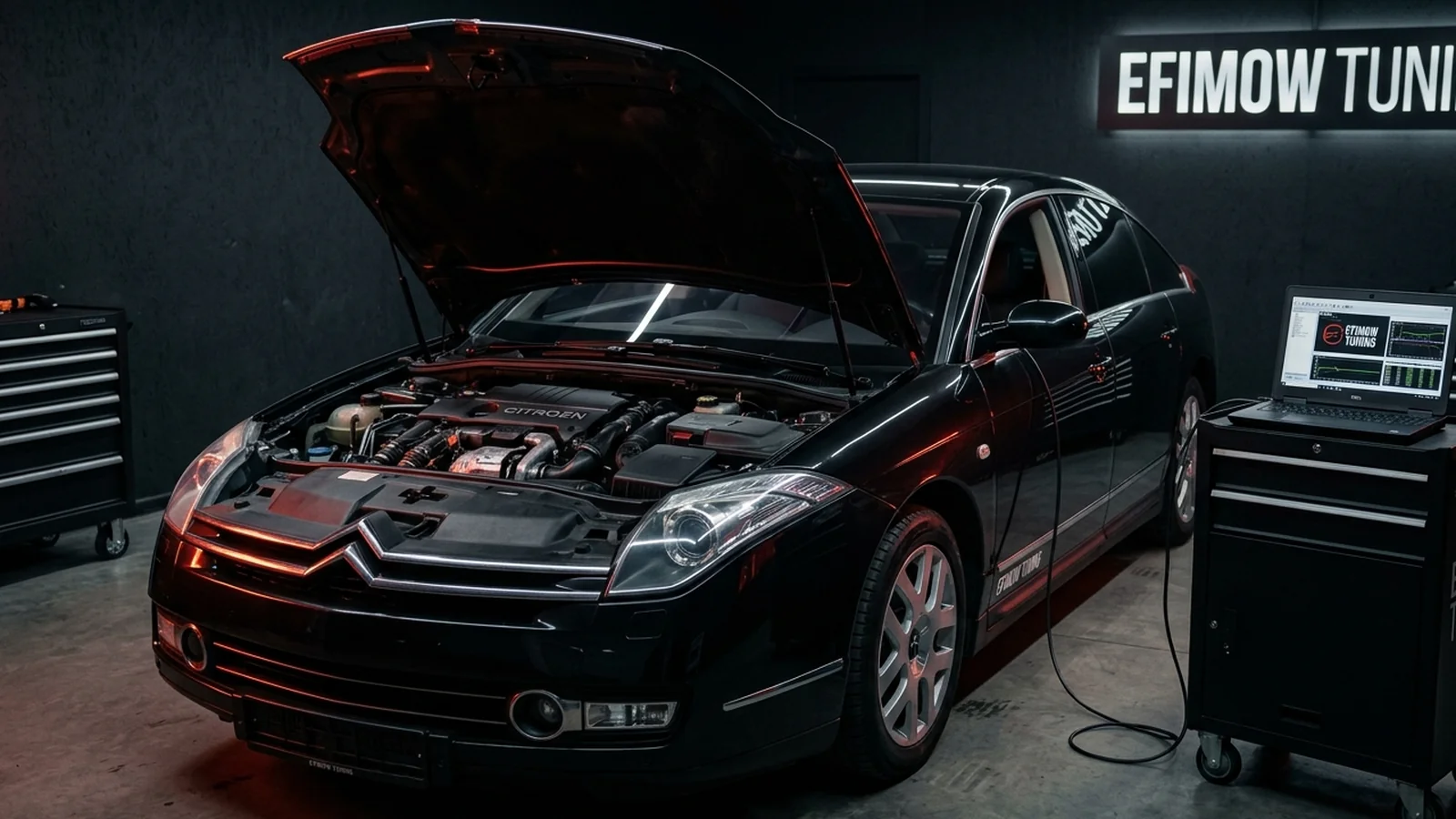
Citroën/Peugeot 2.2 HDi: The Big PSA Diesel Under the Microscope
From the 133 hp single turbo to the 170 hp biturbo: which 2.2 HDi engines exist, which ECUs they use and why the Boxer's 2.2 is a different engine.
October 25, 2026 by Leo Efimow
For a long time, the 2.2 HDi was PSA's engine for its large models: the Citroën C5, C6 and C8 and the Peugeot 406, 407, 607 and 807. Anyone driving one of these cars today usually has a quiet, torquey long-distance diesel and often the question of whether software can add anything. The answer depends heavily on which 2.2 HDi it is, because PSA sells three engines under this name that have little in common technically.
Three engines, one name
DW12TED4 (single turbo): The first 2.2 HDi with 128 to 133 hp arrived in the early 2000s in the C5, C8, 406, 607 and 807. A first-generation common-rail four-cylinder with one turbocharger, controlled by a Bosch EDC15C2.
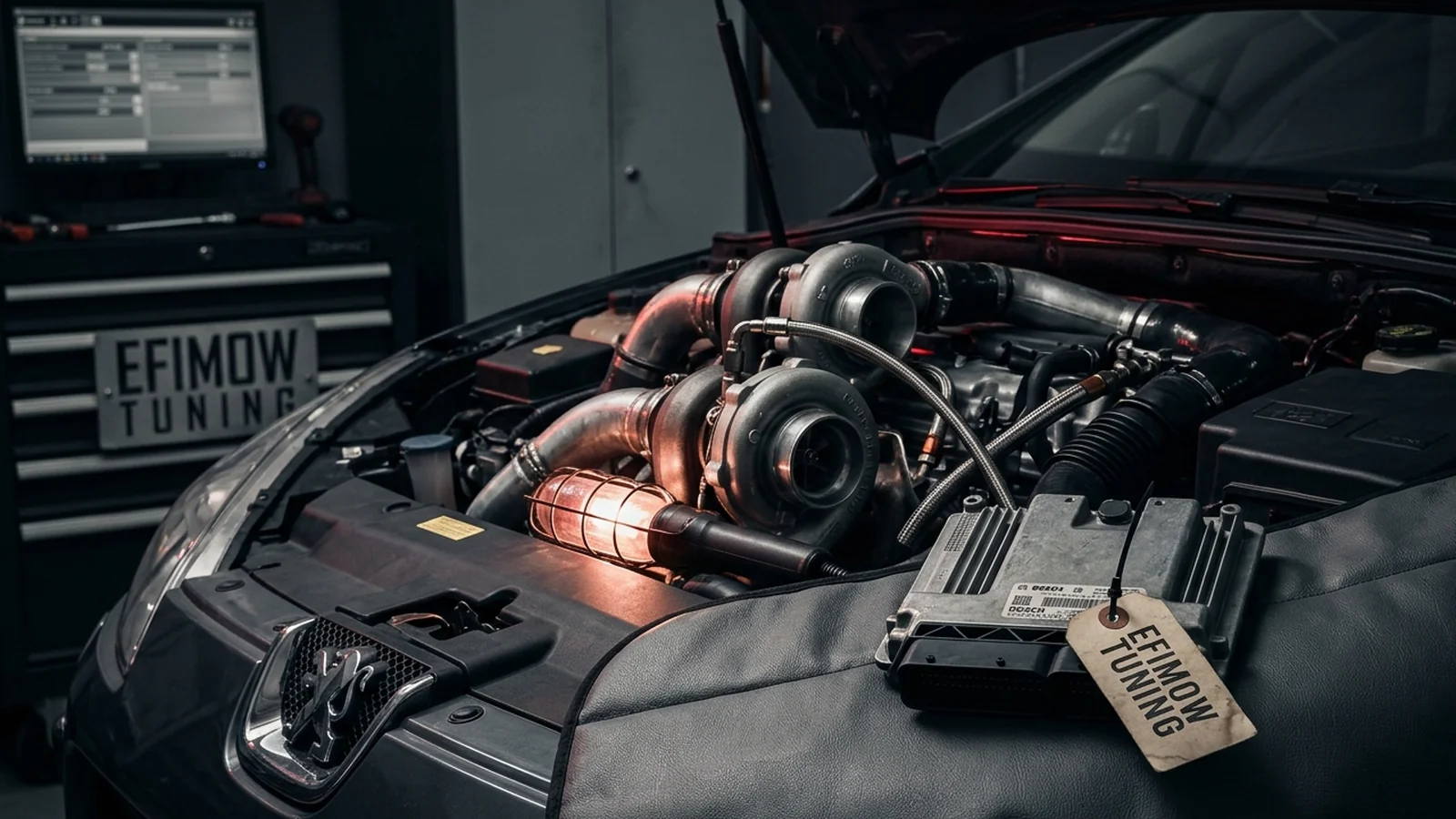
DW12BTED4 (biturbo): From the mid-2000s, the 2.2 HDi received two turbochargers working in stages: one handles the low rev range, the second joins as load increases. That took the engine to 170 hp. It is found in the Citroën C6 and C8 and the Peugeot 407, 607 and 807, controlled by a Bosch EDC16CP39.
The van 2.2 (Puma): In the third-generation Citroën Jumper and Peugeot Boxer the engine is also called 2.2 HDi, but it is a Ford Duratorq engine from the cooperation with Ford. Our catalog lists it as P22DTE with a Visteon DCU102 or a Continental SID208. Apart from the displacement, it shares nothing with the DW12 from the passenger cars.
| Engine | Output (catalog) | Models | ECU |
|---|---|---|---|
| DW12TED4 | 128–133 hp | C5, C8, 406, 607, 807 | Bosch EDC15C2 |
| DW12BTED4 | 170 hp | C6, C8, 407, 607, 807 | Bosch EDC16CP39 |
| P22DTE (Puma) | 100–120 hp | Jumper III, Boxer III | Visteon DCU102 / Continental SID208 |
What is realistic on the single-turbo DW12TED4
The early 2.2 HDi with EDC15C2 belongs to the first common-rail generation. The rail pressures and injectors of that era limit power increases more than on later engines. For this ECU family, our data gives a typical 15–25% more power and 20–30% more torque as a Stage 1 guide value. The family is only partly suited to Stage 2, because pump and injectors are the limit. A bigger turbo achieves little if the injection cannot keep up.
In practice, the DW12TED4 gains mainly in the mid-range: overtaking and climbing. If you tow a caravan with a C5 or 807, you will notice that far more than any dyno figure.
The biturbo: more headroom, more care
The DW12BTED4 with EDC16CP39 offers more reserves. The EDC16 common-rail family is very well documented; our data gives a typical 20–30% more power and torque as a Stage 1 guide value, and Stage 2 with hardware is possible in principle.
The catch lies in the biturbo system itself. The switch between the two turbos runs via flaps and vacuum actuators, with the software controlling the transition based on rpm, load and boost. A calibration that simply raises the boost target provokes overshoot or a hole in the torque curve right at this handover. Done properly, the transition point is moved along so that both turbos stay within their working range.
Before tuning, the vacuum lines, actuators and flaps should therefore work. A biturbo whose second turbo does not switch in cleanly from the factory will not get healthier with software. It just shows the problem more clearly.
Vans: Jumper and Boxer with the 2.2 HDi
With the Puma engine in the Jumper III and Boxer III, the focus is less on power than on pulling strength. For the Visteon DCU ECUs our data lists a typical 15–25% more power and 20–30% more torque, with similar values for the Continental SID20x family. On vans, ECO tuning is often the more interesting choice: more torque low down and in the mid-range, unchanged peak power. Vmax removal is also a frequent request on vans. The tyre speed rating and registration must match.
Options and limits
For all three ECU families, the following are typically documented alongside Stage 1:
- Stage 1+ as a finer calibration step
- ECO tuning for more torque with the same peak power
- Sharp Throttle for a more direct throttle pedal
- Vmax removal (mind tyre approval and registration)
- DTC Off only for non-emissions-related fault codes
What does not belong here: disabling the particulate filter, EGR or catalyst. That is emissions tampering and illegal on public roads, regardless of the car's age. On a 2.2 HDi with the FAP system in particular, it pays to have the filter condition and additive level checked before tuning rather than trying to hide problems with software.
Mechanics before software
The big PSA diesels now usually have high mileages. Three items belong on the list before any tuning: the dual-mass flywheel and clutch on manual cars, the condition of the automatic gearbox on the C6 and 407 Coupé, and leak-free charge-air piping. A leaking intercooler hose causes a slight power loss on a stock engine; on a tuned one it causes fault codes and limp mode.
Process and prices
We work on Citroën and Peugeot directly at the ECU: either on site in Stödtlen at an appointment of your choice or by sending in the ECU. The price is the same in both cases, and booking is online.
Under our pricing rules, the Citroën C5 2.2 HDi with 133 hp (EDC15C2) starts from €175 for Stage 1 and the Peugeot 407 2.2 HDi biturbo with 170 hp (EDC16CP39) from €200. The Jumper III 2.2 HDi with 120 hp with a Visteon ECU starts at €300. You will find all versions in the configurator.
On the legal side: the software change voids the type approval. The software is intended for motorsport use only; read more in the motorsport notice.
Common questions from the workshop
Is tuning worthwhile on a 2.2 HDi with over 250,000 km? That depends on condition, not mileage. A well-maintained engine with tight injectors, a clean charge-air system and a working particulate filter can handle a moderate Stage 1 even at high mileage. On an engine with oil leaking from the turbo, smoky cold starts or a slipping clutch, repair comes first. Software does not cover up wear, it makes it more visible.
Can I have the biturbo calibrated more gently? Yes. On the DW12BTED4 in particular, a calibration focused on the handover between the turbos is often more noticeable than pure peak power. ECO tuning raises torque in the low and mid range and leaves peak power unchanged: a very coherent solution for a C6 or 807 used as a touring car.
What should I watch out for when sending in the ECU? Remove the ECU with the battery disconnected, pack it antistatically and send it well padded. Include a note with the vehicle data and your contact details. On vehicles with immobiliser matching, it is important that the unit goes back unchanged into the same vehicle.
Conclusion
At PSA, "2.2 HDi" is an umbrella term. The single-turbo DW12TED4 mainly gains pulling power from software, the biturbo DW12BTED4 has more reserves but needs a clean calibration of the turbo handover. The van uses the Puma, a completely different engine where torque and fuel consumption come first. Know the right engine code and check the mechanics first, and all three can be improved sensibly. More background on the engine name is in the glossary under HDi.