
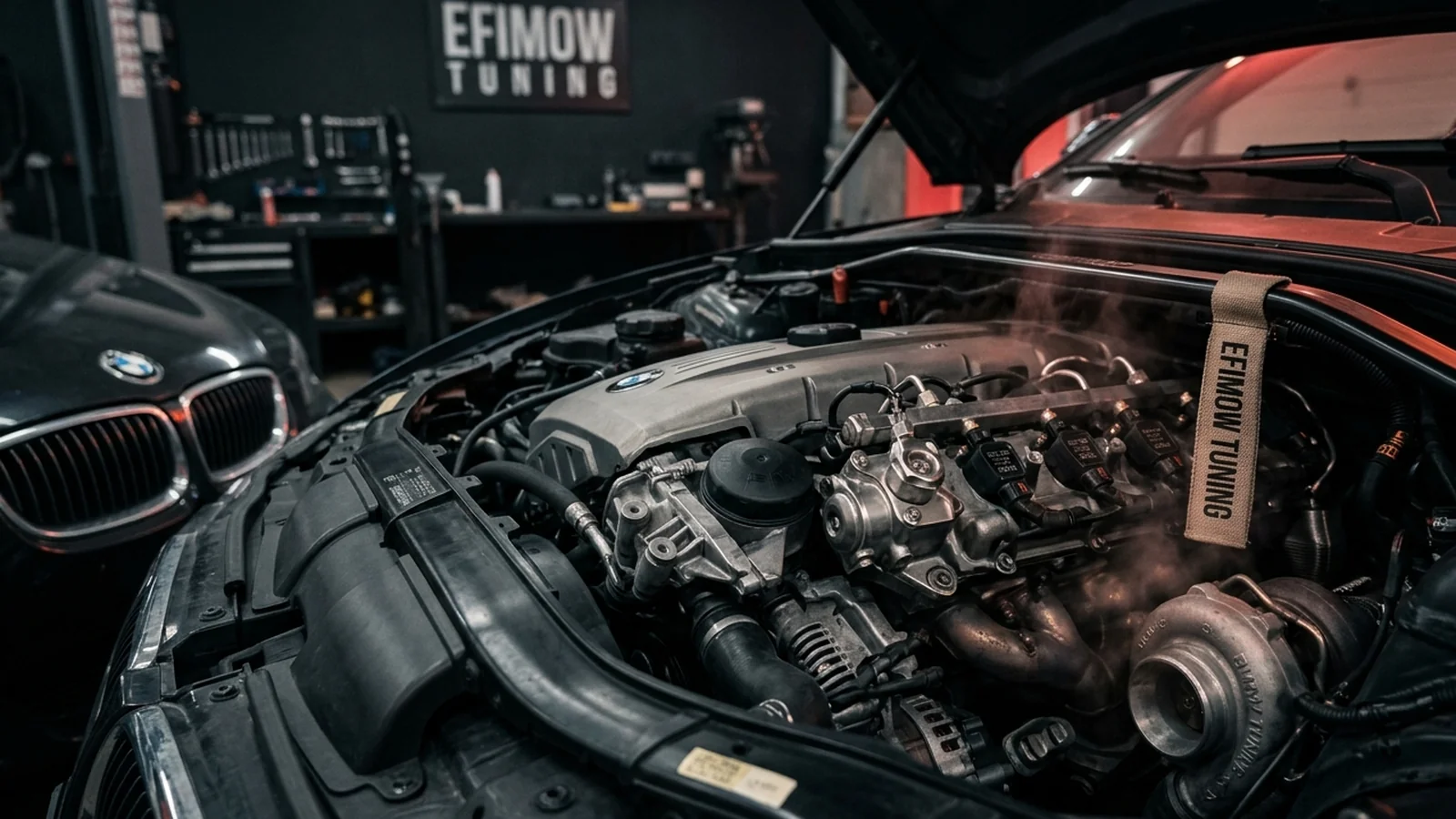
N54: High-Pressure Pump, Injectors and Tuning
The BMW N54 is a popular tuning engine with known weak spots: high-pressure pump, piezo injectors, ignition. What to check before tuning.
October 26, 2026 by Leo Efimow
The N54 holds a special place in BMW history. With it, BMW returned to the turbocharged straight-six petrol engine in the mid-2000s, with two turbochargers, direct injection and piezo injectors. To this day it is regarded as one of the brand's most rewarding tuning engines. At the same time, its reputation precedes it: high-pressure pump, injectors, ignition. This post looks soberly at which weak spots are known, what they have to do with tuning and what you should check before having an N54 calibrated.
The engine in brief
The N54B30 is a 3.0-litre straight-six with two small turbochargers, each feeding three cylinders. Fuel is injected directly into the combustion chamber via piezo injectors and a high-pressure pump that, depending on load, generates pressures up to the range of 200 bar. The engine is controlled by a Siemens ECU of the MSD8 family: MSD80, on later cars MSD81.
With us you will find the N54 in these cars, among others:
| Car | Stock output |
|---|---|
| BMW 135i (E8x) | 306 PS / 400 Nm |
| BMW 335i (E9x) | 306 PS / 400 Nm |
| BMW X6 xDrive35i (E71) | 306 PS / 400 Nm |
| BMW Z4 sDrive35is (E89) | 340 PS / 450 Nm |
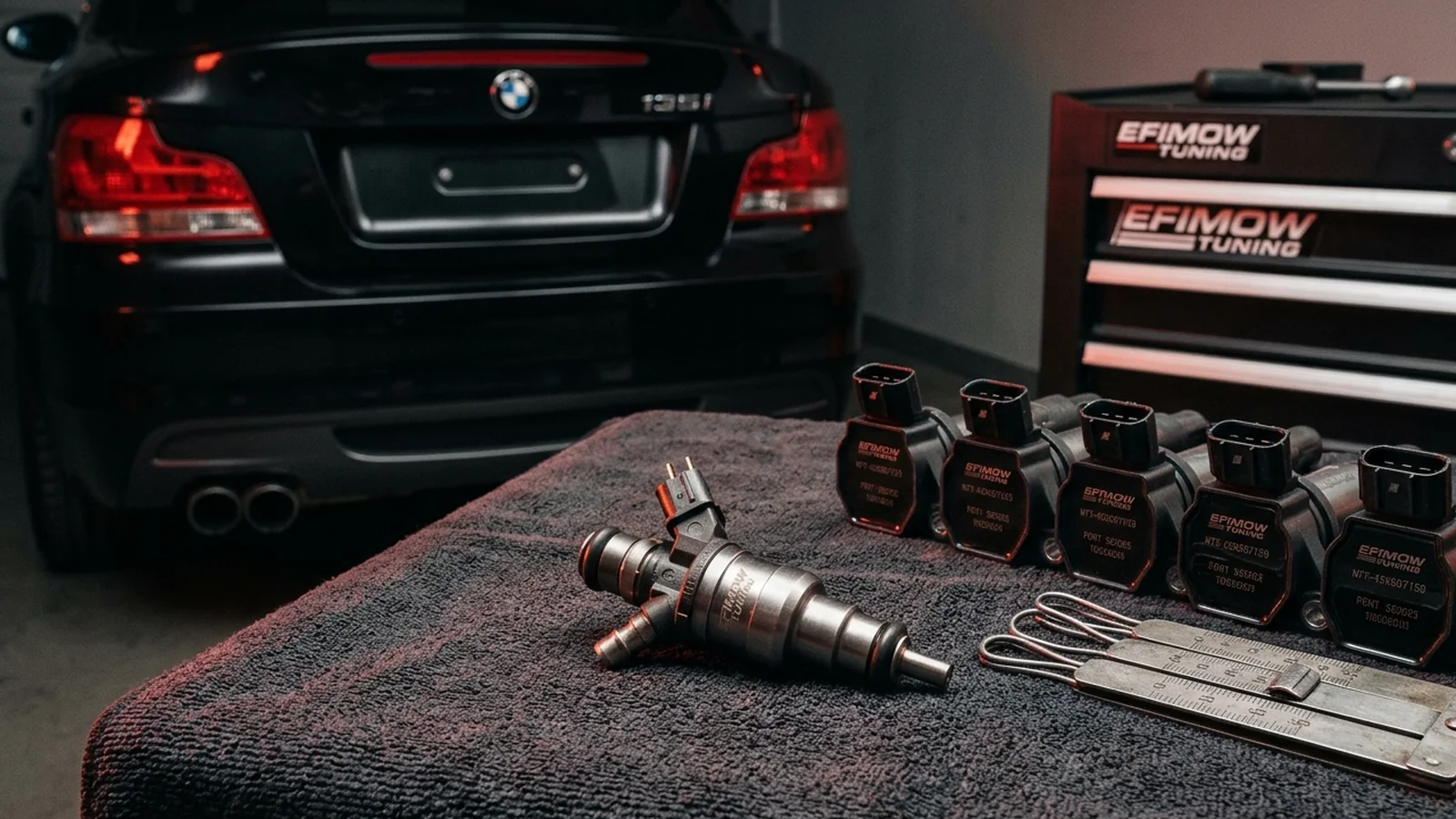
For the 135i, 335i and X6 xDrive35i, the product pages give a calculated guide value of around 373 PS and 520 Nm with Stage 1. That is a calculated figure, not a dyno measurement. Actual output depends on condition, fuel and hardware. And condition is exactly where the N54 topic begins.
Why the N54 is so popular
The N54's reputation as a tuning engine is no accident. The combination of two small turbochargers and direct injection delivers early, broad torque even in stock form. The basic design of the engine is regarded as robust, and the factory calibration leaves reserves. On top of that, the engine was available in comparatively light cars such as the 135i. That is exactly why the basis is decisive: a healthy N54 handles a calibration with ease, a neglected one shows its weaknesses all the more clearly.
The high-pressure pump
The high-pressure fuel pump (HPFP) is the N54's best-known weak spot. Especially on early cars, pumps failed noticeably often. BMW responded with revised pumps and in some markets with extended warranty coverage. Many cars have long since been fitted with a newer pump, but you can only know for sure by checking the vehicle history or the component itself.
Typical signs of a weakening pump:
- longer cranking at start-up, especially with a warm engine,
- loss of power under load up to limp mode,
- an engine power warning in the instrument cluster,
- fault entries relating to fuel pressure in the fault memory.
Why this matters for tuning: more power means more fuel. The pump has to hold the requested pressure at higher flow as well. A pump that just about keeps up in stock operation shows its weakness earlier after a tune. The most reliable check is a data log under load: does actual pressure hold the target, or does it drop? The glossary entry HPFP explains the principle.
The fuel supply also includes the low-pressure pump in the tank. It feeds the high-pressure pump. At higher power levels it can become the limiting component too.
The piezo injectors
The piezo injectors allow very precise injection, but on the N54 they were also an issue over the years. There were several revisions, and newer versions are regarded as considerably more durable than the first ones. Typical signs of a problematic injector:
- misfires on one cylinder, often at cold start or at idle,
- rough running after start-up,
- fault entries for misfires or mixture formation on one cylinder.
A leaking injector is more than a comfort problem: fuel that enters the combustion chamber uncontrolled dilutes the oil and in the worst case can lead to engine damage. If you have misfires, have the cause clarified before thinking about more power.
Ignition: plugs and coils
More boost means higher cylinder pressure, and that puts demands on the ignition system. On the N54, misfires from worn spark plugs or weak ignition coils after a power increase are a common picture. In practice, this has proven itself:
- check spark plugs before the tune and replace them if in doubt,
- shorter replacement intervals after the tune,
- replace suspicious coils instead of waiting.
Which wear parts should be checked more often after a tune is covered in Spark plugs and filters.
Other known points
Besides fuel and ignition, the N54 has some other well-known topics:
- Charge pipe: the stock plastic pipe on the pressure side can crack at higher boost. Many owners replace it with a sturdier version, see charge pipe.
- Turbochargers: with increasing mileage, wastegate rattle and oil leaks are known.
- Intake valve deposits: because fuel is injected directly into the combustion chamber, it no longer washes over the intake valves. Deposits can build up over the years.
- Electric water pump: a known wear part. A failure leads to overheating warnings and should be taken seriously.
Checklist before tuning
An N54 that is 15 years old or more wants a proper look before tuning. These points belong on the list:
- Read the fault memory: especially entries on fuel pressure, misfires and boost.
- Log fuel pressure under load to assess the high-pressure pump.
- Check for misfires and rule out injectors or ignition as the cause.
- Inspect spark plugs and coils, replace if in doubt.
- Check the charge air path for leaks, including the charge pipe.
- Clarify the maintenance status: oil, cooling, history of pump and injectors.
When ordering, you confirm that your car is technically in good condition and has no known problems with engine, transmission or other critical components. With an N54 it is particularly worth being able to give that confirmation with a clear conscience.
Stage 1, Stage 2 and the hardware
A Stage 1 calibration needs no hardware changes and uses the reserves the engine has from the factory. On healthy hardware this works very well on the N54. Stage 2 requires modified hardware and places correspondingly more demand on the fuel supply. The exact difference is explained in Stage 2 tuning. For the N54, in both cases: the calibration can only be as good as the components it meets.
Legal framework
Changing the engine software voids the car's type approval. Our calibrations are intended exclusively for motorsport. The details are in the motorsport notice.
Conclusion
The N54 is a strong, highly tunable engine with known weak spots: high-pressure pump, injectors and ignition top the list, plus charge pipe, turbochargers and water pump. None of them speaks against tuning, but all of them speak for checking the engine first. Keep an eye on fault memory, fuel pressure, misfires and ignition, and you get an N54 that is a joy with its calibration. You can find your car in the configurator.