
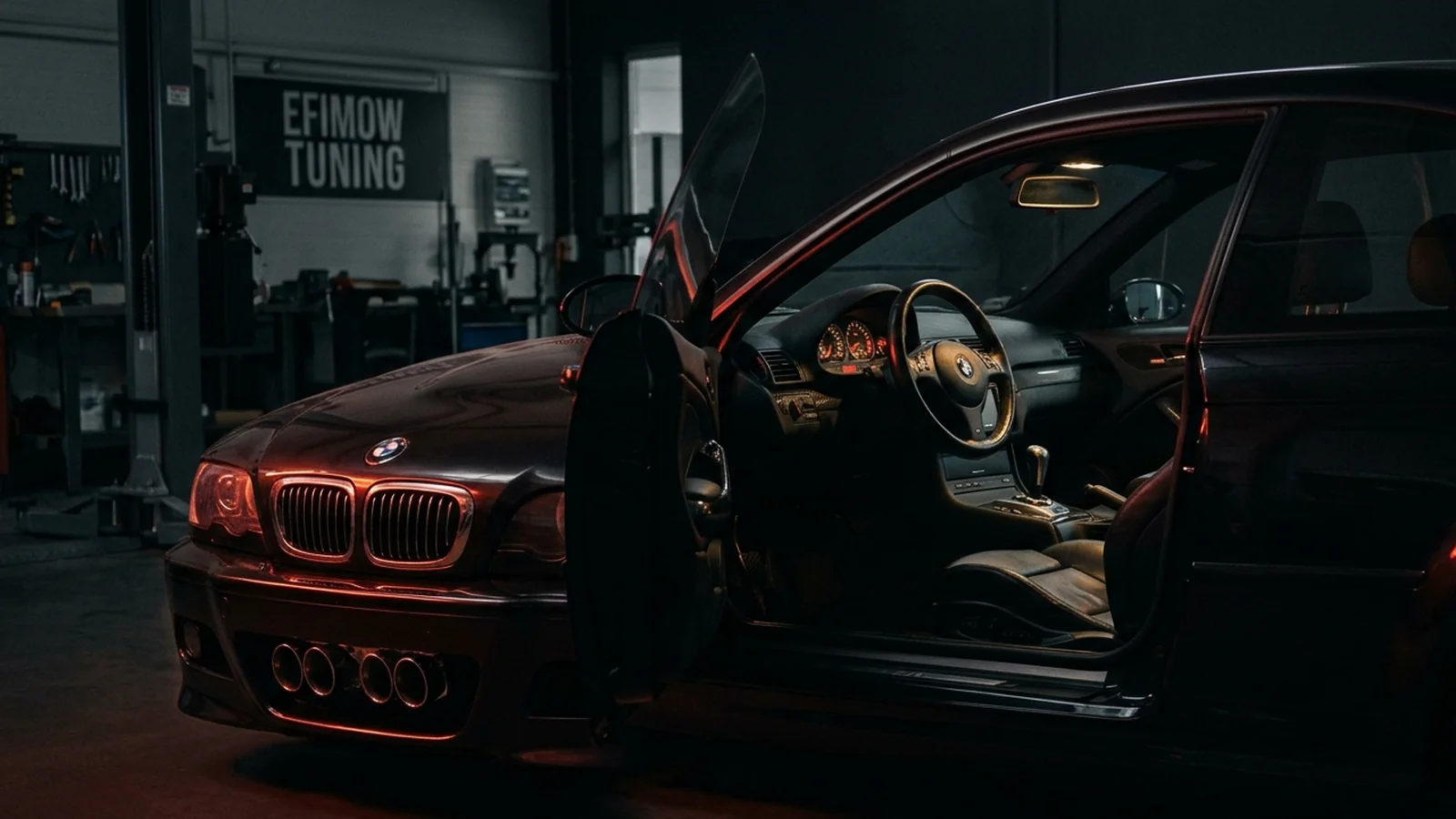
SMG II in the E46 M3: Understanding the Sequential Gearbox
How the SMG II in the BMW M3 E46 works, what Drivelogic does, where pump and clutch age and what matters for maintenance and tuning.
October 26, 2026 by Leo Efimow
The BMW M3 E46 has long been a classic, and few equipment details divide opinion as much as the SMG II. Some love the direct, mechanical shifts and the paddles on the steering wheel; others are annoyed by jerky take-offs and expensive hydraulic repairs. Both have a technical background. If you understand the SMG, you'll drive it better, maintain it properly and be able to judge what makes sense for a tune. This article explains the gearbox from a workshop perspective.
What the SMG II actually is
SMG stands for Sequential M Gearbox (Sequenzielles M-Getriebe). It is neither a torque converter automatic nor a dual-clutch gearbox, but an automated manual gearbox. According to BMW, it is mechanically identical to the M3's six-speed manual. The difference: the clutch and gear changes are not operated by the driver but by an electro-hydraulic unit. There is no clutch pedal; you shift with the selector lever or the paddles on the steering wheel.
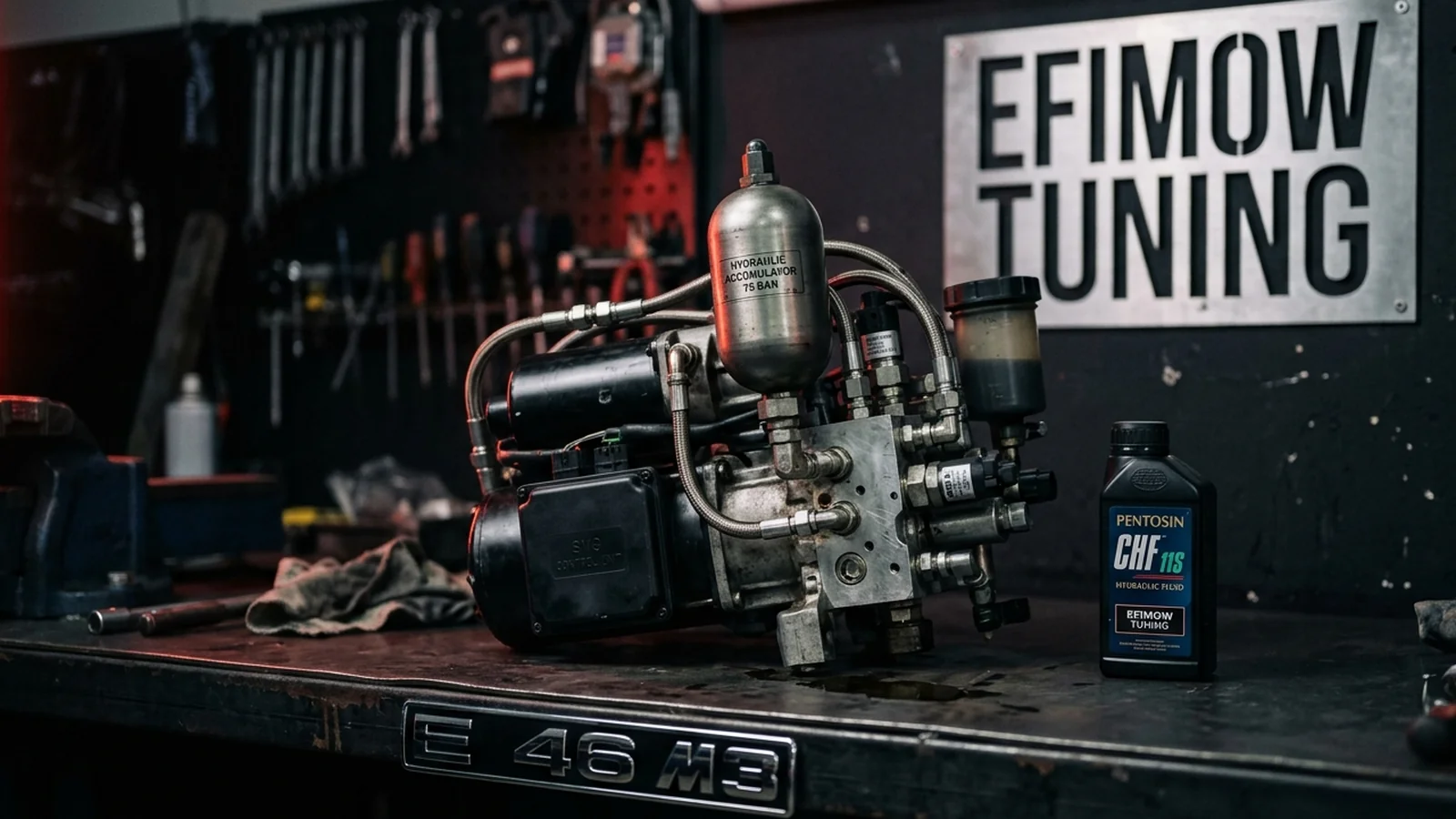
Simplified, the hydraulic unit consists of an electric pump, a pressure accumulator and a valve block. The pump maintains system pressure, the accumulator provides it for fast shifts, and the valves operate the clutch release and the shift mechanism. A dedicated control unit coordinates this with the engine control unit, which reduces torque during upshifts and blips the throttle on downshifts.
The SMG II is the second generation. The first was in the M3 E36; the third, seven-speed generation came in the V10 M5 E60 and M6 E63. In the successor M3 E9x a dual-clutch gearbox replaced the SMG; more in the glossary under DKG.
Drivelogic: eleven driving programmes
Via Drivelogic, the SMG II offers eleven driving programmes: six for the sequential mode (S) and five for the automated mode (A). The higher the level, the faster and harder the gearbox shifts. The sharpest S level is only available with DSC switched off. On top of that there is a launch aid for maximum acceleration from standstill, which puts a heavy load on the clutch and drivetrain.
In daily use this means: in the low levels the SMG shifts more softly but with a noticeable interruption in drive. In the high levels it shifts quickly and with mechanical directness. If you lift off the throttle slightly during shifts in A mode, as you would with a manual, you get much smoother gear changes.
Where the SMG II ages
Many SMG problems are not gearbox problems in the mechanical sense but concern the hydraulics or the clutch:
- Hydraulic pump: the electric pump is the best-known wear part. If it audibly runs more often or for longer, that can point to wear or a pressure loss in the system. A failure shows up as a gearbox fault warning in the instrument cluster.
- Leaks: lines, accumulator and valve block can start leaking with age. That leads to pressure loss and more frequent pump operation.
- Clutch: it is a normal single-plate dry clutch. Lots of pulling away, manoeuvring and creeping creates heat and wear, just as with a manual.
- Clutch adaptation: the system has to know where the clutch bites. After a clutch replacement, work on the hydraulics or component replacement, bleeding and the learning procedure must be carried out via diagnostics. Without a correct learned value, jerky take-offs and harsh shifts are the result. More in Resetting gearbox adaptations.
Buying used: what to look for
If you're thinking of buying an E46 M3 with SMG, check the gearbox specifically, because repairs to the hydraulics and clutch aren't cheap:
- Read the fault memory: stored faults in the transmission control unit, especially concerning hydraulic pressure or the pump, are an important clue.
- Query clutch wear: the system knows the clutch's state of wear. A diagnosis shows how much reserve is left.
- Listen to the pump: after opening the driver's door, the pump runs briefly and builds pressure. If it runs conspicuously long or keeps starting at standstill, something is wrong.
- Test drive cold and warm: pulling away, manoeuvring, downshifting in town and fast gear changes in the high Drivelogic levels.
- History: receipts for clutch replacement, pump replacement and the learning procedure are worth their weight in gold on an SMG car.
Driving tips for a long SMG life
- Avoid creeping: in traffic, leave a gap and pull away briskly. Prolonged slipping is the hardest load for a dry clutch.
- Manoeuvre with feeling: reversing up a slope is a classic cause of clutch wear.
- Use the brake on hills, not the throttle.
- Use the launch aid sparingly: every launch is a peak load for the clutch, drive shafts and differential.
- Hydraulic fluid to specification: use only the approved hydraulic fluid and have the level checked during maintenance.
SMG II and tuning
The S54 in the BMW M3 (E46) is a high-revving naturally aspirated engine with 343 PS. Unlike turbo engines, software brings no big jumps in torque; the product page gives around 371 PS as a calculated reference value for Stage 1. For the SMG that means the extra torque is moderate and, in healthy condition, usually no problem for the gearbox and clutch. Whether the clutch still has headroom depends mainly on its state of wear.
With the SMG, the transmission software itself is often the more interesting part: shift times, shift points and the behaviour of the Drivelogic levels can be adjusted. It is important to assess the hardware realistically. Faster, harder shifts put more load on the clutch, synchronisers and drivetrain. Whether and how a calibration makes sense for your car is clarified on request. Simply mention that you drive an SMG when ordering in the configurator.
Before even thinking about software, the gearbox should be in good order: no stored faults, a leak-free hydraulic system, a pump without unusual run times and a fresh clutch learned value. A software change won't fix a hydraulic problem.
Process and legal notes
For BMW you order the software online, flash it yourself via OBD and pay for the software only once it is finished. Legally: the software change voids the vehicle's type approval, and the software functions are intended exclusively for motorsport. That also applies to launch aids and modified shift strategies. Details in the motorsport notice.
Conclusion
The SMG II in the M3 E46 is an automated six-speed manual with electro-hydraulic actuation and eleven Drivelogic programmes. Its weak spots lie less in the mechanics than in the hydraulic pump, sealing and clutch, and many complaints about jerky behaviour come down to a missing or outdated clutch learned value. If you drive the gearbox correctly, look after the hydraulics and check its condition before a tune, the SMG II is a characterful piece of M history. More in the glossary under SMG and launch control. How the gearbox types compare is shown in The gearbox as a brake.