

Premium Cars and Tuning: Warranty, Leasing, Dealer Service
New-car warranty, lease contract, software updates at the dealer: what to clarify before tuning a premium car.
October 25, 2026 by Leo Efimow
With a ten-year-old estate car, the decision to tune the software is quickly made. With a two-year-old Mercedes, a leased Porsche Cayenne or an Audi RS with an extended warranty, things look different. Contracts, warranty terms and dealer relationships are attached to the car, and every change can have consequences that have nothing to do with power or driving fun. This post sorts out the three topics that raise the most questions with premium cars: warranty, leasing and the dealer workshop. It is not legal advice, but it shows you which questions to clarify before anyone touches the ECU.
Warranty and statutory liability are not the same
In everyday language the two are often mixed up; legally they are different things.
- Statutory liability for defects (in Germany, "Gewährleistung") is the seller's legal liability for defects that already existed at the time of sale. It applies to the dealer, not the manufacturer.
- A warranty is a voluntary promise by the manufacturer or a warranty provider. What it covers and under which conditions is set out in the warranty terms, and those terms practically always contain clauses on modifications to the vehicle.
For tuning this means: a software change does not automatically cancel the warranty for the whole car, but it can jeopardise claims for any damage linked to the change. A faulty navigation system has nothing to do with modified engine software. A turbo failure, a clutch failure or a gearbox problem does, and that is exactly where a manufacturer will look closely.
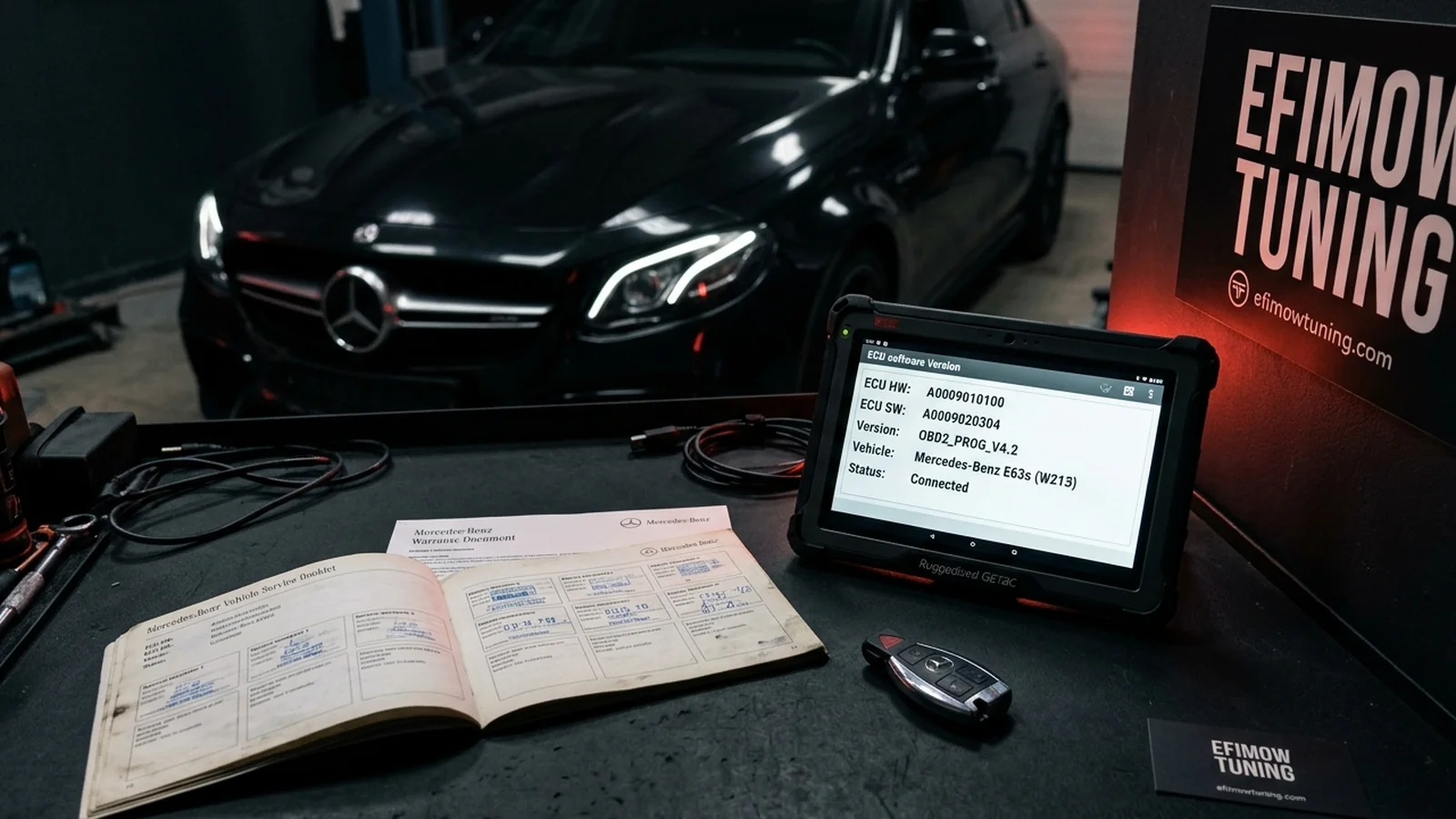
Blanket statements like "the warranty is completely gone" are therefore as wrong as "nobody will notice". The honest answer: if you tune during the warranty period, you will in case of doubt carry the risk for damage to engine and drivetrain yourself.
Extended warranties and warranty insurance
Many premium cars are sold with extended or used-car warranties. The same applies here: the terms decide. These contracts often exclude damage caused by changes to the stock power output, or require the car to be kept in its delivered condition. Read the terms before tuning, not when you want to report a claim.
Leasing: the car is not yours
With a lease, the lessor owns the car. Most lease contracts oblige you to keep the vehicle in the contractually agreed condition and make technical changes subject to the lessor's consent. On return, the car is inspected.
In practice that means:
- Read the contract: does it say anything about changes to engine or software? Then that applies to chip tuning as well.
- Get consent: if you want to tune, ask the lessor in writing.
- Plan the return: a software adjustment can be reversed by writing back the saved original file. Modern diagnostic systems can, however, read software versions, checksums and in some cases programming counters. So a flash back does not make the change invisible in every case, and you should not rely on it.
The dealer workshop and software updates
Premium cars regularly receive software updates at the dealer: during services, recalls or technical campaigns. Some newer cars also receive updates over an online connection. If the engine ECU is reprogrammed in the process, the modified software is usually overwritten. In the best case you simply drive on with stock power; in the less favourable case the diagnostic system flags an unknown software version.
For you this means:
- Tell the workshop openly that the ECU has been modified. That avoids misunderstandings during fault finding.
- Keep the original file and the documents for the tune.
- After an update at the dealer, the modification may have to be applied again, based on the new software version.
Insurance and type approval
Regardless of warranty and leasing, two points apply to every car. First: a power increase matters to your motor insurer and should be reported. If you fail to do so, you risk problems with the claim or recourse in the event of damage.
Second, type approval: the software change voids your vehicle's type approval; the software is intended for motorsport use only. For road use, a power increase would need an expert report and registration in the vehicle documents (in Germany: Eintragung). More on this in the glossary.
A question premium owners ask particularly often: emissions components such as particulate filters, EGR or the SCR system stay active. Disabling them is emissions tampering and prohibited on public roads, no matter how old or new the car is.
Timing: when tuning a premium car makes sense
From a workshop perspective there are three typical situations:
| Situation | Assessment |
|---|---|
| New car under manufacturer warranty | Risk for engine and drivetrain damage is yours; check warranty terms |
| Leased car | Only with the lessor's consent; plan for the return |
| Car out of warranty, owned by you | Your decision; condition and maintenance are the deciding factors |
Many owners therefore deliberately wait until the manufacturer warranty ends. That is not mandatory, but it is an understandable trade-off.
Especially with strong engines: think about the drivetrain
On premium cars with high stock output (AMG models, Audi RS or Porsche, for example), the limits are often not in the engine but in the gearbox, the clutch or the charge-air cooling. A serious calibration respects those limits instead of just raising boost and torque. That also makes sense with regard to warranty questions: the closer the calibration stays to the factory reserves, the lower the load on the rest of the car.
Documentation: what you should keep
With high-value cars in particular, it pays to document the change properly. That helps at later workshop visits, when selling the car and in conversations with your insurer or lessor.
- Original file: the unmodified software of your ECU is the basis for any later return to stock. It should be saved before anything is written.
- ECU identification and software version: this lets anyone trace later which basis the modification was built on. This is important if the dealer installs an update in the meantime.
- Invoice and description of the changes: which stage, which options, which date.
- Service records: a complete service history shows the car was looked after before and after the tune.
When you sell a tuned car, the modification belongs on the table. A buyer who only finds out later has good reason to feel misled.
Checklist before the appointment
- Warranty and, if applicable, extended warranty terms read
- For leasing: written consent from the lessor
- Insurer informed about the planned change
- Maintenance up to date, fault memory checked
- Original file is saved and kept
- Clear that the software is intended for motorsport use only
Conclusion
Tuning a premium car is often technically no harder than tuning a mass-market car. What is harder is everything around it: warranty, leasing, the dealer and insurance. If you clarify these points beforehand, you avoid the expensive surprises and can decide consciously whether and when a software adjustment suits your car.
If you want to know which ECU your car has and which options exist, you will find it in the configurator. For all non-BMW vehicles: on site in Stödtlen on a date of your choice or send in the ECU, at the same price.