

Bosch MD1 in the G Series: Tuning the B47 and B57
B47 and B57 with Bosch MD1 in the G20, G30 and G05: what defines the ECU, why the build date decides the process and what tuning delivers.
October 26, 2026 by Leo Efimow
With the G series BMW brought not only new bodies and driver assistance systems, but also a new generation of ECUs for its diesels. The B47 four-cylinders and B57 six-cylinders in the G20, G30, G01, G05 and others are controlled by the Bosch MD1, the successor to the EDC17. This has changed a fair amount for tuning, above all regarding access to the ECU. Whether everything on your car runs over OBD or the ECU has to be removed once depends on a single date. In this article you will learn what defines the MD1, which vehicles are affected and what tuning realistically delivers on the B47 and B57.
B47 and B57: the modular diesels
From the mid-2010s BMW switched its engines to a modular system. All cylinders have a displacement of around 500 cc, and many parts are shared between three-, four- and six-cylinder engines. On the diesel side the engines are called B37, B47 and B57.
The B47 is the 2.0-litre four-cylinder. In the G series it powers, among others, the 318d and 320d (G20/G21), the 520d (G30/G31), the X3 20d and the X5 25d. The most common power level is 190 hp with 400 Nm.
The B57 is the 3.0-litre inline six. It ranges from the 330d and 530d with 265 to 286 hp via the 540d and the M340d with 340 hp to the top version with four turbochargers and 400 hp, for example in the X5 M50d (G05). Newer models also have a 48-volt mild hybrid system that assists when pulling away.
What the MD1 does differently
The MD1 is the diesel ECU generation Bosch introduced after the EDC17. It works with a multi-core processor from the Infineon TriCore family and has far more processing power and memory than its predecessor. In terms of content, the basic principle stays the same: the MD1 is torque-based, i.e. it calculates a target torque from the driver request and limits and derives injection, rail pressure and boost from it. In addition it controls the complete exhaust aftertreatment with particulate filter, exhaust gas recirculation and SCR with AdBlue.
The most important difference for you lies in protection. The MD1 is much better secured against modified software than the EDC17. Conventional reading and writing over OBD is not possible without a prior unlock. This unlock is a one-off step. After that, work on the ECU usually runs through the diagnostic port again, including later updates or a return to the stock software.
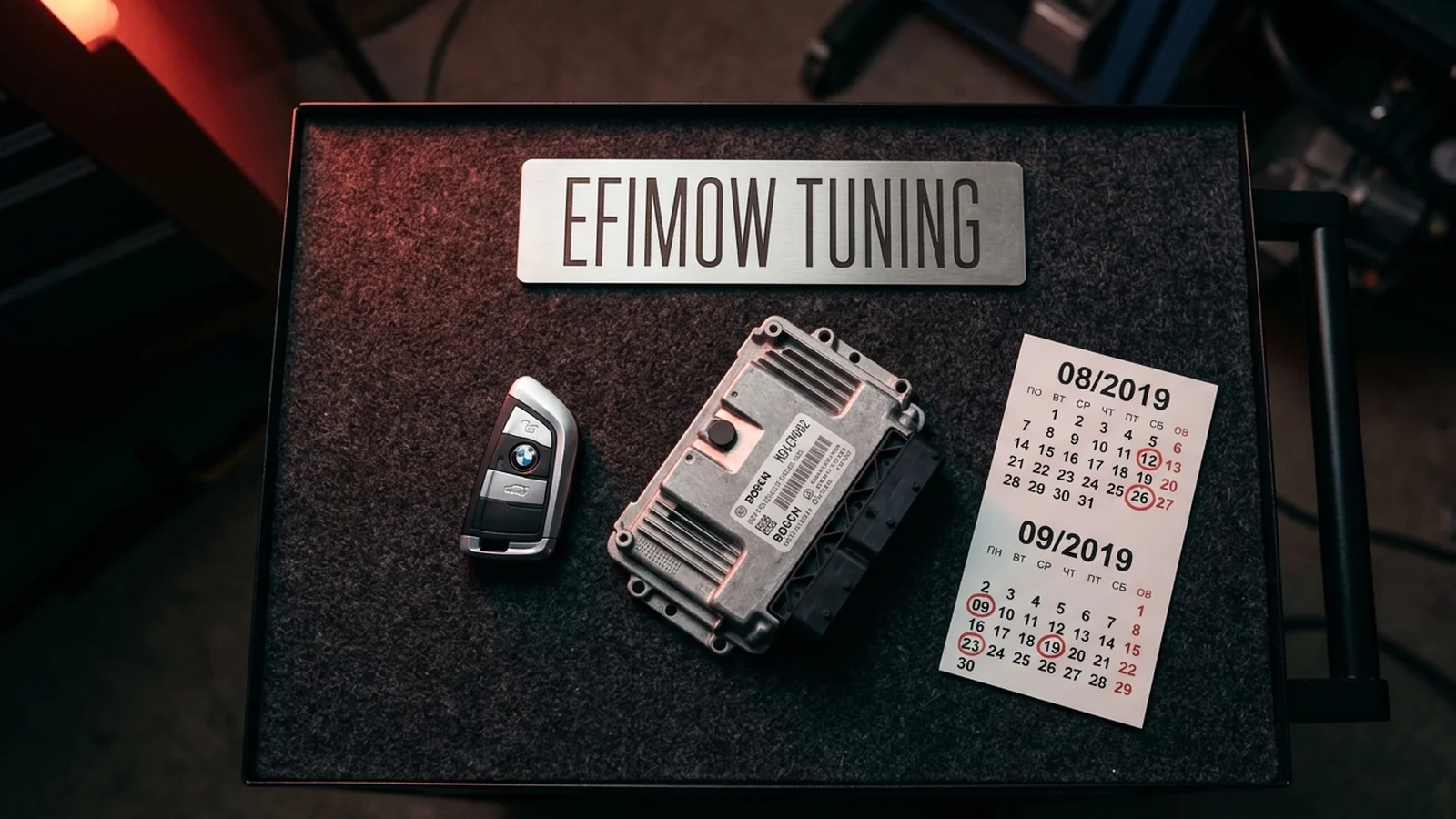
The build date decides the process
How the unlock works depends on the build date of the ECU:
| ECU build date | Unlock | What it means for you |
|---|---|---|
| up to 08/2019 | directly over OBD | Everything stays with you, the ECU stays in the car |
| from 09/2019 | bench procedure | Remove the ECU once and send it to us |
Important: this refers to the build date of the ECU, not the first registration of your car. A car registered at the end of 2019 can have an ECU from earlier production. Conversely, a replacement or exchange ECU fitted later can be younger than the car itself. The registration date is therefore only a rough indication.
After the unlock you flash the finished file yourself over OBD, even with late ECUs. On the product page we state the more involved route as a precaution. If you know your build date or are unsure, just ask us briefly. How to remove and pack the ECU safely is described in the article Removing and shipping your ECU.
What tuning delivers on the B47 and B57
Despite their modern design, the B engines have noticeable reserves. Some calculated guide values from the product pages:
| Vehicle | Stock | Stage 1 (guide value) |
|---|---|---|
| G20 320d (B47) | 190 hp / 400 Nm | approx. 238 hp / 532 Nm |
| G20 330d (B57) | 286 hp / 650 Nm | approx. 358 hp / 865 Nm |
| G20 M340d (B57) | 340 hp / 700 Nm | approx. 425 hp / 931 Nm |
For the top versions such as the X5 M50d the gain is smaller in percentage terms, because the engine already works closer to its limits from the factory. All figures are guide values, not a guarantee; condition and fuel play a part.
Here too: ZF's eight-speed automatic copes with a lot, but the higher torque has to suit the gearbox. A clean calibration reports the actual torque correctly and shapes the torque curve so that the drivetrain is not loaded abruptly. With the mild hybrid, the interaction with the starter-generator is added, which also has to keep working cleanly.
Exhaust aftertreatment stays active
The MD1 cars meet Euro 6 and have a particulate filter and SCR. These systems remain fully active with a reputable calibration. Disabling them by software is emissions tampering and prohibited on public roads. Regardless of that, the software change voids your vehicle's type approval; the software is intended for motorsport use only (see the motorsport notice).
Process and price
The process is the same as on older BMWs, just with the one-off unlock first. You order online, and depending on the build date the unlock runs over OBD or you send in the ECU once. You then read out the original software and upload it, and you flash the finished file yourself over OBD. On very modern cars the adaptation can take a little longer than the usual 48 hours. The software is only paid for once it is finished; today you only pay for hardware and a €5 deposit. According to the product page for the G20 320d, Stage 1 starts at €400 and Stage 2 at €450. You can find more about the ECU on the page for the DDE9 (MD1).
Conclusion
The Bosch MD1 is the ECU generation of the G-series diesels. Technically it follows the familiar torque-based principle, but it sets new hurdles for access. For you the build date decides: up to 08/2019 everything runs over OBD, from 09/2019 the ECU has to come out once. After that the process is as convenient as on older BMWs. The B47 and B57 have clear reserves; on the six-cylinder the gearbox is the yardstick. Choose your model in the configurator to see engine, ECU and price for your car.