
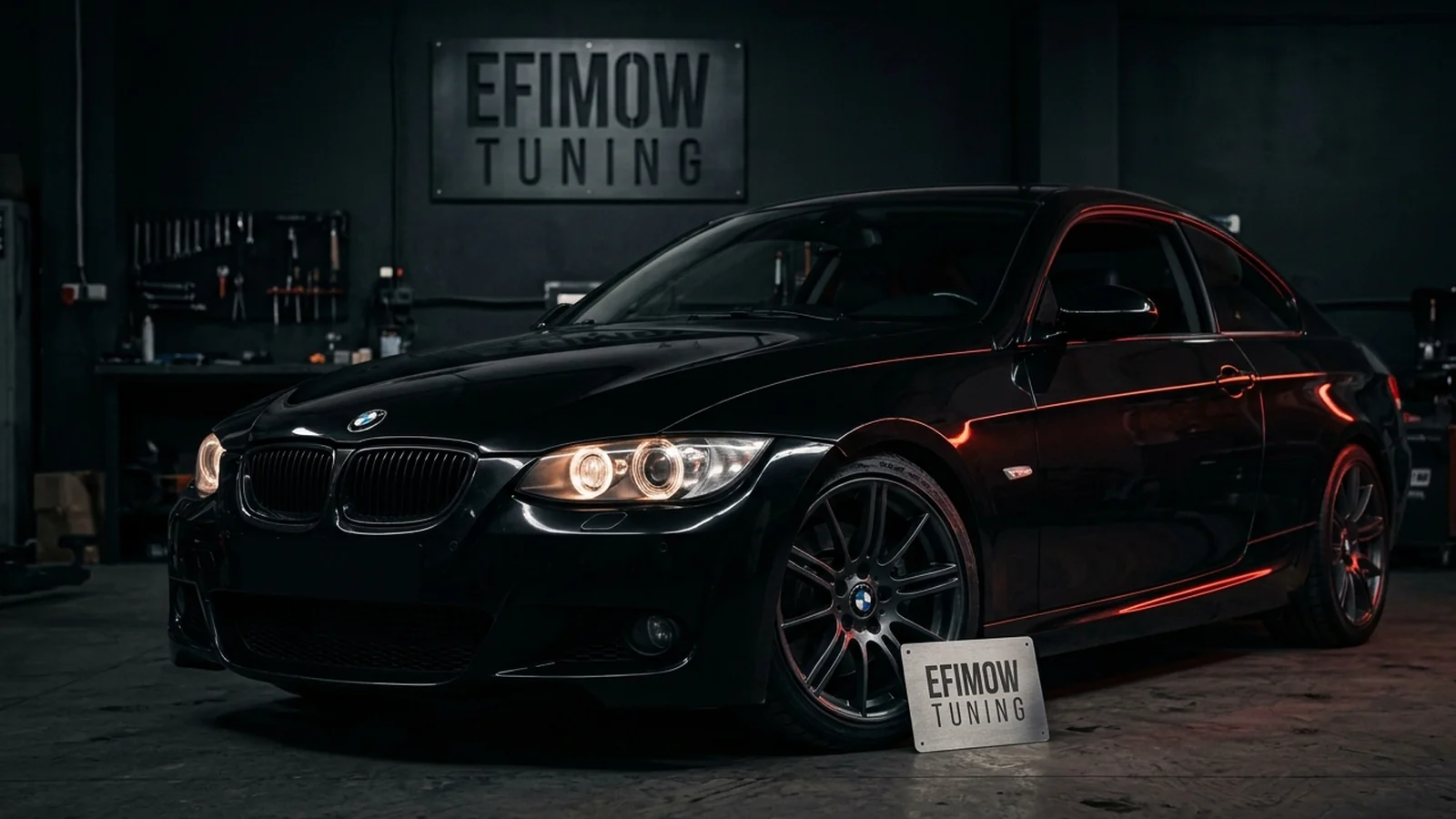
EDC16 in the E60, E87 and E9x: Tuning the M47TU2 and M57TU
How the Bosch EDC16 (DDE5/DDE6) works in the 120d, 320d, 330d, 335d and 530d, what tuning changes and what to watch on these diesels.
October 26, 2026 by Leo Efimow
Between the early M57 and the N engines lies a generation that is often underestimated: the revised M47TU2 and M57TU diesels. They are found in cars now regarded as ideal used buys, such as the E87 120d, the E90 320d, the E60 530d or the E92 335d. They are controlled by the Bosch EDC16, called DDE5 and DDE6 at BMW. With it, torque-based engine management arrived at BMW, and it is still the basis of every diesel calibration today. In this article you will learn which engines belong here, how the EDC16 thinks and what you should look out for on these cars.
Which engines and vehicles belong here
At BMW the EDC16 covers two engine families, each in several versions:
- M47TU2 (2.0 litres, four cylinders, from around 2004): E87 118d and 120d, E90/E91 318d and 320d and the E60 520d. Typical outputs are 122 hp and 163 hp.
- M57TU (3.0 litres, six cylinders, from around 2003): E46 330d with 204 hp, E60 530d, X3 and X5 3.0d with 218 hp and the E60 535d with two turbochargers.
- M57TU2 (from 2007): E9x 325d, 330d and 335d, E60 LCI 525d, 530d and 535d and the X5 E70. Outputs range from 197 to 286 hp.
At BMW the EDC16 in the M47TU2 and M57TU is usually called DDE5, in the M57TU2 DDE6. From 2007 the four-cylinder already moved to the N47 with EDC17, and from 2008 the six-cylinder to the N57. So an E90 320d can have an M47TU2 with EDC16 or an N47 with EDC17, depending on the year. You can see which one you have in the configurator from the stored engine. For the N engines, see our article on the EDC17 in the F series, which also covers the late E models with N47 and N57.
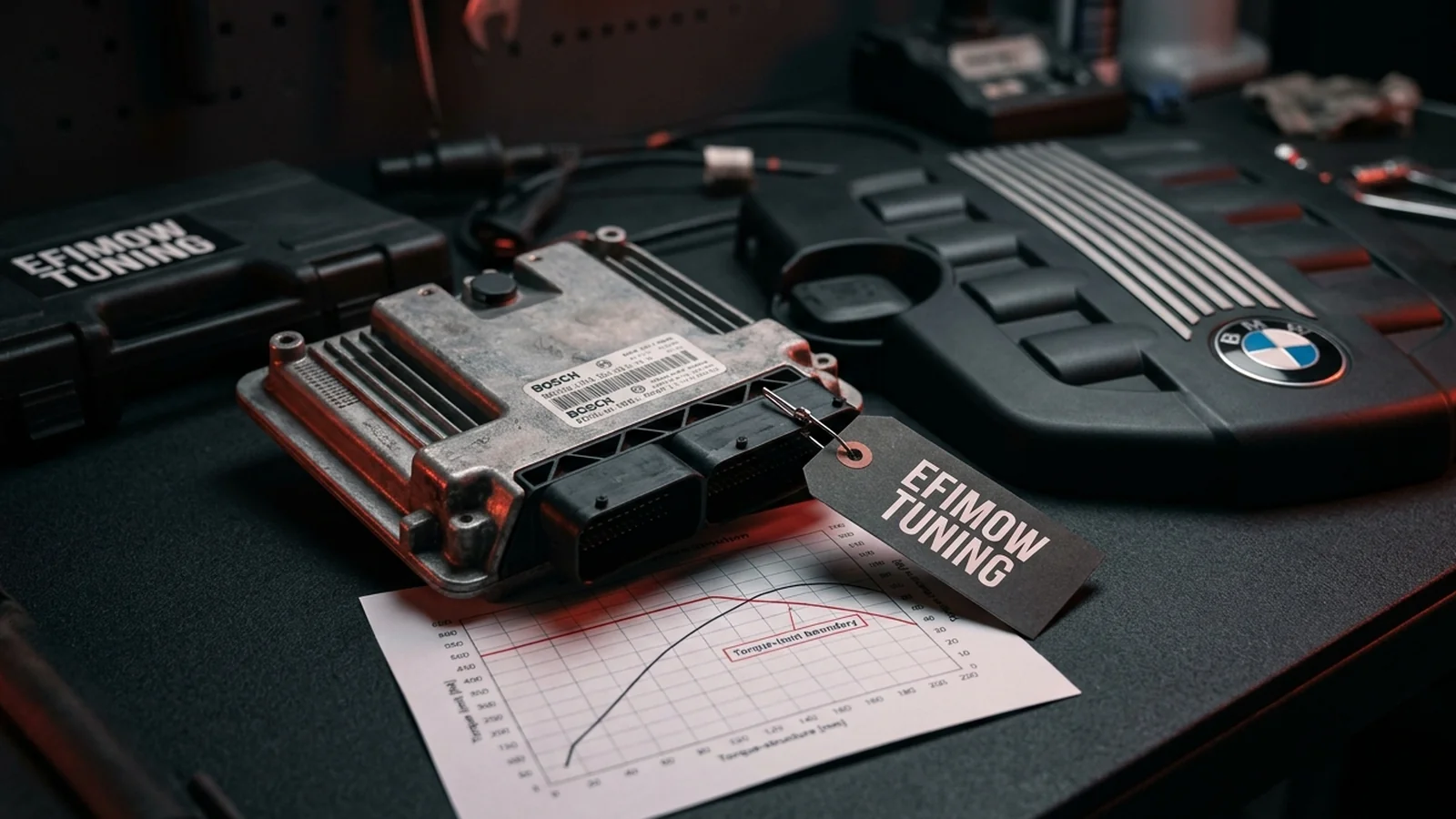
How the EDC16 thinks: torque instead of quantity
Its predecessor, the EDC15, still calculated essentially in injection quantities. The EDC16 takes a different route. From pedal position and engine speed it first derives a driver request expressed as torque. This request passes through a series of limits: a torque limit over engine speed, limits depending on gear and conditions, and requests from the gearbox or stability control. Only at the end does the ECU convert the released torque into an injection quantity via an engine model. Smoke limitation, rail pressure and boost follow.
For tuning this has an important consequence: working on just one point achieves little. If you only raise the driver request, a limiter further down the chain intervenes and practically nothing happens. If you raise the quantity without adjusting the torque structure, the engine model and the actual torque no longer match. The gearbox then receives wrong information about the torque being delivered. A clean calibration therefore adjusts the whole chain consistently: torque targets, limiters, smoke limitation, rail pressure and boost. Protective functions such as the exhaust temperature model remain active.
What tuning delivers on the M47TU2 and M57TU
The factory reserves of this generation are considerable. According to the product page for the E9x 320d with M47TU2, the calculated guide value for Stage 1 is around 204 hp and 452 Nm, starting from 163 hp and 340 Nm. For the 330d with M57TU2, the product page gives around 289 hp and 692 Nm for Stage 1 instead of 231 hp and 520 Nm. The 335d with its two turbochargers starts at 286 hp and 580 Nm stock and accordingly has more headroom.
The torque figures are the interesting part, and at the same time the critical one. Especially with the six-cylinder, the limit is not the engine but the drivetrain. The six-speed ZF automatic fitted to many of these cars copes with a lot, but it has a clear design limit. A reputable calibration therefore shapes the torque curve so that the gearbox is not suddenly overloaded, instead of simply setting the highest possible peak value. All figures mentioned are guide values and depend on the condition of the car.
What to watch on these diesels
These cars are now between 15 and 20 years old. Before tuning, it is worth looking at the following points:
- Swirl flaps: the M47TU2 and M57TU have swirl flaps in the intake manifold. It is well known that they can come loose at high mileages. Have their condition checked before tuning.
- Particulate filter and EGR: many cars of this generation already have a particulate filter. A clogged filter increases exhaust back pressure and costs power. Filter and exhaust gas recirculation stay active with a reputable calibration; disabling them is emissions tampering and prohibited on public roads.
- Turbochargers: on the 335d and 535d two turbos work together. Fluctuating boost or a hole in the transition when the large turbo comes in are warning signs.
- Injectors and air mass meter: as with any older diesel. A weak air mass meter limits the quantity and wastes the potential.
- Gearbox and clutch: on the automatic, fluid condition and shift quality matter; on the manual, clutch and dual-mass flywheel.
A fault memory without entries and an unremarkable test drive are the best basis for a calibration.
Process and price
The EDC16 in a BMW is also handled through the OBD port. You order online, read out the original software yourself and upload it in the customer portal. You usually receive the adapted file within 48 hours; the software is only paid for once it is finished. Today you only pay for the hardware, if you order cable and flasher tool, and a €5 deposit. According to the product pages, Stage 1 for the EDC16 cars starts at €200 and Stage 2 at €250. You can find more about the ECU on the page for the DDE6 (EDC16C35).
The software change voids your vehicle's type approval; the software is intended for motorsport use only (see the motorsport notice).
Conclusion
The EDC16 is the link between the simple diesel ECUs of the late 1990s and the modern EDC17. With it BMW introduced torque-based control, which makes calibration more demanding but also cleaner: when the whole chain is right, every control unit in the car knows what torque is actually being delivered. The M47TU2 and M57TU have significant factory reserves; on the six-cylinder the gearbox is the yardstick. Check swirl flaps, turbos and particulate filter beforehand, and an E90 320d or E92 335d is a very good basis. Choose your model in the configurator to see engine, ECU and price for your car.