
Torque Converter Automatics after Tuning: ZF, Aisin & Co.
What a torque converter automatic has to cope with after chip tuning, how ZF 6HP/8HP and Aisin react to more torque, and how to spot problems early.
October 25, 2026 by Leo Efimow
With torque converter automatics, the tuning question rarely ends at the engine. The gearbox has to handle the extra torque just as the engine produces it. ZF, Aisin, Mercedes and others build excellent automatic gearboxes, but each of them is designed for a certain input torque and controlled by its own software. Here you learn how a torque converter automatic reacts to more torque, which symptoms point to problems and how to avoid them.
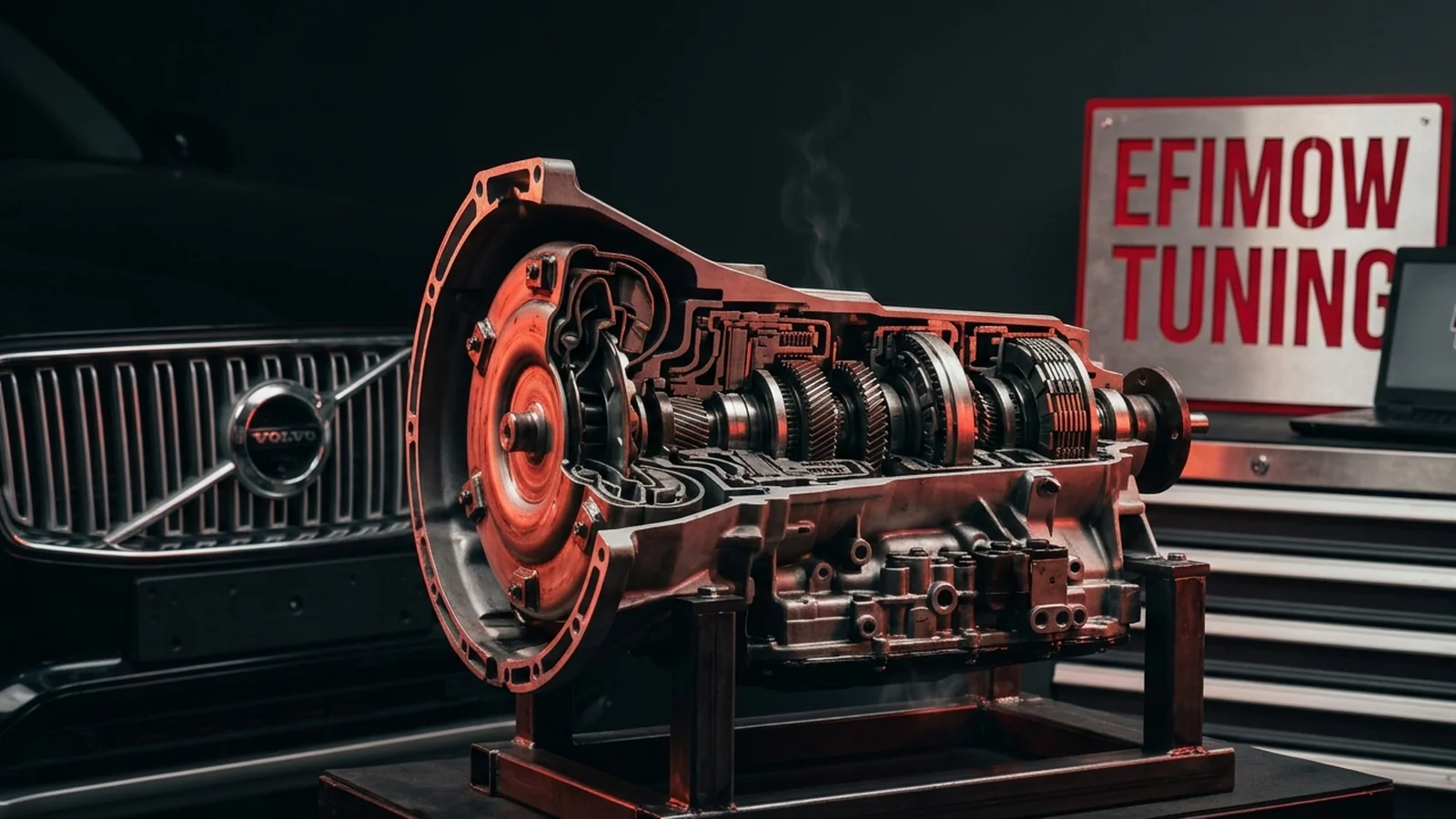
How a torque converter automatic works
A classic automatic consists of three main assemblies:
- Torque converter: it transfers power hydraulically between engine and gearbox and multiplies torque when pulling away. A lock-up clutch connects it mechanically above a certain speed so no slip is lost.
- Planetary gear sets: they create the different ratios.
- Multi-plate clutches and brakes: they are closed hydraulically and determine which gear is engaged.
The whole thing is controlled by the transmission control unit, the TCU. It decides shift points, hydraulic pressures and converter lock-up, and works closely with the engine ECU during shifts. During a gear change the engine briefly reduces torque so the transition runs cleanly.
Where the limit is
Every gearbox has a maximum input torque for which clutches, converter and planetary sets are designed. How large the reserve between stock engine and gearbox limit is depends heavily on the combination. If a gearbox is also fitted to the most powerful engine of the range, there is often headroom with the weaker engine. If the gearbox is already close to its limit in stock form, it gets tight.
The best-known families:
| Gearbox | Gears | Typically fitted to |
|---|---|---|
| ZF 6HP | 6 | BMW, Audi, Jaguar, Land Rover and others (approx. 2001–2010s) |
| ZF 8HP | 8 | BMW, Audi, Jaguar Land Rover, Stellantis and others (from 2009) |
| Aisin 6- and 8-speed | 6/8 | Toyota, Lexus, Volvo, PSA, Mini, VW and others |
| Mercedes 7G-Tronic / 9G-Tronic | 7/9 | Mercedes-Benz |
Within a family there are variants with different torque capacity. Which variant is fitted is shown on the gearbox type plate or in the vehicle data.
What can happen after tuning
If engine torque is raised without considering the gearbox, the consequences usually appear in a typical order:
- Torque limitation: the TCU reports a limit to the engine. The car feels held back despite the tune, especially in the lower gears.
- Slip during shifts: revs flare briefly during a gear change without the car accelerating accordingly. The clutches slip because the holding pressure is no longer sufficient.
- Harsh or delayed shifts: the TCU's adaptation values no longer match the new torque curve.
- High fluid temperature: slip creates heat, and the gearbox fluid ages faster.
- Limp mode: in the worst case the gearbox goes into a protection mode and stores a fault.
How to avoid it
A proper calibration on an automatic car works in several places:
- Limit torque where needed: the engine ECU contains limits per gear and engine speed. If they are matched to the gearbox limit, the gearbox never gets more than it can take. In the lower gears that often costs little anyway, because traction is the limit there.
- Keep the torque report consistent: the TCU calculates clutch pressures from the torque the engine reports. If the report is wrong, so are the pressures.
- Consider the gearbox software: on some gearboxes, pressures and shift times can be adapted in the TCU. That is a topic of its own with its own effort. Whether it makes sense for your vehicle is decided case by case.
- Reset adaptation values: after tuning, the TCU should relearn. Depending on the vehicle this is done via diagnostics or by a defined drive.
Maintenance: the underrated factor
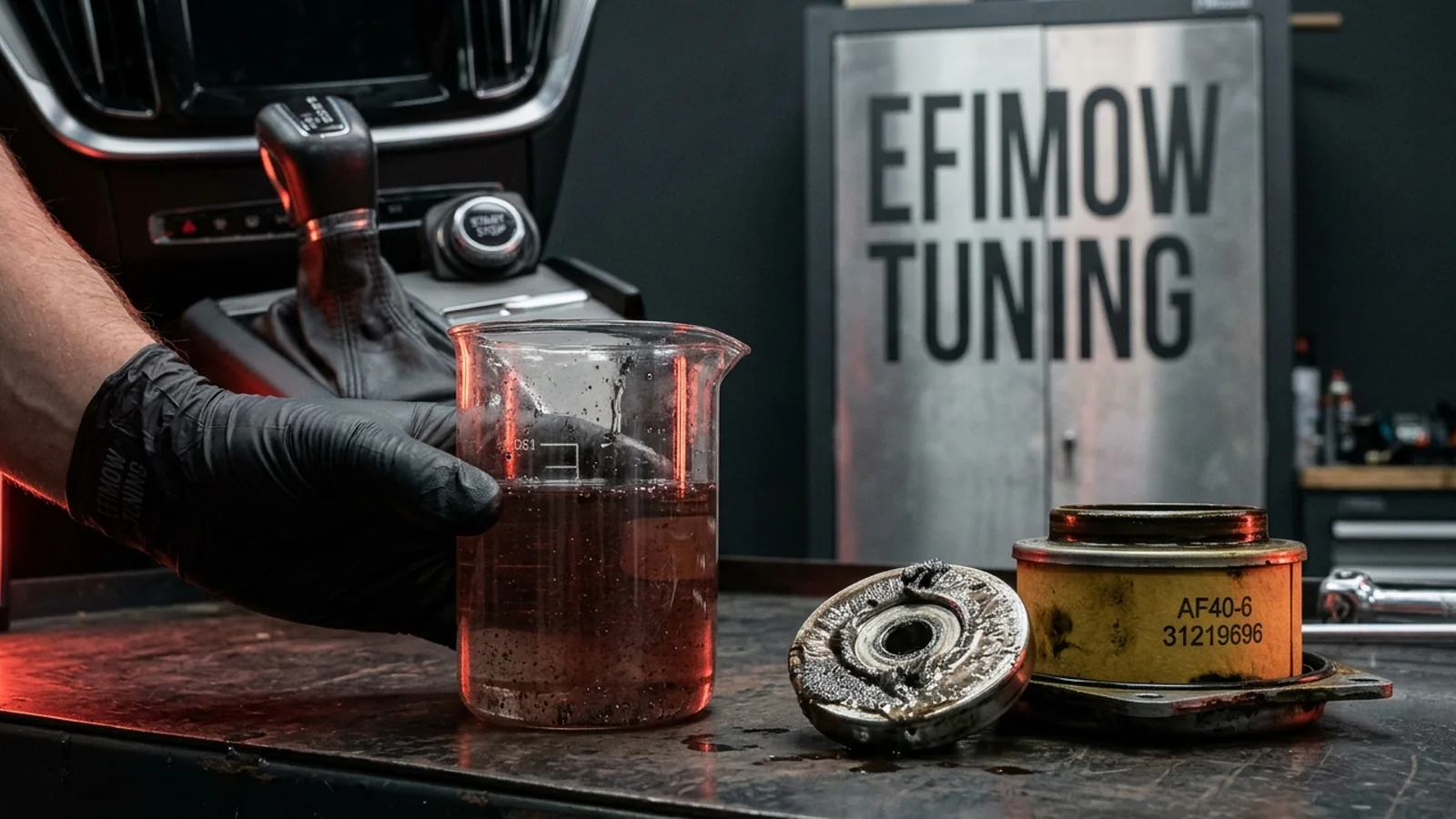
Many manufacturers call the gearbox fluid "filled for life". In practice, gearbox makers and specialist workshops still recommend regular fluid changes, often in the range of 80,000 to 120,000 kilometres. On a tuned car this is all the more important because the fluid has to carry away more heat.
A fluid change with filter also shows you how the gearbox is doing. Lots of debris on the magnet or very dark, burnt-smelling fluid are warning signs. Then a repair comes first, before you think about more torque.
How to tell before tuning whether your gearbox is fit
- Does it shift cleanly in stock form, without jerks and without rev flares?
- Are there stored faults in the TCU?
- When was the last fluid change?
- Is there a delay when engaging D or R?
If any of these questions worries you, have the gearbox checked first. Tuning does not repair a tired gearbox; it speeds up wear.
Process with us
In the configurator you choose your vehicle; the gearbox is part of the information that helps with the calibration. For BMW you order online, flash it yourself via OBD and pay for the software only once it is finished. For all other brands you come to Stödtlen on a date you choose or send in the ECU, at the same price. For BMW with ZF gearbox there is a separate article on TCU adaptation. Legally: changing the engine software voids the type approval, and our software functions are intended exclusively for motorsport. More in the motorsport notice.
Conclusion
A torque converter automatic copes with more torque if you let it: with a limit that matches the gearbox limit, a consistent torque report and relearned adaptation values. ZF 6HP and 8HP, Aisin and Mercedes gearboxes differ in their reserves, so the specific variant matters. Fresh fluid and a healthy gearbox are the foundation. More on the ZF gearboxes in the glossary under 8HP and 6HP.