
Chip Tuning Hybrid Vehicles: What Works and What Doesn't
Mild, full or plug-in hybrid: which control unit releases the power, where software tuning makes sense and where it hardly achieves anything.
October 25, 2026 by Leo Efimow
More and more cars in the workshop have an electric motor on board. And more and more often the question comes up: can you tune a hybrid? The short answer: the combustion engine yes, the system as a whole only to a limited extent. The long answer depends on what kind of hybrid you drive, who in the car decides on power, and what reserves the combustion engine actually has.
Three kinds of hybrid
Not every hybrid is the same. For tuning it pays to tell the designs apart:
| Design | Function | Typical |
|---|---|---|
| Mild hybrid | 48-volt starter-generator, assists when pulling away, recuperates | hardly any electric-only driving |
| Full hybrid | e-motor can drive alone briefly, charged only by engine and recuperation | often naturally aspirated Atkinson engine |
| Plug-in hybrid | larger battery, chargeable from the socket | usually turbo petrol plus e-motor |
In a mild hybrid the combustion engine is the main drive and the electric share is small. In full and plug-in hybrids, engine and e-machine share the work much more.
Who releases the power in a hybrid
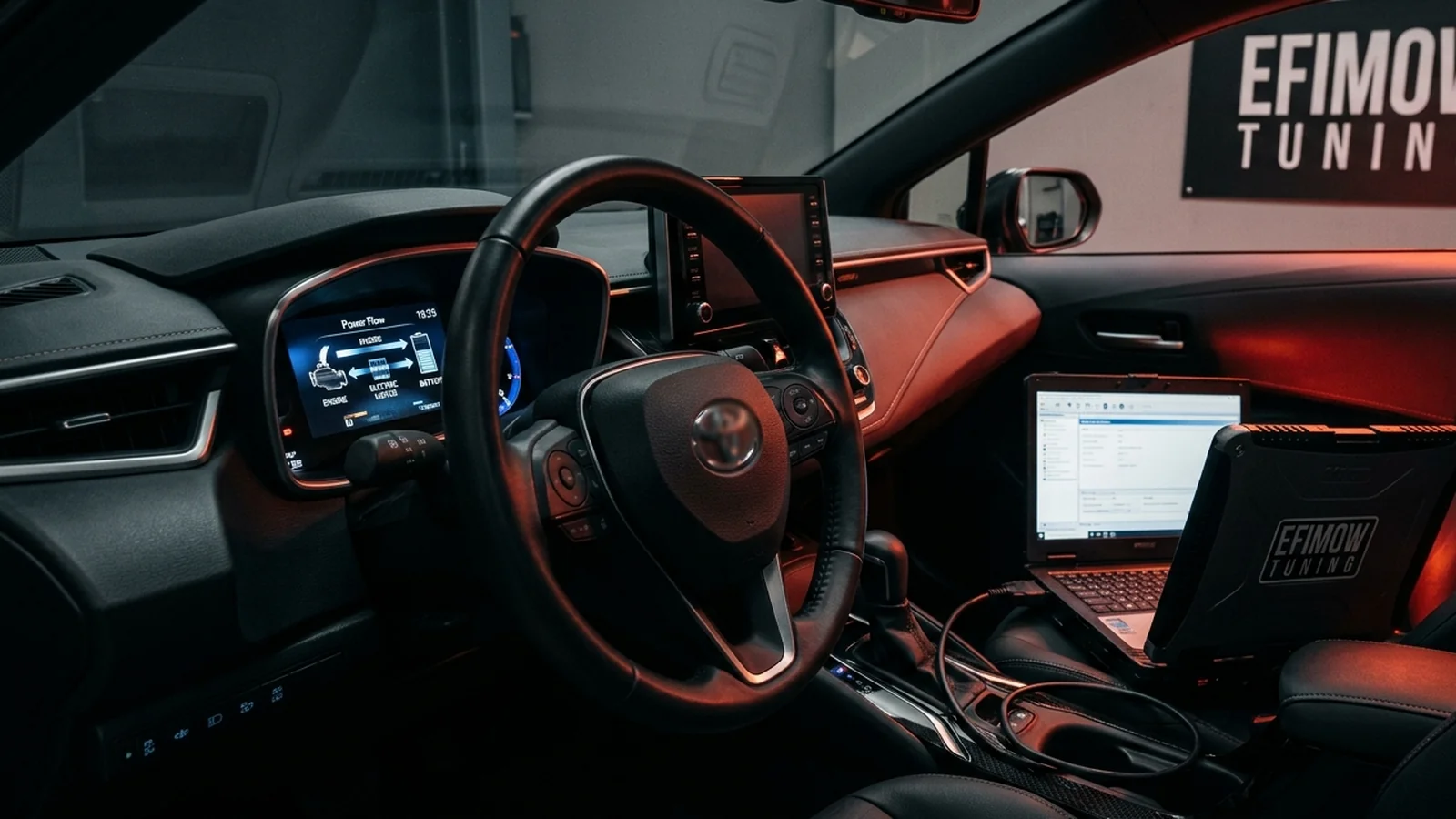
In a conventional car the engine ECU is in charge. It translates the torque request from the accelerator into boost, fuel quantity and ignition timing. A hybrid has a level above that: the hybrid control unit. It decides how much torque the combustion engine should deliver and how much the e-machine. It takes into account the battery's state of charge, its temperature, the load capacity of the gearbox and the selected drive mode.
For tuning this means: allowing the engine ECU more torque does not automatically mean it gets requested. The hybrid controller keeps requesting what it considers right. The system power in your registration documents is a sum managed by this higher-level controller.
Where software tuning makes sense
Mild hybrid with turbo engine: here the combustion engine works largely as in a normal car. The usual changes to boost, injection and ignition are generally possible. What matters is that the torque structure is adapted cleanly so that start-stop, recuperation and boost function still work together.
Hybrid with diesel engine: one example from our catalogue is the Citroën DS5 2.0 HDi Hybrid4 with 165 hp. The diesel drives the front axle, an e-motor the rear. The diesel's ECU is a Delphi DCM3.5; for this family, typical Stage 1 guide values are around 20–30 % more power and torque at the combustion engine. Details are on the DS5 Hybrid4 product page.
Plug-in hybrids with turbo petrol: technically a lot is possible at the combustion engine. Whether the extra power arrives in the overall system, however, depends heavily on how the hybrid controller uses the engine. A case-by-case check is worthwhile here.
Where it hardly achieves anything
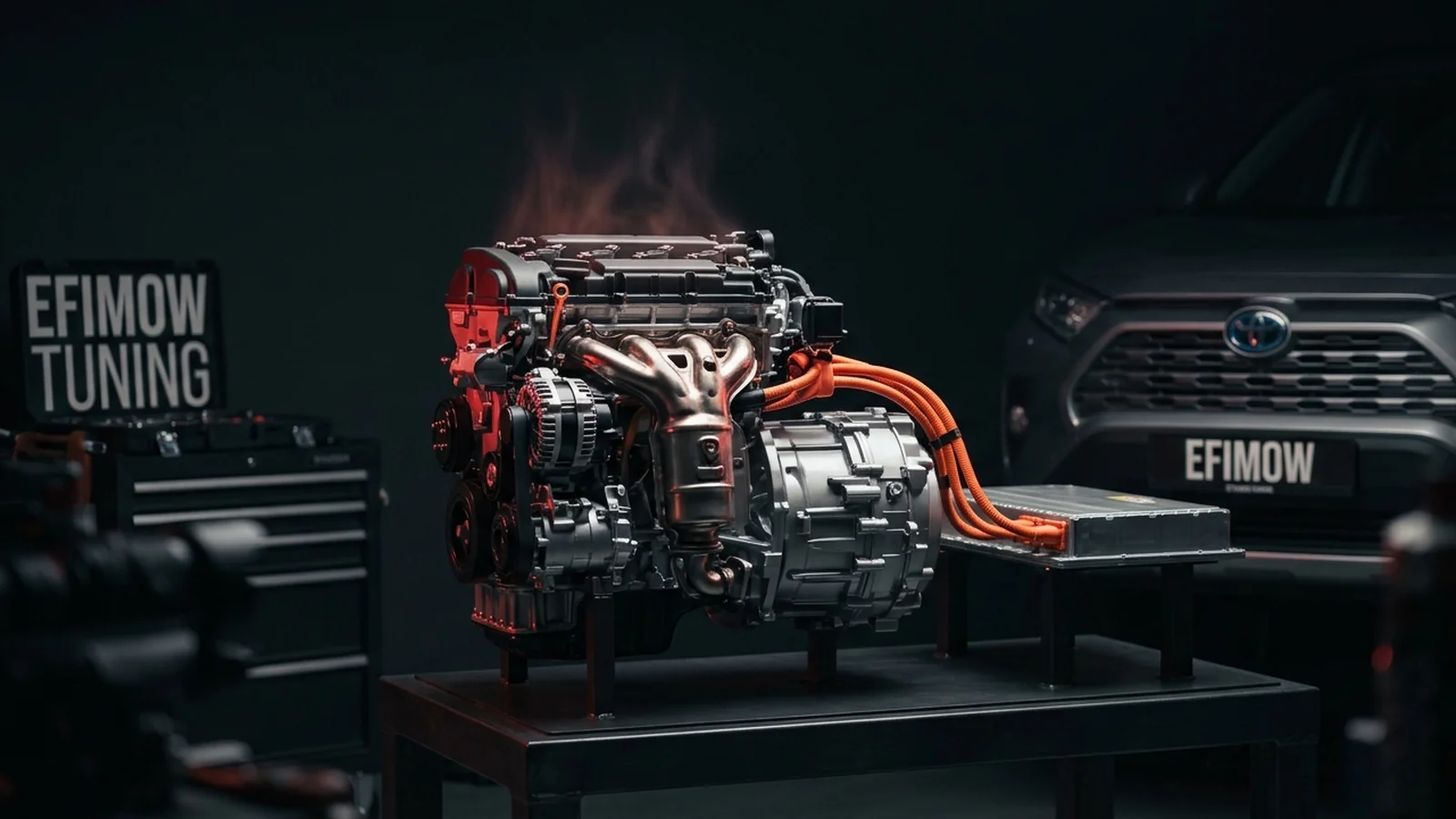
Full hybrids with naturally aspirated engines, as known from Toyota and Lexus, are the most difficult case. An example from the catalogue: Toyota RAV4 2.5 Hybrid and Lexus ES 300h with the A25A-FXS and a Denso ECU. The engine runs as a naturally aspirated Atkinson-cycle unit, designed for efficiency rather than power. For naturally aspirated engines of this family, typical guide values are only 3–8 %. On top of that, the hybrid controller uses the engine for efficiency anyway.
The Mercedes S 400 Hybrid (W221) is similar. The M272 V6 is also naturally aspirated, and the Bosch ME9.7 offers only small margins on naturally aspirated engines. If you want noticeably more here, software alone will rarely make you happy. Honestly: on such vehicles we would rather recommend a sharper throttle response, or leave it alone.
What is off limits in hybrid tuning
- High-voltage components: battery, power electronics and e-machine are not part of chip tuning. Interventions here are a safety issue.
- Battery management: charge and discharge limits protect the battery. They stay as they are.
- Emission control: catalytic converter, particulate filter and lambda control remain active. Switching them off would be emissions tampering and is prohibited on public roads.
Risks and typical problems
Hybrids react more sensitively to poorly calibrated software than conventional cars. If the engine ECU's torque report no longer matches what the hybrid controller expects, fault codes, restricted operation or limp mode can result. A proper calibration therefore keeps the torque model and plausibility checks consistent.
Warranty also plays a role. Many manufacturers give long warranties on the high-voltage battery. A software change to the drivetrain can raise questions in case of damage. Clarify beforehand what this means for your vehicle.
Legal framework
Hybrids are subject to the same rules as any other vehicle: changing the engine software voids the type approval unless the change is inspected and registered. Our software functions are intended exclusively for motorsport. More in the motorsport notice.
Process and price
Whether and how your hybrid can be calibrated is shown in the configurator. For most brands the tune is done on site in Stödtlen on a date you choose, or by sending in the ECU; both cost the same and can be booked online. The price depends on the ECU generation, plus surcharges for newer model years and for ECUs that have to be opened. The configurator shows the exact amount for your model.
Conclusion
On a hybrid it is the combustion engine that gets tuned, not the hybrid system. How much of it arrives is decided by the higher-level hybrid controller. Mild hybrids and diesel hybrids are often good candidates. Full hybrids with naturally aspirated Atkinson engines have few reserves. High-voltage technology, battery management and emission control stay untouched. The glossary explains the designs under hybrid.